The air inside Milan Malpensa Airport has a specific, metallic weight to it. It smells of expensive espresso, floor wax, and the frantic, unspoken electricity of three thousand people all trying to be somewhere else. For the passengers of EasyJet flight EJU3599, that "somewhere else" was supposed to be the cool, damp evening of London. Instead, they became ghosts in the terminal.
They held their tickets. They had checked their bags. They had navigated the labyrinth of retail and the neon glare of duty-free. But between the departure lounge and the pressurized cabin of an Airbus A320 lies a strip of linoleum that has become the most treacherous terrain in modern Europe: the passport control queue.
Consider a hypothetical traveler named Elena. She isn’t a statistic; she is a woman with a laptop bag, a dying phone battery, and a dinner reservation in South Kensington she is increasingly certain she will miss. Elena represents the sixty-odd people who watched their flight depart without them not because of a mechanical failure or a weather front, but because of a line that simply stopped moving.
The Friction of a Hard Edge
For decades, the promise of the digital age was a world without friction. We were told that technology would shave the rough edges off human movement. Biometric gates, QR codes, and high-speed scans were supposed to turn international travel into a series of graceful glides.
The reality at Malpensa tells a different story.
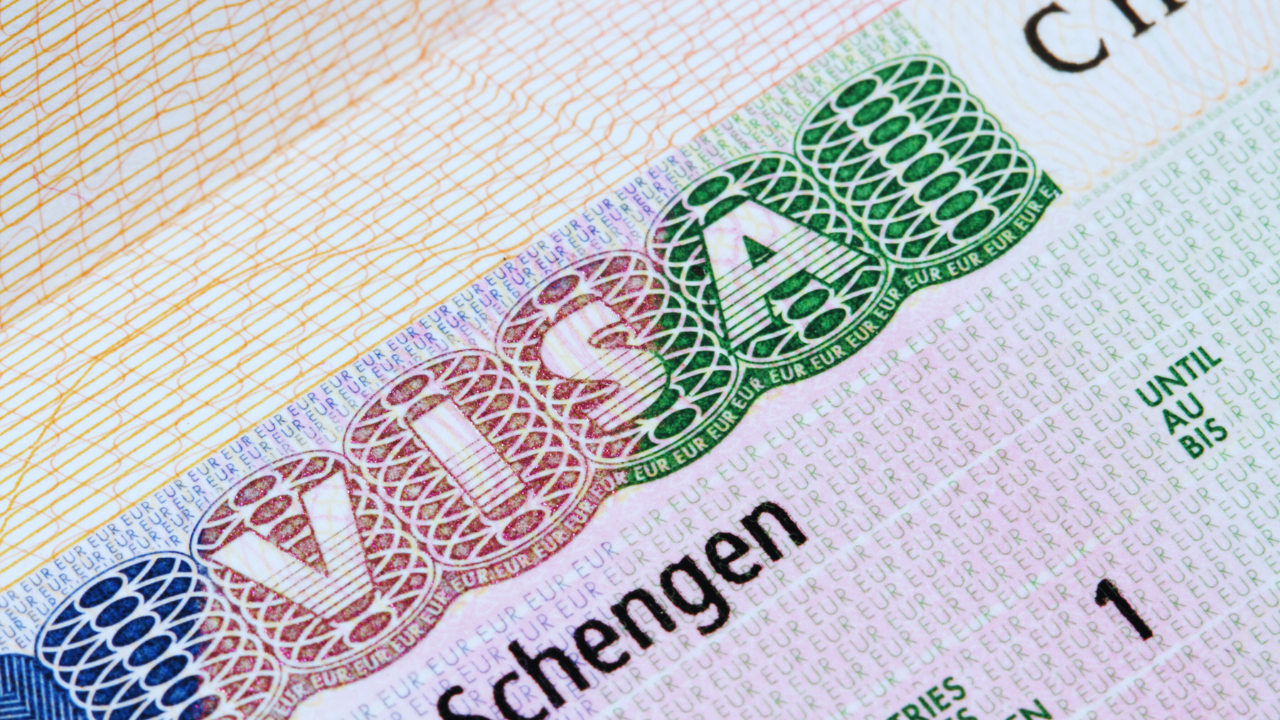
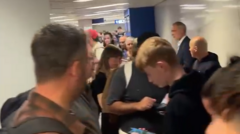
When the UK left the European Union, the border didn't just move; it thickened. What used to be a cursory glance at a burgundy cover became a ritual of stamps, scans, and questions. On this particular afternoon, the system buckled. The queues didn't just grow; they metastasized. They snaked past the stanchions, through the corridors, and deep into the bowels of the terminal.
For the passengers trapped in that slow-motion crush, the anxiety starts as a low hum. You check your watch. You calculate the distance to the gate. You look at the backs of a hundred heads and realize that the math of the universe is suddenly working against you.
Then comes the silence.
The gates closed. The jet bridge retracted. The pilots, bound by rigid takeoff slots and labor laws that dictate exactly how many minutes they can sit on a tarmac, pushed back from the terminal. Down on the apron, the plane taxied away. Inside the terminal, dozens of people stood with their passports in hand, finally reaching the front of the line only to realize they were standing in front of a ghost.
The Arithmetic of Despair
Airlines operate on margins so thin they are practically transparent. A single delayed flight ripples through a carrier’s entire network like a stone dropped in a still pond. If EJU3599 waits twenty minutes for the final forty passengers, it misses its slot. If it misses its slot, it arrives late in London. If it arrives late in London, the crew hits their legal limit of "duty hours." The return flight is canceled. Hundreds more are stranded.
The airline makes a cold, binary choice: sacrifice the few to save the schedule.
But for those standing at the gate, the logic of "operational integrity" feels like a betrayal. There is a specific kind of helplessness that comes from being trapped in a bureaucratic bottleneck while your luggage—containing your toothbrush, your clean clothes, and the souvenirs you bought for your nieces—is currently flying at thirty thousand feet toward a destination you cannot reach.
EasyJet later issued the standard apologies. They cited "bottlenecks at security and passport control." They pointed out that these factors are "outside of their control."
Technically, they are right. The airline does not staff the border booths. The Italian authorities do. Yet, to the passenger, the distinction is meaningless. When you buy a ticket, you aren't just buying a seat; you are buying a promise of transit. When that promise dissolves into a night spent on a hard plastic chair in a shuttered terminal, the fine print of who is "at fault" offers zero warmth.
The Human Cost of Efficiency
We often talk about infrastructure as if it’s made of concrete and steel. It isn't. Infrastructure is a social contract. It’s the collective agreement that if we show up on time and follow the rules, the system will function.
When Elena finally reached the gate, the staff were already packing up. The screen that once displayed her flight number had flicked over to a destination in Sicily. The adrenaline that had sustained her through the two-hour wait evaporated, replaced by a hollow, vibrating exhaustion.
She wasn't alone. There were families with toddlers who had long since crossed the threshold into total meltdown. There were elderly couples leaning on their suitcases, looking around for a representative who wasn't there.
The immediate aftermath is a scramble for survival. You open an app. You see that the next flight isn't until tomorrow evening. You see that the nearby hotels have spiked their prices to $400 a night because they know exactly what has happened at the airport. You realize that your rights—the much-vaunted UK261 or EU261 compensation laws—are a labyrinth of their own.
Because the delay was caused by "extraordinary circumstances" (the border police), the airline might not have to pay for your missed day of work or your expensive hotel. You are, quite literally, stranded in no-man's-land.
The Shrinking World
This isn't just an Italian problem. It is a symptom of a world that is becoming more difficult to navigate even as we become more connected. We have the technology to track a package across the globe in real-time, yet we cannot seem to coordinate the flow of humans through a doorway.
The border at Malpensa is a microcosm of a larger friction. It is what happens when 21st-century travel volume meets 20th-century bureaucracy and 19th-century notions of territory.
We are living in an era of the "unpredictable predictable." We know the queues will be long. We know the staff are underpaid and overworked. We know the planes are full. Yet, every time a group of people is left behind, we treat it as an anomaly—a freak occurrence of the schedule.
It isn't an anomaly. It’s the new baseline.
The passengers at Milan were eventually rebooked or left to find their own way. They scattered. Some took trains. Some slept on floors. Some paid thousands for emergency tickets on other carriers. The "Easy" in the airline's name felt like a cruel joke by midnight.
As the sun set over the Alps, the airport settled into its late-night rhythm. The cleaners buffed the floors where the queues had been. The tension of the afternoon was scrubbed away, leaving no physical trace of the sixty people whose lives had been derailed by a line that refused to move.
The planes continued to rise and fall in the distance, flickering lights against a darkening sky. Below them, the terminal waited for the next morning's crowd—another wave of hopeful travelers, each one unaware that they are only ever one slow-moving stamp away from becoming a ghost at the gate.
The border doesn't have to be a wall to stop you. Sometimes, it just has to be a queue that never ends.