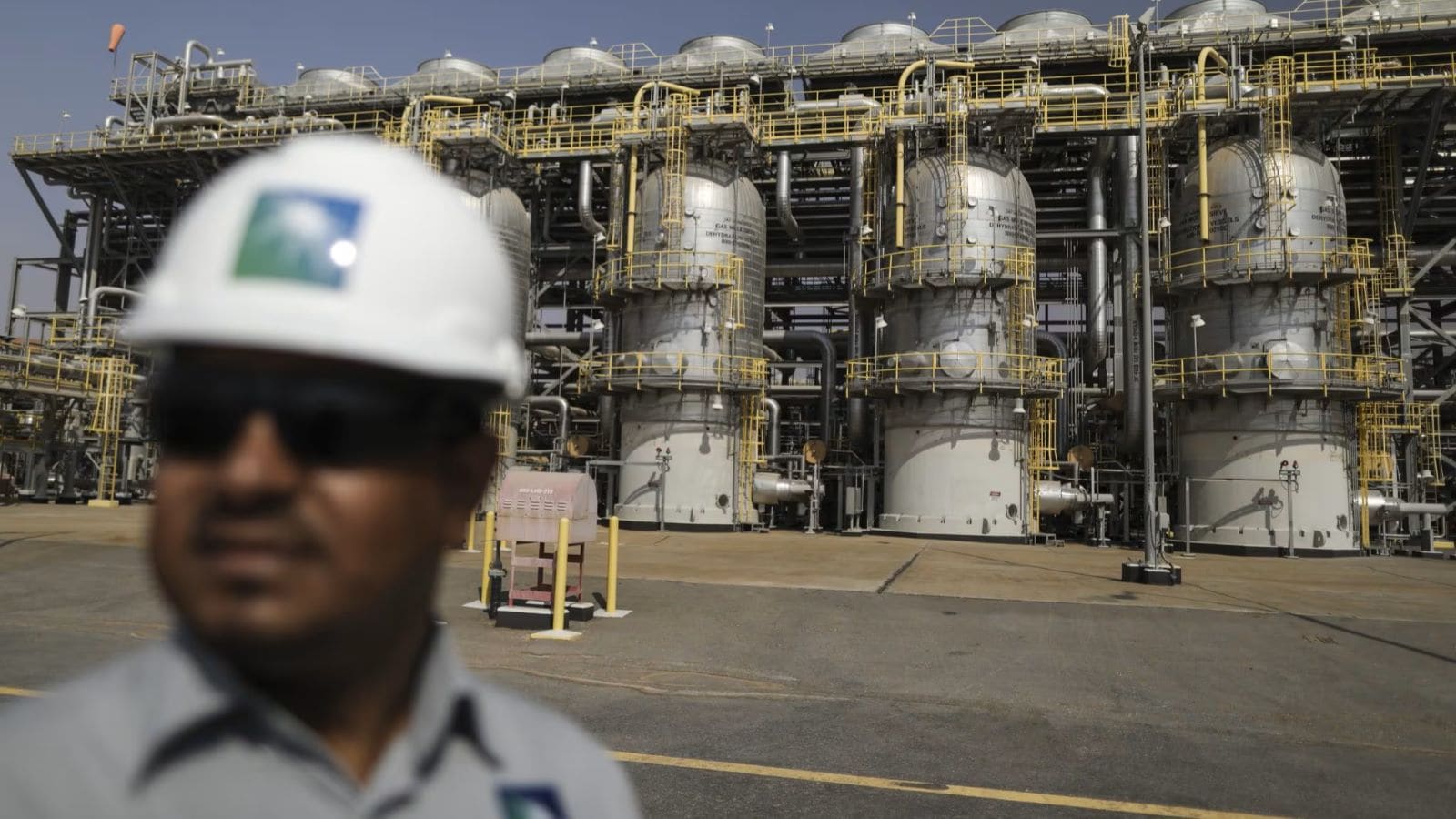
Most financial headlines treat Saudi Aramco like a giant ATM that just prints cash whenever crude prices tick upward. That's lazy analysis. When Aramco Q3 result numbers dropped showing a 9% profit jump fueled by refining margins and firmer oil prices, the usual talking heads immediately credited OPEC+ production discipline and called it a day.
They missed the real story.
Yes, higher crude prices helped the top line. Nobody is denying basic math. When Brent crude climbs, the world's largest oil exporter makes more money per barrel pumped out of the Ghawar field. Yet if you actually dig into the operational mechanics behind this 9% earnings bump, the downstream refining business did way more heavy lifting than casual observers realize.
Why Refining Margins Actually Saved the Quarter
Pure upstream oil producers live and die by the daily spot price of crude. It's a stressful, volatile existence where a single geopolitical headline or a weak manufacturing report out of China can wipe out billions in projected revenue overnight. Aramco spent the last decade trying to insulate itself from that exact trap.
Look at how refining works when crude prices rise. Normally, higher feedstock costs squeeze refiners because they have to pay more for the raw oil they process into gasoline, diesel, and jet fuel. If end-user demand isn't strong enough to support higher pump prices, refining margins collapse.
This quarter broke that pattern. Global refining capacity remained tight across Asia and the Middle East, meaning crack spreads—the difference between the price of crude oil and the petroleum products refined from it—stayed surprisingly wide. Because Aramco owns massive integrated refining and chemical complexes both domestically and through international ventures like Motiva in the United States and S-Oil in South Korea, the company captured profit at both ends of the value chain.
It sold crude at higher market prices. Then its own refineries turned that crude into high-margin distillates.
I've watched energy analysts routinely undervalue integrated downstream assets during bull runs because upstream profits look so flashy on paper. That's a mistake. Upstream generates the headline cash, sure, but downstream stability keeps the dividend machine humming when crude markets get choppy.
Breaking Down the Real Drivers Behind Aramco Q3 Earnings
To understand why a 9% profit jump matters for a company of Aramco's massive scale, you have to look at the sheer denominator involved. Growing net income by nearly double digits when you're already generating tens of billions of dollars per quarter requires serious operational execution.
Three specific factors converged to push those numbers higher:
- Disciplined capital allocation that kept lifting costs near the lowest levels in the global energy industry, even as inflation pushed up rig and service rates for Western supermajors like ExxonMobil and Chevron.
- Stronger Asian petrochemical and fuel demand, particularly for middle distillates like diesel and aviation fuel, which kept utilization rates high across Aramco's joint-venture refineries.
- Favorable crude realization prices driven by tight physical supply, allowing Saudi grades like Arab Light to command healthy official selling prices (OSPs) in key export markets.
Notice what isn't on that list? Speculative trading windfalls or one-off asset sales. This wasn't accounting gymnastics. It was core industrial throughput meeting tight global supply.
The Dividend Question Nobody Wants to Ask
Whenever Aramco posts strong quarterly numbers, institutional investors immediately do one thing. They calculate dividend coverage.
Saudi Arabia's government relies heavily on Aramco's payouts to fund its broader economic transformation projects under Vision 2030. Between base dividends and performance-linked distributions, the cash outflow requirements are staggering. A 9% profit increase doesn't just make the income statement look pretty; it directly eases the pressure on Aramco's balance sheet.
When earnings lag behind dividend commitments, Aramco has to tap into cash reserves or lean on debt markets to bridge the gap. Nobody wants to see an energy giant borrowing money just to pay shareholders, even if its debt-to-equity ratio remains remarkably conservative compared to European peers like Shell or BP. Stronger Q3 earnings mean free cash flow covers a much healthier slice of those massive quarterly payouts without straining liquidity.
How Aramco Compares to Western Oil Majors Right Now
If you put Aramco's quarterly performance side-by-side with Western integrated oil companies, the structural differences jump right off the page. Western majors spent the last few years navigating intense shareholder pressure over capital discipline, share buybacks, and uneven pivots toward renewable energy.
Aramco played a completely different game.
While competitors hesitated to approve long-cycle upstream projects, Aramco kept pouring capital into maintaining its Maximum Sustainable Capacity and expanding its gas network. Gas doesn't get the same media attention as crude exports, honestly, because most of Saudi Arabia's natural gas goes toward domestic power generation and industrial feedstock. Every cubic foot of gas Aramco produces locally frees up another barrel of high-value crude oil for export instead of burning it in domestic power plants.
That substitution effect is quiet, unglamorous, and wildly profitable.
Meanwhile, Western refiners faced rising regulatory compliance costs and aging infrastructure in Europe and North America. Aramco's newer, complex refineries in places like Jazan and Jubail are built specifically to process heavier crude grades into clean, high-specification fuels. Complexity wins in modern refining. Simple refineries get crushed when margins tighten, while complex facilities print money.
What Everyone Gets Wrong About Crude Price Sensitivity
There's a persistent myth among retail investors that Aramco's stock price and quarterly profits should move in a rigid one-to-one lockstep with Brent crude futures. If oil goes up 10%, they expect Aramco's profit to go up 10%.
Real-world energy economics don't work like a simple spreadsheet formula.
First, Saudi Arabia's participation in OPEC+ production adjustments means volume fluctuates alongside price. If prices rise because Riyadh voluntarily holds back barrels from the market, higher per-barrel margins get partially offset by lower total export volumes. You can't just multiply spot prices by static output numbers and call it a forecast.
Second, royalties and corporate tax rates in Saudi Arabia operate on a progressive sliding scale tied to oil price brackets. As crude prices climb past certain thresholds, the marginal government take increases. That mechanism protects the company during severe price crashes, yet it also dampens extreme upside spikes compared to private oil companies operating under flat tax regimes.
Third, refining and chemicals act as a natural counter-cyclical buffer. Sometimes downstream margins surge precisely when crude prices pull back, smoothing out the earnings curve over a full four-quarter cycle. Treating Aramco purely as a leveraged bet on crude prices ignores half of its business model.
Practical Ways to Track Aramco's Momentum Going Forward
If you're watching energy markets or evaluating emerging market equities, stop staring solely at daily Brent crude tickers. You'll get faked out every single time.
Instead, track three concrete indicators before the next earnings cycle hits:
- Monthly Official Selling Prices (OSPs) released by Aramco for Arab Light crude heading into Asia. When Aramco raises its OSP premiums relative to the Oman/Dubai benchmark, it signals genuine physical demand from Asian refiners rather than paper speculation in London or New York.
- Singapore complex refining margins, which serve as the clearest real-time barometer for how profitable Aramco's massive Asian downstream footprint actually is during any given month.
- Free cash flow versus total dividend payouts in the quarterly cash flow statement. Watch whether operating cash flow comfortably clears the combined base and performance-linked dividend bar without drawing down cash balances.
Energy investing rewards people who follow physical barrels and refining margins rather than noisy market commentary. Keep your eyes on crack spreads and Asian OSPs, because that's where the next quarterly surprise is already taking shape.