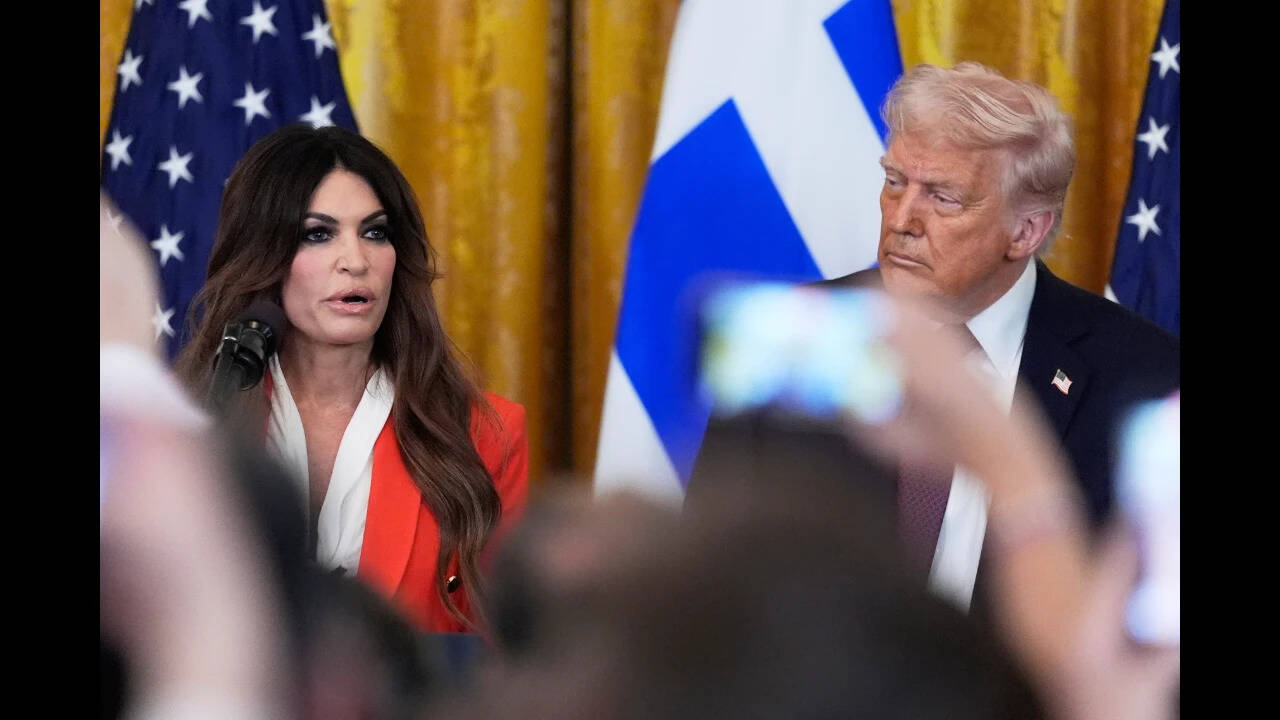
Rumors of a political "burn book" usually sound like pure tabloid fantasy until someone who spent six years inside an inner circle suddenly gets pushed out the door. That is why whispers surrounding Kimberly Guilfoyle after her October 2026 exit as U.S. ambassador to Greece hit a nerve in Washington and beyond.
Let's cut straight to the core of the story. Reports emerged in October 2026 claiming that insiders in and around President Donald Trump's orbit worry Guilfoyle could air grievances or expose sensitive family and political details after stepping down from her diplomatic post in Athens amid misconduct allegations. Yet so far, there is no verified public evidence that a formal "burn book" exists, nor has Guilfoyle released any damaging dossier on the family.
What makes this moment messy isn't a confirmed tell-all manuscript. It's the collision between diplomatic scrutiny, a sharp public distancing by the president, and years of proximity between 2018 and 2024 when Guilfoyle was engaged to Donald Trump Jr.
Why Kimberly Guilfoyle Rumors Sparked Panic in Orbit
When someone spends half a decade at campaign rallies, fundraisers, and private family gatherings, people naturally wonder what they saw behind closed doors. In political media, that curiosity quickly turns into shorthand like "burn book" or "knows where the bodies are buried".
Honestly, that phrasing tells you more about political psychology than hard proof. High-stakes orbits run on loyalty and discretion. When a longtime insider exits under a cloud, nervous allies immediately ask who might talk, who might stay quiet, and who has leverage left.
Still, the anxiety didn't come out of nowhere. Reports from outlets including The Wall Street Journal, The New Republic, and The Independent detailed allegations involving Guilfoyle's conduct tied to her ambassadorship—including scrutiny over private travel, gifts or favors involving figures in Greece, and reported requests for money tied to administration access. Democratic lawmakers also pressed for answers, with figures such as Rep. Gregory Meeks and Rep. Robert Garcia raising oversight questions.
Guilfoyle pushed back against wrongdoing and pledged to defend her reputation, while her legal representation disputed certain reported messages. Meanwhile, the State Department Office of the Inspector General drew attention for looking into gifts or favors from private business figures.
The Gap Between Tabloid Talk and Hard Receipts
There's a big difference between an unnamed source saying someone "knows everything" and an actual document landing in the press. Tabloid rumors thrive on worst-case scenarios because drama gets clicks fast.
In real political fallout, people rarely drop a neat, bound ledger of secrets overnight. More often, tension plays out through subtle signals: who gets invited to events, who gets defended on camera, and who starts looking out for their own legal and financial footing.
If you're tracking this story, separate three distinct threads so you don't conflate them:
- Verified public statements and official actions: Guilfoyle's resignation statement, public comments from President Trump and Secretary of State Marco Rubio, and congressional or inspector general inquiries.
- Reported investigative claims: Media reporting on alleged misconduct, private flights, and donor or lobbying controversies.
- Anonymous rumor-mill chatter: Claims from unnamed insiders warning about potential retaliation or a secret diary.
Treating all three buckets as equal fact is the fastest way to get misled.
What Donald Trump and Allies Actually Said
One of the sharpest turns in the October 2026 coverage wasn't a leak—it was on the record. Asked by reporters about Guilfoyle's exit and her past connection to his family, Trump drew a blunt line, saying she wasn't a member of his family and noting she had dated his son a long time ago.
That kind of public firewall matters. In politics, when a leader draws a hard boundary around an ex-partner or former surrogate, it signals damage control. Earlier in the week, Trump had also indicated dissatisfaction as reports mounted, saying administration officials were looking into the matter and weren't happy.
Rubio's posture shifted noticeably too as stories multiplied. Initially pushing back against relying on unverified sourcing as gospel, he later faced growing scrutiny as additional reports surfaced ahead of the November 2026 midterms.
Publicly severing family ties during a scandal is classic political triage—it protects the core brand while leaving the departing figure to handle the fallout alone.
From an outside observer's seat, that dynamic explains why some insiders sounded jittery. When loyalty feels one-way at the exit door, observers start guessing whether the person walking out will stay quiet or hit back.
Why Six Years Inside an Inner Circle Still Carries Weight
Even when a leader says someone isn't family anymore, shared history doesn't evaporate on command. Between 2018 and 2024, Guilfoyle was a visible fixture around Donald Trump Jr. and broader campaign circles.
In politics, proximity creates context. Even without a literal "burn book," a former insider understands personality clashes, fundraising mechanics, interpersonal friction, and who trusted whom during pivotal moments.
That doesn't mean those insights are explosive or legally damaging. Sometimes "secrets" are just messy relationship history, campaign squabbles, or bruised egos that look dramatic on paper but fizzle in practice.
Misconceptions That Trip People Up on Political Feuds
Whenever an insider exits a powerful circle, the same myths pop up every single time. Let's clear a few of them up before the narrative runs away with itself.
First, people assume an ousted insider automatically wants—or can afford—an all-out war. Fighting a major political family or administration takes money, legal backup, and media strategy. In her public remarks after leaving her post, Guilfoyle emphasized loyalty to Trump and his movement while vowing to clear her name. Whether that posture holds or shifts over time is an open question, not a settled plotline.
Second, readers often confuse leverage with proof. Having history with powerful people is not the same as holding smoking-gun evidence. Without corroborated records, testimony, or verifiable documentation, rumors about hidden files remain speculation.
Third, people forget timing. October 2026 sat right before the November midterm elections. Every controversy in that window got amplified through a partisan and election-year lens, where opponents looked for ethics vulnerabilities and allies scrambled to contain distractions.
A quick look at how the narrative evolved shows how fast rumors can outpace facts:
- Early October 2026: Reports of misconduct allegations, scrutiny over travel and business ties, and questions from lawmakers put pressure on the ambassadorship.
- Mid-October 2026: Guilfoyle stepped down from the post in Athens, Trump publicly distanced her from the family, and tabloid reports floated fears of a "burn book".
- Post-exit phase: Attention shifted to whether formal investigations, legal disputes, or public statements would produce concrete developments beyond insider speculation.
How to Read Coverage of This Story Without Getting Played
If you're following political fallouts like this one, you don't need to take every dramatic headline at face value. A few practical habits keep your read sharp.
- Check the attribution chain. Ask whether a claim comes from a named official, an on-the-record statement, a documented inquiry, or an unnamed source talking to a tabloid. Unnamed sources aren't always wrong, but they often have an axe to grind or a narrative to spin.
- Watch for receipts over adjectives. Words like "explosive," "nightmare," or "burn book" do heavy lifting in headlines. Look for concrete facts—dates, official actions, verified records, or direct quotes—instead of colorful metaphors.
- Separate personal drama from institutional accountability. Relationship tension or campaign gossip is entertainment; inspector general reviews, ethics rules, and congressional inquiries deal with official conduct and law. Keep those lanes distinct.
- Track follow-through, not just day-one shock. Big rumor stories often peak in the first 48 hours and fade if no actual documents or revelations materialize. Give a claim time to be tested before treating it as a turning point.
Rumors of payback make great theater, especially when an inner-circle figure exits under pressure. Until real receipts surface, though, the bigger story is how quickly political alliances tighten—and how fast yesterday's insider can become someone else's liability.