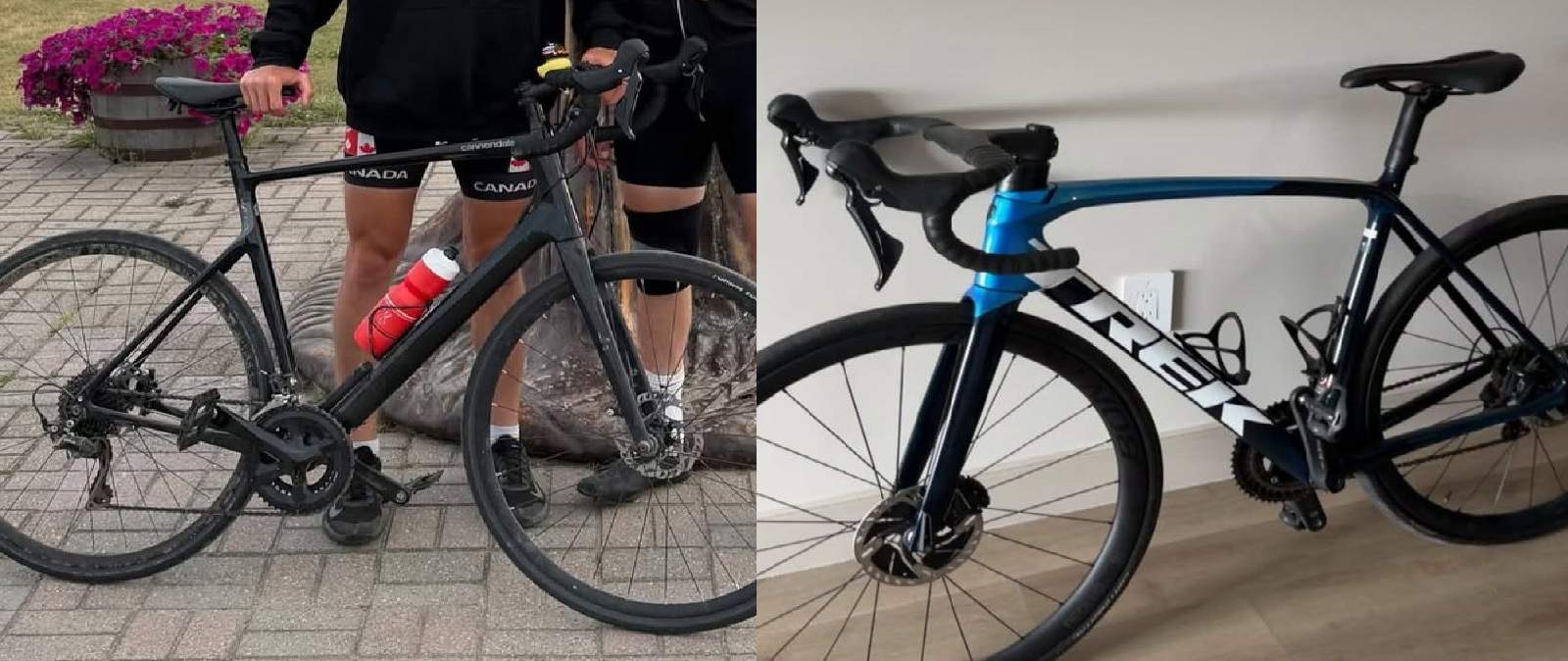
Two arrests in Winnipeg have finally brought a measure of accountability to a crime that outraged observers across the country: the daylight theft of two high-end bicycles belonging to cross-Canada charity riders. Yet the breakthrough reveals a far more systemic breakdown in municipal security and property tracking than a simple police blotter update suggests. When Val Duquenne and Thomas Clark parked their vehicle downtown on a July morning to speak about men's mental health, they parked within arm's reach of an ongoing urban crisis. Their $15,000 professional-grade machines vanished from a vehicle rack in minutes, traded off almost immediately through underground channels before authorities could blink.
For decades, street-level property crime in mid-sized North American cities has operated on an invisible economy of quick trades and low-risk disposal. Thieves do not steal specialized equipment to ride it; they treat high-end frames and components as immediate currency for narcotics.
The Anatomy of a Rapid Downtown Heist
The theft occurred in broad daylight between 7:25 and 8:00 AM along a busy downtown corridor. This was not a midnight smash-and-grab in a dimly lit alley. It took place on Portage Avenue, right outside a major media studio where the cyclists had briefly stepped inside for a morning broadcast interview.
Perpetrators operating in urban centers rely on public indifference. A man unbolting a high-end bike from a rack or a car mount in the early morning rush hour rarely draws a second glance. Passersby assume ownership. They assume the person holding the wrench has the key.
This routine assumption is precisely what allows professional opportunistic thieves to treat downtown streets as an open-air warehouse. Within hours of the frames disappearing from the vehicle mount, the machinery was moving through local networks. Police later established that the primary suspect, 42-year-old Kuol Thomas Madit, did not hold onto the property. Instead, the bicycles were swiftly bartered away. One frame was traded to a 60-year-old local resident, integrating stolen goods into the secondary market before the victims had even finished filing their initial police report.
The Chain of Trade and Enforcement Gaps
Tracking stolen property across an urban underground is notoriously difficult. Most bike thefts vanish into an unrecorded void, never to be seen again. This case only broke the pattern due to a blend of fortunate patrol work and broader municipal enforcement crackdowns.
On August 7, a routine patrol by West District officers in the 1800 block of Bannatyne Avenue West changed the trajectory of the file. An officer recognized a familiar silhouette: a high-end road bicycle being casually ridden down the street. The rider, a 60-year-old man, was stopped and subsequently charged with possession of property obtained by crime over $5,000.
Recovering one bicycle was a victory for the victims, but the structural pipeline remained active until late August. Central District community support units, operating under an intensified local focus on open drug use and street-level crime, encountered Madit near Notre Dame Avenue and Balmoral Street. Along with outstanding warrants and fresh charges for theft and trafficking, officers seized methamphetamine and fentanyl.
The intersection of property theft and the drug trade is an old story in policing. High-value items serve as literal legal tenders for illicit substances. When municipal authorities treat bike theft as a minor nuisance separate from the narcotics crisis, they miss the engine driving the entire illicit market. Addicts do not steal custom carbon-frame touring bikes for recreational purposes. They steal them because an underground buyer will trade a few grams of drugs for a machine worth thousands of dollars.
The Cost Beyond the Carbon Frames
For Duquenne and Clark, the loss was more than financial. Representing the Men Don't Ride Alone campaign, the two young men from New Brunswick had logged thousands of kilometers to generate awareness and funds for Movember Canada.
When the original bikes vanished, the psychological blow was heavy. Yet the incident triggered an immediate counter-response from the local community. Winnipeg residents and corporate sponsors stepped forward, including local Canadian Tire outlets that contributed heavily to get the riders back on the road.
Public sympathy proved powerful, yet charity shouldn't have to subsidize basic urban law enforcement failures. The reality is that touring cyclists, delivery riders, and daily commuters remain acutely vulnerable in urban cores where property crime carries virtually zero deterrent penalty. Even after recovering from the Winnipeg setback and completing their cross-country trek to British Columbia, the duo faced yet another theft incident in Calgary, highlighting a national vulnerability in how unattended gear is treated by municipal thieves.
The legal system will now process the charges laid against the two Winnipeg men. Court dates loom, evidence will be weighed, and the recovered bicycle sits back in its owner's hands while the second frame remains missing. But the underlying vulnerability of city streets remains entirely unchanged, waiting for the next vehicle to park downtown with an expensive rack on the back.