A Primetime Spectacle Built on Old Intelligence
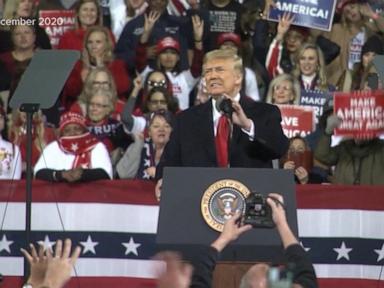
When the East Room lights went up for a Thursday evening primetime presidential address, official Washington braced for what White House aides had hyped as a historic unveiling of hidden intelligence. The commander-in-chief stood at the podium with a thick stack of newly declassified files. He promised to finally prove that foreign adversaries and corrupt officials systematically compromised American electoral infrastructure.
What unfolded over twenty-five minutes was less of a groundbreaking forensic revelation and more of a masterclass in political rhetoric. The centerpiece of the speech revolved around claims that the People's Republic of China obtained sensitive voter registration data covering hundreds of millions of citizens. Yet a closer examination of the underlying files, published simultaneously on a White House portal, revealed a starkly different narrative.
The voter records in question consisted primarily of publicly available files. In the United States, voter rolls containing names, addresses, party affiliations, and voting histories are regularly purchased by political campaigns, commercial brokers, research entities, and foreign observers alike. You do not need a state-sponsored cyber warfare unit to acquire data that state election boards post online for public download.
Critical context was missing from the podium. While the president highlighted intelligence memos noting Chinese interest in domestic political figures, the broader consensus of the American intelligence community remains intact. The primary assessment completed by national security agencies years ago concluded that no foreign entity successfully altered ballots, modified vote tallies, or breached the core counting mechanisms during the election in question.
By framing public commercial datasets as a catastrophic breach of national sovereignty, the administration shifted the ground from verified operational sabotage to general vulnerability. That distinction matters immensely when shaping federal policy.
The Anomaly of the Machinery Claims
Electronic voting platforms took the brunt of the president's ire during the broadcast. He asserted that hardware and software components across the country remain inherently exposed to localized tampering and remote exploitation.
The technical reality on the ground tells a far more nuanced story. American elections do not run on a single, centralized digital grid. They are administered across more than 10,000 independent municipal and county jurisdictions, each operating under distinct state laws, hardware standards, and procedural safeguards.
Most American voters mark paper ballots that are subsequently scanned by optical readers. These counting devices are kept offline, completely isolated from the internet during active voting hours. Pre-election logic and accuracy testing, combined with post-election hand audits, form a multi-layered defense designed to catch mechanical drift or software anomalies long before results are certified.
+-----------------------------------------------------------------------+
|                 STRUCTURE OF US ELECTION DEFENSES                     |
+-----------------------------------------------------------------------+
|  1. DECENTRALIZATION                                                  |
|     10,000+ independent local jurisdictions with varied systems     |
+-----------------------------------------------------------------------+
|  2. PHYSICAL AUDIT TRAILS                                             |
|     Vast majority of votes backed by paper records                    |
+-----------------------------------------------------------------------+
|  3. AIR-GAPPED HARDWARE                                               |
|     Tabulation systems disconnected from public networks              |
+-----------------------------------------------------------------------+
|  4. MANDATORY RECOUNTS & AUDITS                                       |
|     Bipartisan hand-checks verify machine accuracy post-election      |
+-----------------------------------------------------------------------+
To execute a widespread, election-altering attack on electronic tabulators would require a coordinated physical breach across hundreds of disparate local precincts simultaneously. It would demand insider credentials, physical key access, and undetected alteration of paper audit trails that match the digital output.
When major networks broadcast the address, legal and media teams issued immediate on-air clarifications. Broadcasters pointed out that no verifiable evidence has surfaced demonstrating that electronic voting machines in the field were hacked or manipulated to alter vote counts in any state.
The presidential rhetoric nevertheless bypassed these operational realities, focusing instead on theoretical vulnerabilities to argue that state-managed voting systems require immediate federal oversight.
Legislative Objectives behind the Intelligence Release
To understand the timing of the address, one must look beyond past grievances and examine the immediate legislative battles on Capitol Hill. The speech served as a high-stakes bullhorn for the SAVE America Act, a controversial measure currently stalled in Congress.
The proposed legislation would institute strict mandatory requirements for voting nationwide. Under its provisions, citizens would be required to present documentary proof of citizenship—such as a passport or birth certificate—in person when registering to vote in federal contests, alongside mandatory government-issued photo identification at the polling booth.
The Debate Over Access versus Security
Proponents argue that standardized identification rules protect the integrity of the ballot box and restore confidence among voters who doubt election outcomes. They contend that verifying citizenship at registration is a basic, common-sense safeguard that aligns the voting process with standard administrative procedures for banking or air travel.
Opponents, including voting rights advocates and state election administrators, counter that the measure creates significant bureaucratic hurdles for millions of eligible citizens who lack immediate access to expensive secondary documents like passports or updated birth records.
- Married women whose legal names differ from their birth certificates face complex documentation paper trails.
- Low-income citizens, rural residents, and elderly voters frequently lack easy access to government offices that issue official documentation.
- Military personnel serving overseas may encounter delays when attempting to register under strict physical presentation rules.
Furthermore, state election authorities maintain that non-citizen voting is extraordinarily rare, already illegal under federal law, and punished by severe prison sentences and deportation. Recent administrative reviews cited during the address claimed that hundreds of thousands of potentially non-citizen records existed on state rolls, but election law experts quickly noted that such reviews rely heavily on third-party commercial data matching that produces widespread false positives.
Strategic Declassification as a Political Instrument
Presidents have long used executive declassification power to influence public debate. What made this address distinct was the selective nature of the materials brought into the light.
The documents posted online highlighted foreign interest in state voter files and internal intelligence debates regarding adversary intentions. Yet the document dump conspicuously omitted broader intelligence evaluations regarding other foreign states, such as Russia or Iran, whose covert influence operations have been repeatedly detailed in bipartisan Senate Intelligence Committee reports.
By focusing almost exclusively on China and localized procedural flaws, the narrative constructed a specific arc. It suggested that internal government actors hid vital facts from the public while allowing foreign actors to browse national voter data unchecked.
This approach creates an acute challenge for intelligence professionals. When classified reports are released piecemeal without full analytical context, raw intelligence cables can be easily mistaken for finished, verified conclusions. A raw report reflecting an unvetted threat warning is vastly different from a consensus intelligence assessment vetted across multiple national security agencies.
The Looming Midterm Strategy
Beyond the halls of Congress, the timing of this primetime intervention carries undeniable implications for the upcoming congressional midterms.
Setting the stage with broad claims of systemic vulnerability accomplishes two clear political objectives simultaneously. First, it energizes the voter base by reinforcing a long-held narrative that electoral victories are actively threatened by hostile forces. Second, it lays the rhetorical groundwork to dispute unfavorable outcomes in tight battleground districts later in the cycle.
If a political party establishes a baseline assumption that the voting apparatus is fundamentally compromised, any electoral loss can be attributed to system failure or foreign meddling rather than shifting voter preferences.
Congressional leaders from both parties responded swiftly following the speech. Opposition lawmakers warned that using the White House podium to question election security without presenting concrete, verified evidence of vote tampering harms democratic institutions and invites civic distrust. Meanwhile, staunch allies rallied behind the message, demanding that state governors immediately purge voter rolls based on the newly published files.
State election directors, who bear the constitutional duty of running American elections, now find themselves caught in the crossfire between federal rhetoric and local execution. They must reassure their constituents that the ballot boxes are secure while managing complex administrative changes dictated by aggressive political fights in Washington.
The battle over election administration is no longer just about ballot access or security protocols. It has become a permanent feature of the political campaign itself, where raw intelligence reports serve as campaign literature and the mechanics of democracy are debated under the intense glare of primetime television.
The debate over the SAVE America Act will continue in the Senate, but the broader narrative framework is already locked in place. Voters in every state will go to the polls this fall under the shadow of a national argument over who gets to vote, how those votes are counted, and whether the results can ever truly be accepted by all sides.