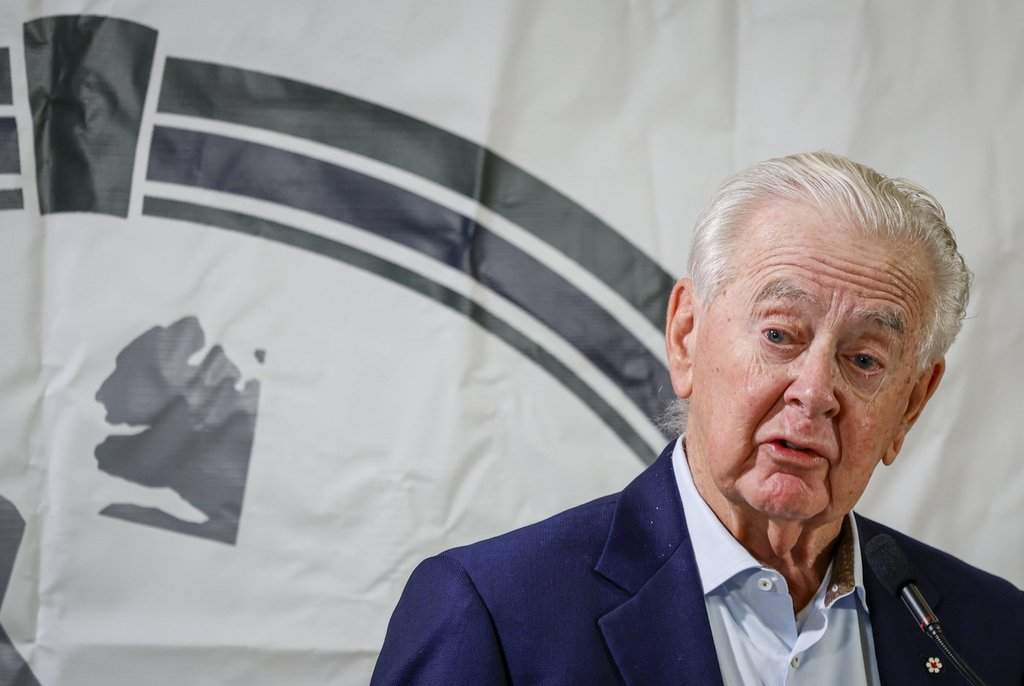
Preston Manning's latest report argues that Western Canada can build real political muscle within Confederation by uniting provinces around greater provincial sovereignty instead of chasing separation. The core pitch is practical. Rather than blowing up the country after Alberta's October 19, 2026 referendum, western provinces can coordinate policy, press Ottawa on federal-provincial friction, and extract concessions from inside the constitutional tent.
After decades covering Canadian federalism and watching every iteration of western discontent rise and cool, I read proposals like this with a mixture of respect for the persistence and skepticism toward the math. Manning understands western grievance better than almost anyone alive. He spent the late 1980s and 1990s turning frustration in Calgary and Edmonton into a national parliamentary force. Yet uniting Western Canada inside Confederation faces hard structural ceilings that catchy slogans cannot wave away. If you enjoyed this post, you should look at: this related article.
Why Separation Lost Steam While Sovereignty Gained Ground
Separating from Canada sounds clean on a protest sign. In practice, leaving Confederation creates immediate currency, trade, border, and treaty headaches that make even hardened fiscal conservatives hesitate. That reality explains why a report co-chaired by Manning steers energy toward sovereign provinces within Confederation rather than outright exit.
Look at what happened around Alberta's October 19, 2026 referendum. Frustration with Ottawa ran hot, especially over federal-provincial jurisdiction and economic policy. Still, telling voters they can claim stronger provincial control while staying inside Canada is an easier sell than asking them to gamble on a brand-new country. For another perspective on this event, see the latest coverage from BBC News.
Provincial coordination gives premiers a bargaining table. It does not hand them a veto over Parliament.
From a purely tactical standpoint, that shift is smart politics. Premiers already possess substantial constitutional powers under Section 92 of the Constitution Act, 1867 over natural resources, property and civil rights, municipal institutions, and health care. Pushing those boundaries aggressively tests federal patience without triggering an immediate economic shock.
The Seat Math That Limits Western Canada in Ottawa
Even when Western Canada speaks with a sharper voice, parliamentary arithmetic still rules the House of Commons. Out of 343 total seats in the 45th Parliament—where 172 seats make a majority—British Columbia holds 43, Alberta holds 37, Saskatchewan holds 14, and Manitoba holds 14. Add those four western provinces together and you get 108 seats.
Ontario alone holds 122 seats, and Quebec holds 78. Those two central provinces total 200 seats—well past a majority on their own.
| Province or Region | House Seats | Share of 343 Seats | Political Reality |
|---|---|---|---|
| British Columbia | 43 | 12.5% | Split evenly between Liberals and Conservatives with NDP and Green presence |
| Alberta | 37 | 10.8% | Heavily Conservative, with small Liberal and NDP pockets |
| Saskatchewan | 14 | 4.1% | Predominantly Conservative |
| Manitoba | 14 | 4.1% | Closely contested across Liberals, Conservatives, and NDP |
| Ontario | 122 | 35.6% | Decisive swing territory in federal elections |
| Quebec | 78 | 22.7% | Distinct political bloc with strong Bloc Québécois weight |
Numbers like that explain why western premiers often feel outnumbered in Ottawa. A federal government can win power with minimal support in Alberta or Saskatchewan if it sweeps suburban Ontario and holds ground in Quebec and British Columbia. Manning's report rightly spots that structural imbalance, yet counting on unified western pressure to force Ottawa's hand requires overcoming deep internal divisions west of the Manitoba border.
Four Western Provinces Rarely Agree on Everything
Calling Western Canada a single bloc is convenient shorthand. It is rarely accurate.
British Columbia has its own economic gravity. Coastal trade, port infrastructure, forestry, clean tech, and Lower Mainland urban politics pull Victoria in directions that do not always match Regina or Edmonton. Even with a majority Conservative government in British Columbia, federal seat standings in BC are split tightly between Liberals and Conservatives, alongside New Democrats and a Green MP.
Manitoba sits at another crossroads. Its economy blends agriculture, hydro power, manufacturing, and logistics, while Winnipeg's electorate behaves very differently from rural Saskatchewan. When oil prices swing or federal carbon and energy rules collide with coastal environmental priorities, western unity fractures fast.
Consider a hypothetical example of how that friction plays out in real life. Suppose Alberta, Saskatchewan, British Columbia, and Manitoba all sign onto a joint statement demanding tighter provincial control over resource approvals and federal transfers. If a major pipeline or transmission corridor requires crossing another province's watershed or indigenous territory, shared rhetoric runs straight into local economic self-interest.
Constitutional Reality Checks Every Premier Faces
Advocates of stronger provincial autonomy often talk as if Ottawa can simply hand over powers whenever premiers ask nicely. Canada's constitution does not work like a corporate org chart where one division can rewrite another's charter.
Major structural changes—such as altering Senate powers, changing constitutional amending formulas, or reshaping core federal-provincial divisions—require high thresholds of provincial and federal consent. Even when provinces work together, Ottawa controls federal spending power, interprovincial trade and navigation rules in key respects, criminal law, and international treaties.
That does not mean provinces are powerless. Far from it. Premiers can:
- Use existing jurisdiction aggressively: Provinces already run health systems, schools, land use, and resource licensing, and they can set strict terms on how federal funds operate inside those spheres.
- Form regional buying and policy blocs: Coordinated procurement, regulatory alignment, and joint trade missions can lower friction across provincial borders without needing a constitutional amendment.
- Apply sustained political pressure: When premiers coordinate public messaging ahead of federal budgets or court disputes, they raise the political cost for any prime minister ignoring western concerns.
Yet there is a catch that seasoned observers know too well. Courts can strike down provincial overreach if a law trespasses onto federal jurisdiction. Federal governments can also use fiscal leverage—attaching conditions to health or infrastructure transfers—that forces cash-conscious provinces to negotiate.
Where the Manning Report Hits the Mark and Where It Overreaches
The strongest part of Manning's argument is his diagnosis of chronic federal-provincial friction. Too many Ottawa governments treat western provinces as reliable vote banks to be taken for granted or as stubborn outliers to be lectured. Ignoring that resentment does not make it disappear; it feeds alienation and pushes voters toward fringe options.
Where the argument stretches too far is the assumption that unity among western provinces automatically translates into lasting leverage inside Confederation. Seat distribution in Parliament, differing economic interests from Vancouver to Winnipeg, and constitutional limits all constrain how far coordinated pressure can go.
Western Canada does not need another grand constitutional fantasy to matter in national politics. Disciplined coalition-building with allies in Atlantic Canada or parts of Ontario, paired with sharp use of existing provincial powers, wins far more real ground than going it alone.
Preston Manning-led report says Western Canada can unite, gain power within Confederation
This video report covers the November 2026 Calgary press conference where Preston Manning outlined the recommendations on uniting Western Canada within Confederation and responding to Alberta's referendum.