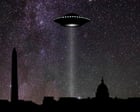
The Archdiocese of Washington abruptly stripped Monsignor Stephen Rossetti of his long-held post as an official exorcist, cutting total institutional ties with his prominent ministry following public assertions that linked unidentified flying objects to demonic manipulation. Cardinal Robert McElroy issued the directive, declaring that the priest's public theories gravely undermine the precise theological framework governing Catholic teachings on evil. While mainstream observers might view this as a fringe bureaucratic squabble over science fiction, the crisis exposes a profound, institutional struggle inside the modern Church. It reveals the escalating friction between ancient theology, the hyper-accelerated culture of social media, and a public increasingly obsessed with the unexplained.
This is not a story about whether space aliens exist. It is a story about institutional control, theological brand management, and the terrifyingly blurry boundaries of modern belief systems. For a different perspective, see: this related article.
The YouTube Litmus Test
Monsignor Rossetti is no backwater eccentric. He is a trained psychologist, a high-profile author, and for nineteen years served as a trusted, frontline spiritual warrior for the nation's capital. His organization, the St. Michael Center for Spiritual Renewal, built a massive digital footprint, amassing over 148,000 followers on Instagram alone.
The trouble began on May 29, when Rossetti published a video to his social channels tackling the cultural obsession with UAPs (Unidentified Anomalous Phenomena). In the video, Rossetti argued that demons are inherently deceptive entities that weaponize human blind spots to manipulate reality. Further analysis on this trend has been provided by NBC News.
"It's my personal belief that probably many if not most of these UFO sightings are in fact demons," Rossetti stated. He noted that these entities possess physical capabilities, such as extreme velocity, that defy human engineering, warning that the phenomenon acts as a psychological cloak for malevolent forces.
The reaction from the chancery was swift and total. Within days, Cardinal McElroy scrubbed Rossetti from the active roster of archdiocesan exorcists and severed all ties with the St. Michael Center. The offending video was instantly set to private. Rossetti issued a swift, somber public apology, bowing to the authority of the Church's Magisterium.
But the damage to the institutional status quo was already done.
Why the Vatican is Terrified of the Unexplained
To understand the severity of McElroy’s crackdown, one must understand how the contemporary Catholic Church handles the supernatural. The Vatican does not dislike the supernatural; it dislikes unmanaged supernaturalism.
The official rite of exorcism is one of the most strictly regulated, thoroughly vetted procedures in global religion. The Church relies heavily on medical doctors, psychiatrists, and neurological experts to rule out mental illness, epilepsy, and psychosis before a bishop ever signs off on a formal deliverance. It is a process designed to be clinical, quiet, and profoundly cautious.
[Alleged Supernatural Event]
       │
       ▼
[Psychiatric Evaluation] ──(Natural Causes)──> [Medical/Psychological Care]
       │
 (No Medical Explanation)
       │
       ▼
[Theological Scrutiny by Bishop]
       │
       ▼
[Authorized Rite of Exorcism]
When a high-profile exorcist bypasses this rigorous framework to hypothesize on social media about global military sightings and airborne phenomena, it threatens to turn a solemn ministry into an internet circus. By tying the precise, dogmatic reality of the demonic to the highly volatile world of UFO subculture, Rossetti fundamentally blurred the lines between ancient theology and contemporary conspiracy theory.
The Church has spent centuries defending its intellectual credibility against accusations of superstition. A prominent priest validating sci-fi anxieties on YouTube destroys decades of carefully curated public relations in a single click.
The Great Dogmatic Dilemma
The irony is that Catholic theology actually leaves significant room for the possibility of extraterrestrial life. High-ranking Vatican astronomers, including leaders at the Vatican Observatory, have long maintained that the existence of intelligent alien life would not contradict Christian doctrine. God’s creative power is not bound by human geography.
However, Rossetti’s error was not asserting that aliens exist. His error was asserting that they do not, while claiming their manifestations are actually a massive, coordinated psychological operation run by the devil.
According to Catholic doctrine, demons are pure intellectual spirits without physical bodies. They can manipulate matter, induce illusions, and exploit human perception, but they do not build titanium hulls or fly physical crafts through commercial airspace. By telling hundreds of thousands of followers that physical military radar anomalies are literal demons, Rossetti strayed from the Thomistic theology that anchors the Church’s understanding of the spiritual world. He traded the rigorous philosophy of Saint Thomas Aquinas for the sensationalism of late-night talk radio.
The Digital Gold Rush for Deliverance
This clash highlights a broader, deeper trend that the hierarchy is struggling to contain. The demand for exorcisms and spiritual deliverance has quietly surged over the last decade.
In a secularized world stripped of traditional community and objective truth, millions of people find themselves adrift, seeking explanations for profound psychological distress and societal chaos. Many find their way to figures like Rossetti, who offer concrete, definitive answers to abstract spiritual anxieties.
Social media has transformed this quiet pastoral ministry into a highly lucrative, immensely influential digital ecosystem. Exorcists have become influencers. They host podcasts, write bestselling memoirs, and accumulate massive followings by detailing terrifying encounters with the dark side.
This digital visibility creates a profound structural headache for bishops. A cardinal cannot easily manage a priest who possesses a direct digital pipeline to hundreds of thousands of faithful followers. When that priest begins dispensing personal geopolitical and astrological theories under the banner of his official archdiocesan appointment, the hierarchy has no choice but to drop the hammer.
The Cost of Compliance
Monsignor Rossetti’s immediate submission to the cardinal's decree reflects the absolute, top-down nature of Catholic ecclesiology. He did not rebel. He did not launch a breakaway ministry or accuse the archbishop of heresy. He asked for forgiveness and promised total obedience.
Yet, the institutional bridge is burned. The St. Michael Center must now seek shelter under a different diocese or operate entirely outside the official architecture of the Washington Archdiocese. The swift, unceremonious ejection of a nineteen-year veteran sends a chilling message to every other cleric operating in the digital space.
The institutional Church is fiercely protective of its boundaries, acutely aware that in a hyper-connected media environment, an unguided remark can spark wildfire heresies overnight. In trying to protect the integrity of its ancient rites from the chaotic gravity of the UFO phenomenon, the Archdiocese of Washington drew a hard line in the sand.
The message is clear. The sky may be filled with unexplained phenomena, but the Church will not allow its ancient demons to fly them.