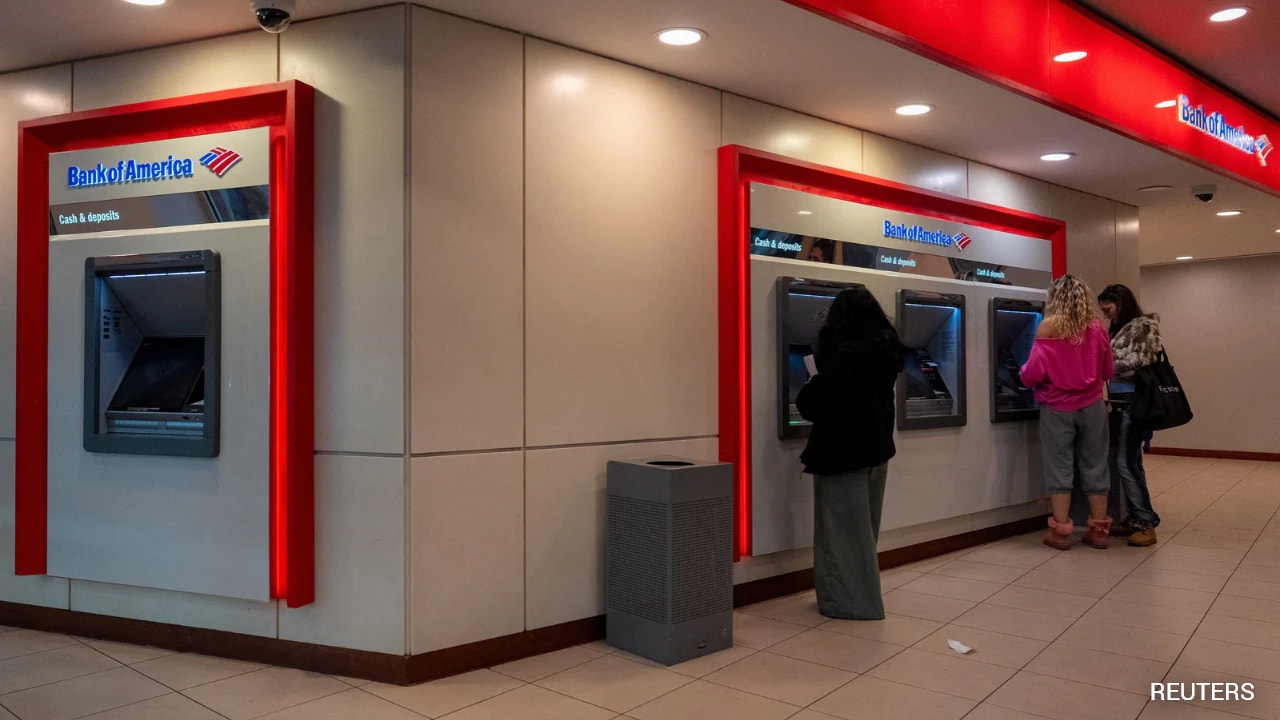
Major US banks including JPMorgan Chase, Bank of America, and Wells Fargo regularly experience payment, deposit, and transfer delays due to a combination of aging core banking infrastructure, mandatory Automated Clearing House (ACH) batch-processing windows, and aggressive fraud-screening algorithms. While financial institutions often blame isolated technical glitches when paychecks vanish or wire transfers stall, the reality is structural. The American banking system still relies heavily on decades-old mainframe architecture layered beneath modern mobile apps, creating chronic bottlenecks whenever transaction volume spikes, clearing house rules collide with holiday schedules, or automated compliance holds freeze funds without human review.
You open your banking app on a Friday morning expecting your direct deposit to cover rent, utilities, and groceries. The screen shows zero. Or worse, it shows a pending balance that refuses to clear while your scheduled auto-pay drafts hit an empty checking account.
This is not a rare anomaly. Over the past several years, millions of customers across JPMorgan Chase, Bank of America, Truist, and U.S. Bank have watched their money evaporate into digital limbo during high-profile outages and quiet, unannounced clearing stalls. Banks issue terse, sanitized statements promising that funds are safe and engineers are working on the issue. They rarely explain why a multi-trillion-dollar financial institution cannot move digits from one ledger to another in real time.
To understand why your money gets stuck, you have to strip away the sleek user interface on your smartphone and look at the plumbing underneath.
The Illusion of Instant Money
Modern fintech apps trained consumers to believe money moves at the speed of a text message. When you tap a button on Venmo, Cash App, or Zelle, the notification arrives in seconds. That speed is mostly a magic trick.
Behind the curtain, the actual settlement of funds between major US banks still crawls along legacy rails built in the 1970s. Most consumer transfers, direct deposits, and bill payments travel through the Automated Clearing House (ACH) network, governed by Nacha and operated by the Federal Reserve and The Clearing House.
ACH does not process transactions individually as they happen. It bundles them into massive electronic files and transmits them in scheduled batches several times a day, Monday through Friday. If an employer's payroll processor misses a cutoff window by three minutes on a Thursday afternoon, your paycheck does not move until Friday morning. If a federal holiday falls on a Monday, the entire pipeline backs up like a jackknifed tractor-trailer on an interstate.
Banks front the cash on peer-to-peer apps based on trust scores and balance histories, absorbing the short-term risk while waiting days for the actual backend settlement to clear. When something breaks in that backend batch process—a corrupted file from a third-party payroll vendor, a rejected routing batch at the Federal Reserve, or a server timeout at a clearing house—the illusion shatters. Your money isn't lost in cyberspace. It is sitting in an unparsed data file waiting for a human operator to manually re-index the batch.
Why Legacy Mainframes Keep Choking
Walk into the data centers of the largest Wall Street retail banks and you will find the beating heart of American finance running on COBOL, a programming language designed in 1959.
Banks keep these IBM mainframes because they are extraordinarily reliable at processing millions of simple arithmetic operations without crashing. Replacing a tier-one bank's core ledger system is the corporate equivalent of performing a heart transplant while the patient runs a marathon. The risk of catastrophic data loss is too high, and the price tag easily runs into the billions.
Instead of rebuilding from scratch, banks bolted modern APIs, mobile interfaces, and cloud-based fraud engines onto the outside of these ancient mainframes. Every time you check your balance or initiate a transfer, a middleware layer has to translate your modern smartphone request into a format a 1970s mainframe understands, wait for the mainframe to process the ledger update, and translate the response back.
During normal traffic, this works well enough. During peak load events—the first of the month, tax refund season, Black Friday, or a Friday payday following a holiday—those translation layers bottleneck. Queues back up. Timeouts trigger. The mobile app displays an error message or fails to reflect a pending deposit, even though the underlying mainframe has not yet processed the incoming batch file.
The Silent Culprit Behind Individual Account Freezes
System-wide outages make the evening news, but individual banking delays happen thousands of times every single day without triggering a single press release. Ask any branch manager off the record what causes the most customer fury, and they won't point to server crashes. They will point to automated compliance and fraud algorithms.
Federal anti-money laundering statutes, specifically the Bank Secrecy Act (BSA), impose crushing financial penalties on banks that fail to catch illicit cash flows. To protect themselves from regulators, JPMorgan Chase, Bank of America, and their peers deployed hyper-aggressive machine learning models to monitor every incoming and outgoing dollar.
These systems do not care about context. They look for statistical anomalies.
Consider a hypothetical example to see how easily a legitimate customer gets trapped. Suppose a freelance graphic designer normally receives $3,500 a month in small ACH transfers. Suddenly, she lands a major corporate contract and deposits a legitimate $18,000 paper check via mobile capture, or receives an incoming wire from a new commercial client. To the bank's risk engine, that transaction screams potential check kiting, account takeover, or money laundering.
The algorithm immediately slaps an automated hold on the funds. No human looked at the check. No investigator verified the client. The system simply quarantined the money for seven to ten business days while placing the ticket into an understaffed back-office review queue.
When the customer calls the support line, the front-line representative cannot override the hold. Federal banking regulations and internal risk controls wall off fraud-review departments from customer service agents. The agent reads from a script, cites "standard verification procedures," and tells the customer to wait.
Check Clearing Rules Are Weaponized Against Consumers
Under Regulation CC, the Federal Reserve rule implementing the Expedited Funds Availability Act, banks are required to make deposited funds available within specific timeframes—usually the next business day for local checks and electronic transfers, or up to two to five business days for larger amounts.
However, Regulation CC contains broad "exception hold" loopholes. Banks can legally delay your funds for up to seven business days or longer if:
- Your account has been open for less than 30 days.
- You deposit checks totaling more than $5,525 in a single day.
- You have repeatedly overdrawn your account within the past six months.
- The bank has "reasonable cause to doubt collectibility" of the check.
That last clause is a blank check for the bank. "Reasonable cause" is entirely subjective. If a bank's automated imaging software detects a slight smudge on a mobile check endorsement, or if the issuing bank's routing database experiences a momentary verification lag, the receiving bank invokes an exception hold.
Because major banks earn interest on the float—the billions of dollars sitting in limbo between deposit and clearance—they have zero financial incentive to accelerate exception reviews. Every extra day your money sits in a suspense account earns yield for the institution at overnight federal funds rates.
The Real-Time Payments Mirage
For years, banking executives promised that FedNow—the Federal Reserve's instant payment service launched in 2023—and the private RTP (Real-Time Payments) network operated by The Clearing House would eliminate banking delays forever.
The technology works. Both networks settle funds irrevocably in seconds, 24 hours a day, 365 days a year.
Yet years after launch, the vast majority of American consumers still wait days for routine transfers and paychecks. Why? Because adoption remains fragmented and asymmetric.
First, sending an instant payment via FedNow or RTP requires both the sending bank and the receiving bank to be fully integrated on the same rail, and the sender's payroll or accounting software must explicitly choose to pay the higher transaction fee for instant settlement rather than defaulting to cheap, batched ACH. Most corporate payroll providers still use standard ACH because sending an ACH file costs fractions of a cent per employee.
Second, many megabanks enabled instant receiving long before they enabled unrestricted instant sending for retail customers. Letting money flow in instantly poses zero risk to the bank. Letting customers push thousands of dollars out instantly with zero recall mechanism terrifies bank fraud departments. Once an RTP or FedNow payment leaves your account, it cannot be reversed like an ACH debit or a credit card charge. If a scammer tricks an elderly customer into sending an instant wire, the money is gone forever, and the bank faces regulatory pressure and reputational damage.
As a result, major banks throttle instant transfers with tight daily dollar caps, mandatory cooling-off periods for new recipients, and friction-heavy multi-factor authentication checks that frequently fail and trigger—you guessed it—another 48-hour security delay.
Third-Party Middleware Is a Single Point of Failure
When Chase or Bank of America experiences a sudden deposit delay, the bank's own servers aren't always the ones broken. Modern banking relies on a tangled web of third-party vendors, data aggregators, and payment processors.
Your employer uses ADP, Workday, or Gusto. Those platforms route payroll files through regional clearing banks before they ever touch JPMorgan Chase. Your brokerage account uses Plaid, Yodlee, or Finicity to verify your checking balance before initiating an ACH pull.
If a data aggregator's API rate-limits requests, or if a regional clearing partner experiences a certificate expiration on a Sunday night, the downstream megabank receives nothing. When customers flood social media complaining that Chase lost their paycheck, Chase's internal network status dashboard often shows all green lights—because from Chase's perspective, the file never arrived.
This finger-pointing creates an accountability vacuum. The employer blames the payroll processor. The payroll processor blames the clearing house. The bank blames the originator. Meanwhile, the consumer absorbs the late fees, bounced check charges, and overdraft penalties.
What Happens to Your Fees During a Bank-Caused Delay
Officially, major US banks claim they automatically waive overdraft fees and reimburse late charges caused by their own system outages. In practice, that protection is full of holes.
If a bank's public system crashes and delays direct deposits for two million customers, the institution will usually run a batch script a week later to reverse internal overdraft fees incurred during the outage window.
They will not, however, automatically call your mortgage servicer, your auto lender, or your landlord to explain why your automated payment bounced. Nor will they automatically refund a late fee charged by an external credit card issuer unless you spend hours on the phone gathering documentation, filing a formal dispute, and proving that the external fee resulted directly from the bank's internal processing failure.
Furthermore, if your delay stems from an individual fraud hold rather than a publicized system outage, the bank treats your frozen balance as a standard compliance matter. Any scheduled payments that bounce while your funds are under review will trigger standard returned-item penalties unless you manually intervene and argue your case with a supervisor.
How to Bulletproof Your Cash Flow Against Banking Bottlenecks
You cannot force JPMorgan Chase to rewrite its COBOL mainframes, and you cannot override Federal Reserve clearing schedules. You can, however, stop treating a single megabank checking account as a single point of failure for your entire financial life.
Split your direct deposit across two unrelated institutions. Ask your payroll department to route 80% of your paycheck to your primary bank and 20%—or a fixed emergency buffer—to a completely separate bank or credit union that runs on a different core processor. If your primary bank's ACH ingestion engine chokes on a Friday morning, your secondary account will still clear your rent or grocery money on schedule.
Never schedule auto-pay drafts on the exact day your paycheck hits. Payroll ACH batches clear at different times depending on the bank's internal posting schedule—sometimes at 2:00 AM, sometimes at 9:00 AM, and occasionally at 5:00 PM if a batch gets delayed. Set all recurring bills, mortgages, and credit card auto-pays to draft at least three business days after your nominal payday.
Use wire transfers or RTP for time-critical, high-dollar moves. If you are closing on a house, paying a contractor, or moving money that absolutely must settle the same day, do not rely on standard ACH transfers initiated through a brokerage or mobile app. Initiate a domestic Fedwire before the bank's afternoon cutoff—usually 4:00 PM or 5:00 PM Eastern Time—and verify the receiving institution's incoming wire instructions by phone beforehand to prevent compliance-name-mismatch holds.
Keep a physical cash reserve and a high-limit credit card offline. Digital banking infrastructure is fragile. Keeping enough physical cash in a home safe to cover a week of fuel and groceries, alongside a credit card from a different issuer than your primary checking bank, ensures a weekend server crash never leaves you stranded at a checkout counter.
Document everything the moment a delay occurs. Take timestamped screenshots of your pending balance, your employer's pay stub showing the funds were released, and any error messages inside the app. If a delay triggers external late fees or damages your credit profile, written proof of the bank's processing failure is the only leverage that forces a supervisor to issue a manual fee reimbursement or file a formal Consumer Financial Protection Bureau (CFPB) complaint response.
The sleek apps on your phone make banking look effortless, modern, and instantaneous. Trusting that illusion with zero margin for error is how ordinary people end up locked out of their own money when the 50-year-old machinery underneath finally grinds to a halt.