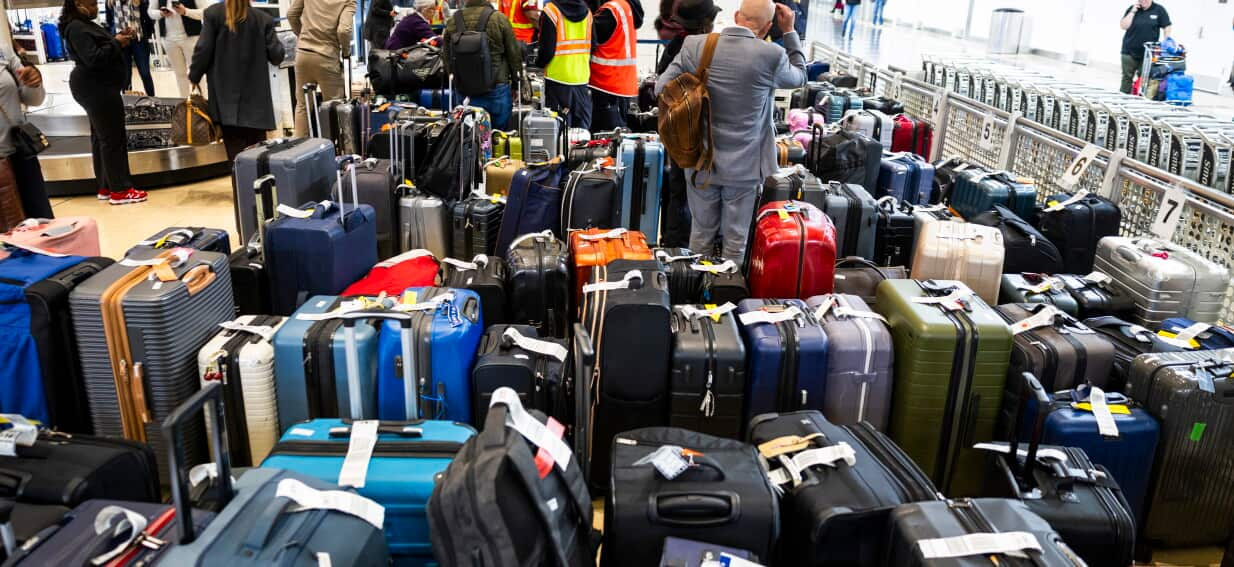
When the Federal Aviation Administration halts departures across the United States due to an air traffic control failure, flights eventually resume, but the underlying systemic decay remains untouched. Travelers see delayed boards and crowded terminals. Airlines see millions of dollars evaporating by the hour. Yet the true culprit behind these nationwide ground stops is not a single software glitch or an isolated staffing shortage—it is decades of Congressional funding gridlock, aging radar infrastructure, and an air traffic control system operating dangerously close to its breaking point.
Aviation runs on thin margins and tighter schedules. When a critical communications line severs, a flight-data computer crashes, or an understaffed regional radar facility hits a mandatory safety threshold, the entire domestic network locks up like an engine without oil. The FAA issues a ground stop. Planes sit on tarmacs. Crews time out under strict federal duty limits. By the time the agency gives the green light to resume operations, the domino effect has already ruined travel plans for hundreds of thousands of passengers and cost carriers tens of millions in lost revenue, overtime, and rebooking logistics.
To understand why a localized air traffic problem triggers coast-to-coast paralysis, you have to look beneath the sleek terminals and modern cockpits to the Cold War-era plumbing running the National Airspace System.
The Illusion of a Quick Recovery
The press releases always sound reassuring. Technicians identify the fault, backup servers kick in, and the FAA lifts the ground stop within a few hours. To the casual observer, the system worked. Safety held, nobody got hurt, and planes are back in the air.
That narrative is pure fiction.
In commercial aviation, a two-hour halt does not produce a two-hour delay. It triggers a multi-day operational hangover. Aircraft are out of position. Maintenance schedules—which are legally binding down to the exact flight hour—suddenly fall out of sync because a jet meant for a hub in Dallas is stuck on a taxiway in Newark. Flight attendants and pilots hit their federally mandated rest caps while sitting idle at the gate, forcing airlines to cancel flights even after the skies clear because there is nobody legally allowed to fly the plane.
Consider a hypothetical scenario involving a single afternoon outage at a major En Route Center on the East Coast. Even if engineers restore full radar and radio capability by 4:00 PM, the evening bank of international and transcontinental departures is already compromised. Planes incoming from Europe cannot land on time, miss their gates, and delay their return legs. Regional feeders connecting small cities to major hubs get scrubbed entirely so airlines can prioritize widebody jets carrying three hundred passengers. By the next morning, the ripple effect hits the West Coast, leaving travelers in Seattle stranded because of a computer hiccup in Virginia eighteen hours earlier.
The system does not bounce back. It limps forward until the weekend lull allows airlines to reset their networks.
Copper Wires and Floppy Disks in the Jet Age
Most passengers assume air traffic controllers sit in front of futuristic screens powered by ultra-modern cloud computing. While facilities have seen incremental upgrades over the years, vast stretches of the FAA’s technical backbone rely on legacy hardware that would belong in a museum if it weren't actively keeping Boeing 737s from colliding.
For years, the agency’s Inspector General and the Government Accountability Office have issued blunt warnings about the state of FAA facilities. Many Air Route Traffic Control Centers—the massive regional hubs that guide high-altitude traffic between cities—were built in the 1960s. Their roofs leak. Their heating and cooling systems fail, threatening sensitive server racks. Worse, the telecommunications networks linking radar sites to control rooms still depend heavily on leased copper lines and outdated Time-Division Multiplexing technology that telecom providers are actively trying to decommission.
When one of those aging switches fails, or a backhoe accidentally slices through a poorly mapped fiber bundle lacking true physical redundancy, controllers lose radar feeds or voice communications with pilots. At that exact second, safety protocols demand immediate action. Controllers cannot guess where airplanes are moving at five hundred miles per hour. They stop accepting new traffic into their sector, forcing neighboring facilities to absorb the overflow until the entire region chokes.
The FAA has spent billions on NextGen, its multi-decade initiative to transition from ground-based radar to satellite-based navigation. While NextGen has delivered real benefits—allowing planes to fly more direct routes and burn less fuel—the foundational infrastructure supporting it remains brittle. Upgrading the software means very little if the underlying power grid, backup generators, and data conduits remain vulnerable to single-point failures.
The NOTAM Wake-Up Call That Everyone Ignored
We have seen this movie before. In January 2023, the FAA grounded every departing flight across the United States for the first time since September 11, 2001. The culprit was a corrupted database file in the Notice to Air Missions (NOTAM) system—an archaic text-based alert network that warns pilots of closed runways, broken airfield lights, and temporary flight restrictions.
Investigators later revealed that a contractor had unintentionally deleted files while working to synchronize a primary database with a backup. Because the architecture lacked modern safeguards, the corruption replicated across the system, taking down both the primary and secondary servers.
Lawmakers expressed outrage. Hearings were held. Promises of modernization echoed through Capitol Hill. Yet the structural vulnerability persisted because fixing core aviation infrastructure is expensive, unglamorous, and spans multiple election cycles. Politicians love cutting ribbons on new airport terminals; they rarely campaign on replacing uninterruptible power supplies in windowless radar bunkers.
The Human Bottleneck Nobody Can Automate
Technology is only half the equation. Even if the FAA replaced every line of legacy code tomorrow, the National Airspace System would still face a severe, self-inflicted staffing crisis.
Air traffic control is one of the highest-stress professions in the world, and the pipeline to replace retiring veterans is badly broken. The FAA currently operates with roughly three thousand fewer fully certified controllers than its own internal staffing targets require. At critical facilities like the New York Terminal Radar Approach Control (TRACON)—which manages some of the most complex, congested airspace on earth—staffing levels have hovered dangerously below 60 percent of target capacity.
To keep planes moving, the FAA relies on mandatory overtime. Thousands of controllers work six-day weeks, ten hours a day, month after month. Exhaustion is baked into the schedule.
When a facility is already running on a skeleton crew, there is zero margin for error. If two controllers call in sick, or a thunderstorm forces aircraft to deviate around weather cells—dramatically increasing the workload per controller—the facility cannot safely handle normal traffic volume. Supervisors have no choice but to slow arrivals and departures, triggering cascading delays across the country.
Training a new controller takes years, not months. Candidates must pass rigorous medical and psychological screenings, complete months of instruction at the FAA Academy in Oklahoma City, and then spend two to three years training on the floor of a specific facility before earning full certification. Nearly half of all trainees wash out before reaching the finish line. You cannot rush that process without compromising safety, which means the staffing deficit will haunt US aviation well into the next decade.
Why Washington Keeps Dropping the Ball
If the problems are well-documented and the economic damage of every outage runs into the hundreds of millions, why hasn't the federal government fixed it?
The answer lies in how the FAA is funded. Unlike virtually every other major developed nation—including Canada, the United Kingdom, and Germany, which transitioned their air navigation services into independent, user-fee-funded corporations—the United States keeps air traffic control tethered to the federal appropriations process.
Every year, the FAA must beg Congress for budget authority. When lawmakers fight over unrelated political priorities, pass short-term continuing resolutions, or threaten government shutdowns, the FAA’s long-term capital projects grind to a halt.
During government shutdowns, academy training stops. Hiring freezes. Maintenance upgrades get deferred. Even when funding flows, the annual appropriations model makes it nearly impossible for the agency to execute multi-year tech procurement contracts efficiently. By the time the FAA navigates federal acquisition rules to buy new hardware, the technology is already halfway to obsolescence.
Airlines and industry groups have repeatedly debated spinning off air traffic control into a non-profit, private-sector corporation funded directly by aviation taxes and user fees. Proponents argue this would insulate critical infrastructure from political dysfunction and allow rapid technological modernization. Opponents—including general aviation lobbies representing private pilots and smaller regional airports—fight the idea fiercely, fearing commercial airlines would dominate the board and saddle private aircraft owners with steep fees.
Caught in the middle of that lobbying trench warfare, the status quo wins by default. And the public pays the price every time a screen goes dark in a control tower.
The Real Cost of Systemic Complacency
Every time flights resume after an air traffic failure, the news cycle moves on within twenty-four hours. Cable news panels stop talking about radar frequencies and go back to politics. Airlines tally their losses, quietly adjust ticket prices to recoup the damage, and brace for the next disruption.
Meanwhile, the safety net grows thinner.
The professionals working the scopes—the controllers working six-day weeks, the technicians patching decades-old equipment with scavenged parts—perform miracles daily to keep commercial aviation the safest mode of transportation in human history. Their dedication masks the rot beneath them. When a breakdown occurs, they default to the most conservative safety posture possible: stop everything, clear the skies, and protect human life at all costs.
That commitment to safety is commendable, even heroic. It is also unsustainable as a long-term operational strategy. You cannot run the world's busiest, most complex aviation network on emergency stops, mandatory overtime, and aging copper wires forever. Until Congress decouples critical aviation infrastructure from political brinkmanship and funds a genuine top-to-bottom overhaul of both hardware and hiring, the question is never if the next nationwide ground stop will happen—only which Tuesday afternoon it will ruin.



