Coverage of the war in Ukraine often reads like a stock market ticker, chasing daily headlines and breaking alerts while missing the structural mechanics driving the conflict. Live updates matter when air raid sirens wail or a border crossing closes. Yet relying solely on minute-by-minute dispatches obscures how artillery production schedules, electronic warfare frequencies, and depleted manpower pools actually dictate who holds ground. To understand where the war in Ukraine stands, readers need to look past the immediate flashpoints and examine the industrial, logistical, and political pressures grinding both sides down.
Live reporting excels at speed. It struggles with depth. When an outlet publishes a rolling feed of strikes, statements, and troop movements, each event is framed as a standalone shock rather than a symptom of a broader constraint. Over years of covering modern warfare, one pattern stands out above all others: tactical maneuvers rarely succeed for long if the supply chain behind them is brittle. A drone strike on a refinery three hundred miles behind the line does more to shape the battlefield over six months than a skirmish over a tree line does in six days.
Why Live Feeds Miss the Real Battlefield Math
Modern conflict in Eastern Europe runs on attrition and math. Every shell fired, every interceptor launched, and every armored vehicle lost enters an accounting ledger that neither side can ignore indefinitely.
When a live blog reports a drone interception or a localized advance, the audience gets a snapshot without the denominator. Intercepting a cheap long-range drone with an expensive surface-to-air missile is a tactical success and an economic headache. Firing thousands of artillery rounds per day requires manufacturing capacity, propellant powders, and barrel replacements that take years to scale.
Live updates tell you what happened in the last hour. Logistics and industrial output tell you what can happen next year.
Consider how attritional warfare alters military doctrine. In a fast-moving maneuver war, speed and surprise carry outsized weight. In a war of position fortified by dense minefields, trenches, and constant overhead surveillance, mass and sustainability often outweigh cleverness. A unit that can sustain steady resupply of ammunition, spare parts, and fresh rotations outlasts a unit that flashes brilliance once and runs dry.
Readers who track the war in Ukraine through rolling updates often swing wildly between euphoria and despair. A bold cross-border raid or a major sanctions package sparks optimism. A setback along an eastern sector triggers panic. Neither reaction matches the slower, grimmer reality on the ground, where progress is measured in meters and industrial bottlenecks rather than dramatic breakthroughs.
The Fog of Rolling Coverage
Rolling coverage creates its own distortions. Reporters and aggregators face relentless pressure to post something new every few minutes, even when verified facts are scarce or militarily minor.
Rumors travel faster than confirmation. Official statements from capitals and defense ministries are carefully curated to shape morale, rally allies, or rattle adversaries. Treating every claim in a live feed as settled fact turns readers into spectators of information operations rather than informed observers.
There is also a structural bias toward the visible and the loud. A dramatic missile impact in a major city draws immediate cameras and urgent alerts. Quiet diplomatic friction over export licenses, unglamorous maintenance delays on donated equipment, or demographic strain in recruitment offices rarely trends on social media, yet those factors quietly set the ceiling on what any army can achieve.
The Industrial Bottlenecks Behind Every Frontline Shift
Strip away the rhetoric and look at the factories. Whoever solves the munitions bottleneck most reliably shapes the tempo of operations.
Modern artillery and air defense consume hardware at rates that caught Western defense planners off guard. Peacetime procurement models were built for small, specialized forces and predictable orders, not sustained high-intensity consumption across a thousand-kilometer front. Expanding production lines for explosives, nitrocellulose, precision guidance kits, and airframes requires capital investment, safety certifications, and skilled labor that cannot be conjured overnight.
At the same time, defense industrial mobilization looks very different across states with different political systems. A centralized state economy can redirect factory floor space and compel overtime through decree, though it still faces sanctions, component shortages, and quality control issues. Market-based democracies rely on contracts, multi-year guarantees, and private shareholder risk tolerance, which can move slowly at first but often produce higher technological sophistication once capital is committed.
- Artillery and missiles dictate fire superiority and force defenders into deeper cover or force attackers to slow down.
- Air defense interceptors protect cities, power grids, and rear logistics hubs from saturation attacks.
- Electronic warfare systems jam navigation and communications links, turning expensive precision weapons into blunt instruments or forcing constant software and hardware adaptations.
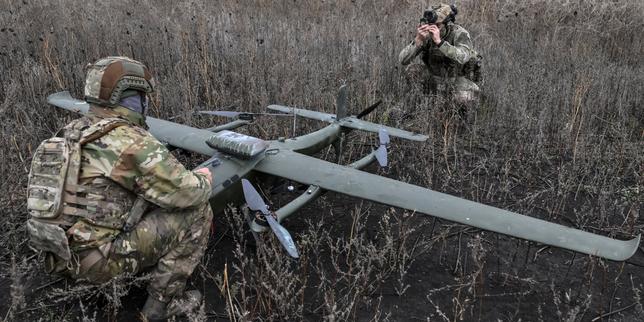
- Unmanned aerial vehicles provide continuous reconnaissance and low-cost strike options, shrinking the space where troops and vehicles can hide.
None of these tools is a silver bullet. Every offense-defense pairing triggers a rapid cycle of adaptation. A drone frequency gets jammed, so operators switch frequencies or shift to fiber-optic guidance. A new air defense layer goes up, so attackers alter flight altitudes, route profiles, or swarm timings. The war is a continuous engineering race played out under lethal conditions.
Energy Infrastructure as a Strategic Target
Targeting power grids and fuel facilities is not new in warfare, but its role in the war in Ukraine highlights how modern societies depend on interconnected networks. Electrical substations, transformers, and generation plants are hard to harden completely and take months to repair or replace.
Strikes on energy infrastructure serve two linked purposes. Militarily, power outages complicate rail logistics, communications, and industrial workshops. Politically and socially, winter blackouts and heating disruptions test civilian endurance and pressure governments to divert air defenses away from frontline units toward urban centers.
Defending vast energy grids is an asymmetric problem. Attackers can pick where to concentrate salvos along a sprawling network, while defenders must spread scarce interceptors across dozens of critical nodes. Even when air defenses stop a high percentage of incoming threats, a handful of penetrating strikes can knock out key equipment and strain repair crews working in freezing conditions.
Manpower, Morale, and the Limits of Endurance
Machines do not operate themselves. Behind every radar station, howitzer crew, and infantry squad stands a human being dealing with fatigue, fear, and separation from family.
Manpower sustainability is one of the hardest variables to track from afar because both sides guard casualty figures and recruitment numbers closely. Still, the pressures are visible in policy shifts, mobilization debates, rotation intervals, and training timelines. When experienced soldiers are killed or wounded faster than equally skilled replacements can be trained, unit cohesion erodes.
Training creates a painful trade-off. Rush recruits to the front too quickly, and survival rates drop while tactical mistakes multiply. Keep them in training too long, and units at the front remain understrength and exhausted. Commanders constantly walk that razor's edge, trying to balance immediate defensive needs against long-term force preservation.
| Pressure Point | Why It Matters | What Observers Often Miss |
|---|---|---|
| Ammunition supply | Governs how often units can suppress enemy fire or support an attack | Stockpile numbers alone hide caliber mismatches and aging propellants |
| Force rotation | Determines combat readiness, injury recovery, and unit morale | Paper headcount often includes personnel who are wounded, in transit, or unfit for assault |
| Air defense coverage | Protects cities, logistics hubs, and forward airbases | Interceptor reloads and radar coverage gaps matter more than headline system counts |
| Economic endurance | Funds wages, pensions, imports, and domestic production | Inflation, labor shortages, and currency controls accumulate slowly before biting hard |
Morale is equally complex. Determination to defend one's home or fulfill a national mission can sustain soldiers through extraordinary hardship. Yet prolonged exposure to constant danger, rotation delays, and uneven leadership takes a toll over years. No army has endless reserves of patience or stamina.
The Myth of Quick Decisive Blows
For much of the conflict, public debate has swung between expectations of a sudden collapse on one side and a sweeping breakthrough on the other. History offers a sobering corrective. Wars of industrial attrition rarely end with a neat cinematic stroke unless one side's internal cohesion or supply system gives way completely.
More often, pressure builds incrementally until a breaking point appears. That breaking point might be financial, political, logistical, or military, and it may arrive in a place few predicted. Recognizing that slow accumulation of stress is essential for anyone trying to make sense of daily developments.
Diplomacy, Sanctions, and External Leverage
No major war exists in a vacuum. Sanctions regimes, export controls, diplomatic backchannels, and alliance politics shape the war in Ukraine just as surely as terrain and weather.
Sanctions are frequently judged by a flawed standard: whether they immediately stop military operations. In practice, economic restrictions work more like friction than a brick wall. They raise transaction costs, force rerouting through third countries, complicate payments, and degrade access to advanced components. Over time, that friction adds up, even when smuggling networks and alternative trade partners blunt the initial shock.
Sanctions rarely produce instant collapse; they widen margins, slow adaptation, and force costly workarounds.
Allied support faces its own political gravity. Domestic budgets, election cycles, competing global crises, and differing threat perceptions among partner nations all influence how quickly aid is approved and delivered. A pledge made at a summit is not the same as equipment arriving on the ground with spare parts, manuals, and trained crews.
Meanwhile, diplomatic maneuvering continues beneath and alongside the fighting. Negotiating positions are shaped by battlefield leverage, domestic political survival, and distrust born of broken commitments. Outsiders often demand simple explanations for why talks stall or drag on, overlooking how deeply security guarantees, territorial control, and post-war stability are entangled.
What Serious Readers Should Watch Next
To cut through the noise of live updates, focus on indicators that reveal trajectory rather than momentary drama. Watch industrial output announcements alongside actual delivery timelines. Pay attention to how governments manage budgets, inflation, and labor shortages at home. Look closely at training pipelines, air defense replenishment, and shifts in how commanders use drones and electronic warfare.
Above all, resist the urge to reduce a sprawling, multi-layered conflict to a single daily headline. Live news tells you what just happened. Patient analysis shows you why it happened—and how much weight it can truly bear.


