NATO Secretary General Mark Rutte’s push for an energy ceasefire in Ukraine looks like a humanitarian lifeline on paper. In reality, it is a diplomatic band-aid stretched across a geopolitical fault line that has already snapped.
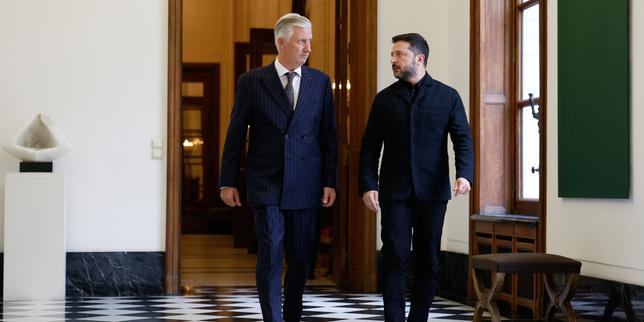
When Rutte met Ukrainian President Volodymyr Zelenskyy in Brussels on October 15, 2026, he stressed the urgency of halting strikes on energy infrastructure while keeping Allied weapons flowing through the PURL mechanism. Sounds reasonable enough. Yet the timing and political mechanics behind that push tell a much messier story. Just days earlier, on October 11, U.S. President Donald Trump had declared on social media that Russia and Ukraine had agreed to an immediate energy ceasefire—a claim Zelenskyy told Axios was "news" to him, coming right after Russian strikes hit a power plant in Kharkiv and just days after Washington unveiled a controversial deal to pull Russian diesel onto global markets. Also making news in related news: Why Staying Indoors in Saudi Arabia Is Harder Than It Sounds Right Now.
By mid-November, the truce had effectively collapsed under the weight of drone swarms, Strait of Hormuz shipping chokepoints, and hard-nosed domestic politics. Calling this a simple diplomatic setback misses the point. An energy ceasefire in a war of attrition is not peace; it is a selective freeze on two rival economic engines.
Why an Energy Truce Collides With Battlefield Math
For more than four years, energy infrastructure has served as both weapon and target in Russia's full-scale invasion of Ukraine. Moscow has systematically pounded Ukrainian substations, power plants, and heating grids to break civilian morale and strain industrial output ahead of winter. Kyiv, denied the massive air-defense stockpiles it desperately needs to intercept every ballistic missile and drone, struck back where Moscow hurts most: oil refineries, fuel depots, and logistics hubs deep inside Russian territory. Further insights regarding the matter are covered by The Washington Post.
On paper, a mutual pause looks symmetrical. Stop hitting our grid, and we will stop hitting your refineries.
In practice, the two sides do not value those targets equally. For Ukraine, grid protection is about keeping hospitals lit, water pumps running, and factories operating through sub-zero months. For Russia, refinery output is not merely a domestic convenience; it is export revenue, military fuel supply, and leverage in global commodity markets.
When a ceasefire suspends strikes on energy assets, it alters the cost-benefit calculus of the entire conflict. A pause in Ukrainian drone attacks gives Russian engineers breathing room to repair damaged distillation units and resume refined fuel exports. Look at what happened in October: data from analytics firm Kpler showed Russian diesel exports more than doubled to 271,000 barrels per day in October from 135,000 in September, aided by eased U.S. sanctions pressure and a temporary lull in strikes on refineries.
Then came November. Rather than holding, the truce unraveled in a wave of escalated strikes. Ukraine launched massive overnight drone attacks that hit major infrastructure and oil refineries across regions including Ryazan, Yaroslavl, Kirishi, and the Volga area. Estimates reported by MarineLink indicate that near-daily drone strikes over a 20-day stretch in late October and November slashed Russian crude processing volumes from over 700,000 metric tons per day down to roughly 400,000 metric tons per day, affecting roughly 54 percent of Russia's estimated 930,000-ton daily primary refining capacity.
A ceasefire that pauses refinery strikes without halting missile barrages on civilian power grids asks one side to surrender its most cost-effective asymmetric lever while still absorbing winter punishment.
That asymmetry explains why Kyiv has repeatedly treated energy truce talk with guarded skepticism. Zelenskyy has stated he is willing to halt attacks on Russian energy targets if Moscow stops hitting Ukrainian energy infrastructure. Yet without strict verification, enforcement teeth, and parallel limits on long-range strike systems, a pledge on paper is easily broken in the dark.
The Diesel Deal and the Strait of Hormuz Illusion
You cannot understand Rutte's push in Brussels without looking west toward Washington's pump prices.
Since the U.S. and Israel went to war with Iran in February 2026, shipping disruptions around the Strait of Hormuz—a chokepoint that carried roughly a fifth of the world's oil prior to the conflict—have sent global fuel costs surging. Average U.S. diesel prices climbed from around $3.67 a gallon a year earlier to peaks above $6.50 a gallon in September, squeezing truckers, farmers, and households ahead of the November midterm elections.
In early October, the Trump administration moved aggressively to ease that pressure by striking an agreement with Moscow to bring millions of tons of Russian diesel to global and U.S. markets, while pressing Kyiv to stop hitting Russian refineries. The pitch was straightforward: get Russian fuel flowing again, calm energy markets, and shield American voters from sticker shock.
The economics never matched the sales pitch.
First, shipping fuel across oceans is not flipping a light switch. Even as Russia boosted overall diesel exports to buyers such as Brazil and Türkiye, reporting from the Financial Times and The Independent noted that no cargo under the U.S.-Russian diesel arrangement had reached American ports by mid-November, with tankers diverted or left waiting without eager U.S. buyers amid political backlash and sanctions complexity.
Second, Ukraine's refinery drones were never the primary driver of the global diesel crunch. Energy economists pointed out that the Hormuz crisis was far larger than localized refinery outages in Russia. Blaming Kyiv for high diesel prices made for sharp election-season rhetoric, yet it misdiagnosed the market's main bottleneck.
Third, easing pressure on Russian fuel exports risked undermining years of Western sanctions intended to starve Moscow's war chest. European officials watched the maneuver with alarm, worried that bilateral energy bargaining between Washington and Moscow would sideline European security interests and hand the Kremlin fresh cash without securing durable concessions in Ukraine.
Consider a hypothetical example to see how quickly incentives warp under such a deal. Suppose Country A promises to halt drone strikes on Country B's export terminals in exchange for a diplomatic pledge that Country B will spare Country A's power substations. If Country B keeps firing cruise missiles at substations under the cover of "technical malfunctions" or "non-energy military targets," while Country A honors the terminal ban to keep a major ally happy, the truce becomes a unilateral concession. That gap between diplomatic theater and battlefield reality is exactly where fragile ceasefires go to die.
NATO's Tightrope Between Deterrence and De-escalation
Mark Rutte's role as NATO Secretary General puts him squarely in the middle of this squeeze.
NATO is not a single decision-maker with one voice; it is an alliance of 32 nations balancing divergent threat perceptions. Frontline states like Estonia, Latvia, and Lithuania watch Russian military movements closely, while larger European capitals debate winter aid, air-defense transfers, and their seat at any negotiating table. Meanwhile, Washington's shifting posture—oscillating between pushing ceasefires, criticizing Ukrainian strikes, and debating peace terms—has forced Brussels to work overtime just to keep Allied support predictable.
When Rutte talks about an energy ceasefire alongside continued Allied weapons deliveries, he is trying to square two competing imperatives.
| Strategic Factor | Proponents of an Energy Ceasefire | Skeptics in Kyiv and Allied Capitals |
|---|---|---|
| Civilian Winter Survival | Aims to spare Ukrainian power plants and heating grids from strikes. | Doubts Moscow will honor grid restraint without broader coercion. |
| Global Fuel Markets | Hopes to stabilize diesel supply and cool energy price spikes. | Argues Hormuz disruptions drive global prices far more than refinery strikes. |
| Russian War Economy | Seeks to reduce escalation and create space for broader talks. | Warns pauses let Russia repair refineries and boost export revenues. |
| Alliance Cohesion | Bridges U.S. pressure for de-escalation with European support for Kyiv. | Fears ad-hoc deals bypass European security guarantees and weaken leverage. |
There is a real humanitarian case for protecting power grids. Nobody who has walked through a darkened apartment block in Kyiv or Kharkiv during a winter freeze dismisses the value of keeping the lights on.
Still, hope is not a verification mechanism. A ceasefire on energy targets only holds if both sides believe cheating costs more than complying. Right now, Moscow has shown little appetite for verifiable restraint, and Washington's attempts to manufacture quick diplomatic breakthroughs on social media have outrun actual agreement on the ground.
What Reality Demands From Allies Right Now
If NATO and its partners want an energy ceasefire that survives more than a news cycle, they have to stop treating it as a standalone talking point.
First, tie any energy truce to strict monitoring and immediate air-defense reinforcement. Ukraine cannot trade away its ability to strike Russian oil infrastructure unless it has credible protection over its own cities and substations—and clear consequences when Russian missiles hit power facilities.
Second, separate domestic fuel politics from European security strategy. Chasing quick diesel fixes through ad-hoc deals with Moscow has yielded messy diplomatic friction and unfulfilled shipping promises, while leaving core supply shocks untouched.
Third, keep European allies anchored in the negotiation loop. Peace terms or partial truces negotiated over the heads of Europeans—or announced before combatants even agree to the text—only breed distrust at the exact moment unity matters most.
Diplomats love the neatness of an energy ceasefire because it sounds humane, pragmatic, and achievable. Until the incentives on the ground actually change, though, every announcement of one will remain a hostage to the next drone launch and the next winter night.

