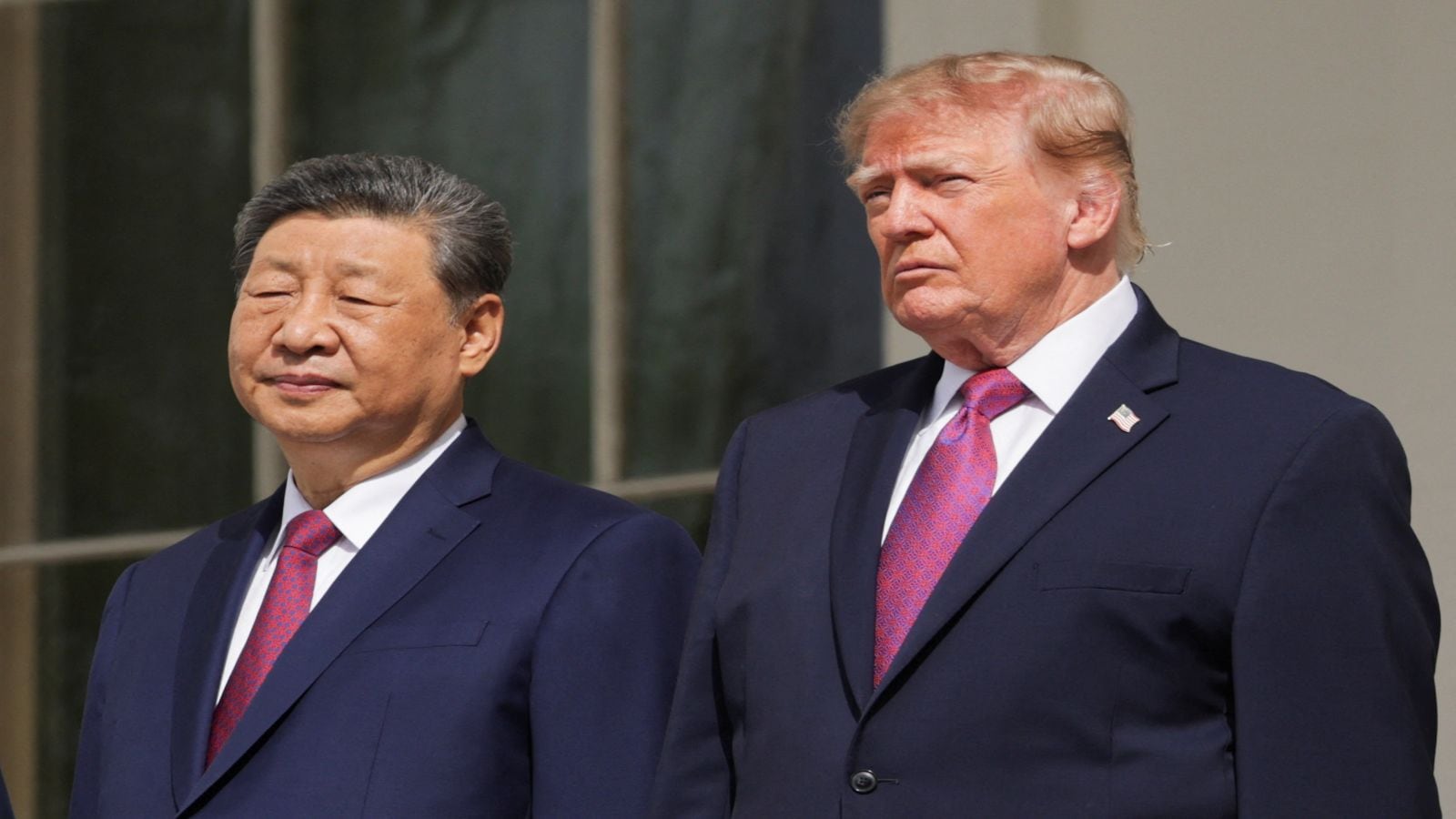
When Xi Jinping’s Boeing 747 touches down at Joint Base Andrews, the diplomatic choreography is always immaculate. Handshakes are measured to the second, motorcades glide down Pennsylvania Avenue, and press secretaries distribute carefully vetted talking points about mutual respect and constructive dialogue. Beneath the pageantry of the newly announced two-month US-China trade truce, however, lies a far more calculated reality. Washington and Beijing have not suddenly resolved their structural economic rivalry. Instead, both governments have purchased sixty days of strategic breathing room to manage domestic financial pressures, recalibrate supply chains, and prepare for the next phase of economic brinkmanship.
A tariff pause is not a peace treaty. To understand why the White House agreed to suspend scheduled duty escalations just as the Chinese president arrived in the capital, you have to look past the diplomatic communiqués and examine the balance sheets of American importers, the export bottlenecks in Guangdong, and the brutal arithmetic of global bond markets.
The Anatomy of a Sixty-Day Ceasefire
In trade diplomacy, timelines tell the real story. A permanent agreement takes years of line-by-line legal wrangling over intellectual property enforcement, state-owned enterprise subsidies, and dispute resolution mechanisms. A ninety-day window gives negotiators enough runway to draft a framework. A two-month trade truce, by contrast, is an emergency brake.
Consider the mechanics of modern maritime logistics. A container ship leaving the Port of Yantian takes roughly fourteen to twenty-one days to reach the ports of Los Angeles or Long Beach, depending on routing and weather. Once docked, customs clearance, rail transfer, and regional warehousing add another two to three weeks. Sixty days is barely enough time for one full inventory cycle to clear the Pacific.
That specific duration reveals the primary beneficiaries of the pause. Retail executives, agricultural exporters, and mid-tier industrial manufacturers on both sides of the ocean have spent months lobbying their respective capitals for predictability. When tariff rates swing by double digits on short notice, corporate treasurers freeze capital expenditures. Banks tighten credit lines for cross-border trade finance. By locking in a sixty-day moratorium on new levies, Washington and Beijing effectively unfroze Q4 and Q1 logistics pipelines without surrendering a single inch of long-term negotiating ground.
What Gets Frozen and What Remains Hot
Not every sector gets relief under a temporary standstill. Trade truces in the modern era operate like surgical tourniquets rather than blanket amnesties.
- Consumer and Industrial Tariffs: The immediate pause typically targets pending tariff hikes on consumer electronics, apparel, furniture, and general industrial components—goods where price spikes pass directly and visibly to retail consumers within weeks.
- Agricultural Commitments: Whenever Beijing seeks a temporary thaw in Washington, state-backed buyers inevitably signal renewed interest in American soybeans, sorghum, pork, and liquefied natural gas. These purchases serve a dual purpose: they stabilize Chinese food and energy reserves while delivering immediate political relief to lawmakers in the American Midwest.
- Export Controls and Tech Restrictions: Crucially, national security restrictions rarely enter the bargaining pool during short-term truces. Controls on advanced semiconductors, lithography equipment, artificial intelligence compute clusters, and dual-use aerospace components operate on a separate regulatory track. Washington views these as non-negotiable security guardrails rather than commercial bargaining chips.
Why Washington Blinked First on the Calendar
Publicly, administration officials frame any pause in tariff escalations as a sign of strength—evidence that maximum pressure has forced Beijing back to the negotiating table. Behind closed doors in Washington, the calculus is decidedly more defensive.
Tariffs are taxes paid at the border by domestic importers, not foreign governments. While large multinational corporations with diversified manufacturing footprints in Vietnam, Mexico, or India can absorb or reroute around sudden duty hikes, thousands of smaller American manufacturers rely on specialized Chinese tooling, chemical precursors, and sub-assemblies that cannot be replicated overnight. When those input costs surge, domestic factory margins compress.
At the same time, the Federal Reserve’s monetary path remains tethered to inflation data. A sudden wave of broad-based import duties introduces an artificial price shock into the goods sector just as central bankers are trying to anchor inflation expectations. For the White House, allowing a massive new tranche of tariffs to take effect right before a high-stakes summit would have risked spooking equity markets and driving up treasury yields while cameras were rolling on the South Lawn.
The truce buys time for the domestic economy to digest existing trade barriers without triggering an acute supply shock. It also shifts the burden of expectation onto Beijing. If the sixty days expire without tangible concessions on industrial overcapacity or market access, Washington can reimpose the suspended tariffs while arguing it gave diplomacy every reasonable chance to succeed.
Beijing’s Export Engine Needs the Pressure Valve
If Washington needed inflation relief, Beijing needed volume. China’s domestic economy has spent the last several years wrestling with a protracted real estate contraction, high local government debt, and stubbornly weak household consumption. When domestic consumers refuse to spend, the Chinese Communist Party relies on its traditional growth engine: manufacturing and exports.
That strategy has run into a wall of global resistance. It is no longer just the United States erecting barriers against subsidized Chinese electric vehicles, solar panels, lithium-ion batteries, and steel. The European Union, Brazil, India, and several Southeast Asian nations have launched anti-dumping investigations or imposed countervailing duties to protect their own industrial bases from a flood of below-cost Chinese goods.
Xi Jinping’s arrival in Washington comes at a moment when Beijing cannot afford to lose unhindered access to the world’s largest consumer market simultaneously. Even a sixty-day reprieve allows Chinese factories to clear excess inventory, generate vital foreign exchange, and ease unemployment pressures across coastal manufacturing provinces.
The Illusion of Structural Reform
Veteran trade watchers have seen this movie before, most notably during the 2018 G20 summit in Buenos Aires, when a temporary truce eventually led to the Phase One trade deal. That history offers a sobering lesson in what a two-month pause can—and cannot—achieve.
The core friction between the United States and China is not a simple dispute over trade deficits. It is a clash between two fundamentally incompatible economic models.
- State-Directed Industrial Policy: Beijing channels hundreds of billions of dollars in low-interest loans, tax breaks, cheap land, and direct subsidies to dominate strategic global industries. From Beijing’s perspective, this is sovereign economic planning designed to insulate China from foreign pressure.
- Market-Based Reciprocity: Washington argues that state-backed overcapacity distorts global prices, bankrupts private competitors abroad, and creates dangerous single-source dependencies in critical supply chains.
No amount of shuttle diplomacy over sixty days will convince the Chinese leadership to dismantle the state-subsidy apparatus that underpins its political legitimacy. Nor will any American administration accept the hollowing out of its remaining manufacturing base in exchange for a few billion dollars in temporary agricultural orders.
The Corporate Scramble Behind the Scenes
While diplomats draft joint statements, corporate supply chain directors are treating the two-month truce not as a green light to return to business as usual, but as a narrow window to accelerate their exit strategies.
In boardrooms from Chicago to Munich, the consensus has hardened: geopolitical risk is now a permanent line item on the balance sheet. When a temporary tariff pause is announced, procurement teams immediately execute a specific playbook.
First comes front-loading. Importers rush to place orders and book container space so goods clear US customs before day sixty-one arrives. This creates an artificial surge in trans-Pacific freight rates and warehouse utilization, followed by an inevitable slump once the window closes.
Second comes origin engineering. Companies use the breathing room to finalize secondary supplier contracts in countries like Mexico, Malaysia, Thailand, and Poland. Even if a final product still contains Chinese-made components, shifting final assembly and substantial transformation outside mainland China insulates the company from bilateral tariff crossfire.
"A sixty-day truce doesn't make anyone build a new factory in Shenzhen," says one veteran customs broker based in Long Beach, reflecting the mood across the logistics sector. "It just gives them sixty days to move their remaining molds and tooling onto a ship bound for Haiphong or Monterrey."
The Overlooked Variable: Currency and Capital Flows
Most media coverage of US-China trade negotiations fixates on tariff percentages and soybean quotas. Yet the most potent weapon in Beijing’s arsenal requires no customs declaration: the exchange rate of the yuan.
During previous rounds of trade hostilities, whenever Washington raised tariffs by 10 or 15 percent, the People’s Bank of China allowed the renminbi to depreciate gradually against the US dollar. A weaker yuan automatically makes Chinese exports cheaper in dollar terms, effectively neutralizing a substantial portion of the American tariff wall.
During a two-month trade truce, currency stability becomes an unwritten condition of the ceasefire. Washington watches daily yuan fixings closely for signs of competitive devaluation. Conversely, Beijing has strong incentives to keep the currency steady while Xi Jinping is in Washington; a sharp drop in the yuan triggers capital flight from wealthy Chinese households looking to move assets offshore into dollar-denominated real estate and equities.
This creates a delicate monetary equilibrium. Both sides need a calm currency market to project confidence during the summit, even though their underlying fiscal and monetary policies are pulling the dollar and the yuan in opposite directions.
What Happens on Day Sixty-One
The structural flaw of any short-term diplomatic pause is that it compresses complex negotiations into an arbitrary countdown clock. As the sixty-day deadline approaches, market volatility inevitably returns. Hedge funds begin pricing in the probability of snap tariffs. Importers halt new bookings. Diplomats leak pessimistic assessments to the press to extract last-minute concessions.
If negotiators manage to produce a modest package—perhaps a formal mechanism for bilateral financial working groups, minor adjustments to existing tariff exclusions, and a publicized schedule of commodity purchases—the truce could be extended into the spring. That scenario keeps trade flowing while leaving the deepest strategic disputes unresolved.
If talks stall over enforcement mechanisms or new national security restrictions, the suspended tariffs will snap back into force automatically, likely accompanied by retaliatory measures targeting American agricultural exports or US firms operating inside China.
Xi Jinping’s presence in Washington proves that neither superpower wants an uncontrolled economic rupture right now. Both economies are carrying too much debt, facing too many domestic headwinds, and remaining too deeply intertwined to sever ties overnight without triggering a global recession. Yet a sixty-day pause is merely an intermission in a decades-long contest for industrial and technological supremacy—and the clock is already ticking down to zero.