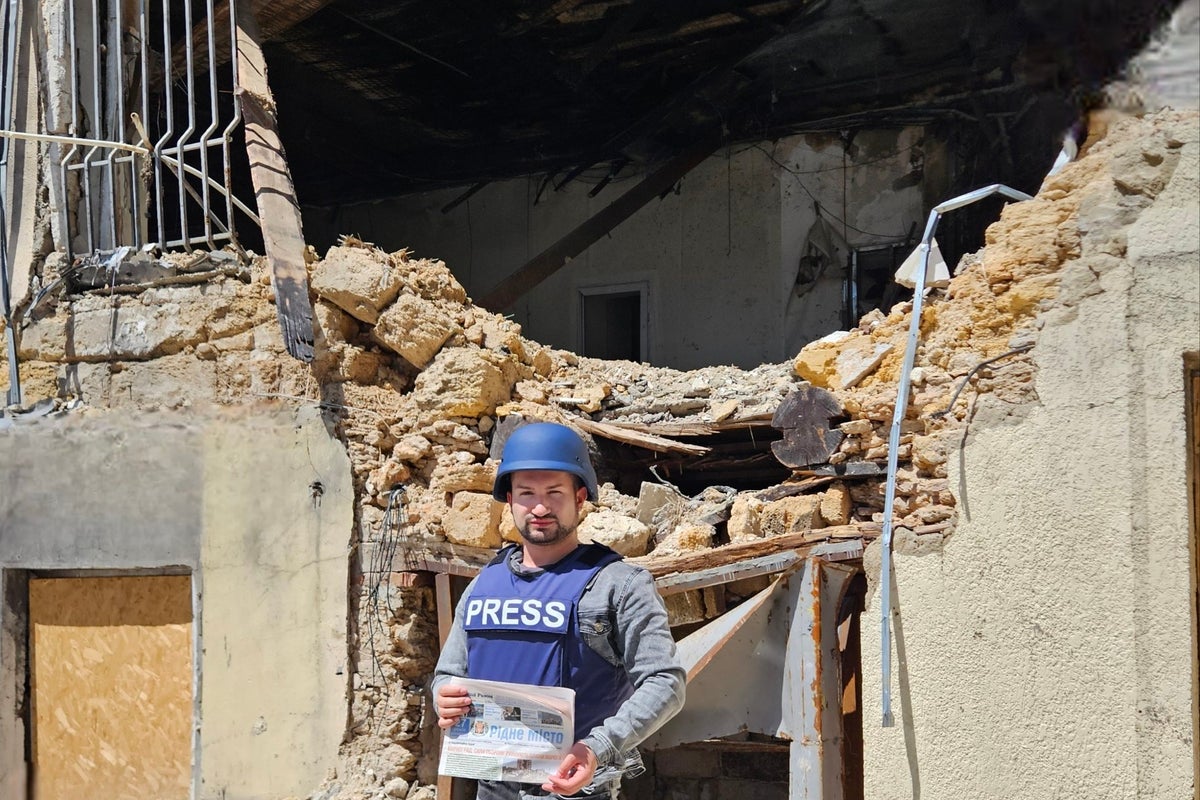
The traditional newsroom died in a flash of artillery fire and the sudden, terminal collapse of the commercial advertising market. For regional publishers across Ukraine, the transition from chronicling municipal council budgets to documenting shrapnel impacts and mass displacement happened overnight. Yet the true threat to these provincial outlets is no longer just the incoming ordnance that flattened printing presses in Kharkiv, Chernihiv, and Zaporizhzhia. It is a quiet, institutional starvation born of dried-up revenue streams, paper shortages, and burnt-out staff trying to keep a semblance of local democracy alive from damp basements.
Understanding how local journalism survives an existential war requires looking past the heroic dispatches of frontline reporters and examining the cold economics of survival. When the invasion pulverized local retail economies, the regional newspaper’s primary engine—small business classifieds, local supermarket circulars, and municipal announcements—evaporated instantly. Without capital, editorial teams fractured. Some editors fled westward, attempting to manage operations from foreign laptops, while others stayed behind to print single-page emergency editions on vintage equipment powered by sputtering generators. For a closer look into similar topics, we suggest: this related article.
The Anatomy of Financial Collapse
Regional publishers operating outside major metropolitan centers faced a unique vulnerability. Metropolitan titles like The Kyiv Independent or large digital networks could pivot toward international philanthropic grants and subscriptions from sympathetic global readerships. A weekly or bi-weekly paper in a regional hub like Sumy or Mykolaiv enjoyed no such luxury. Their audience consists largely of pensioners, displaced families, and citizens whose purchasing power has been completely wiped out.
Consider a hypothetical regional weekly with a pre-war print run of five thousand copies. When fuel prices spike fourfold and distribution roads are mined or bombed, the logistics of delivering physical paper become economically impossible. Subscription fees collected in local currency lose their value against soaring inflation, while the cost of newsprint imports skyrockets. International donor funding, while vital, often bypasses hyper-local outlets due to bureaucratic hurdles, favoring high-visibility national organizations instead. For further context on this topic, in-depth coverage can be read at NBC News.
This financial chokepoint forces editors into impossible compromises. Do they spend incoming grant money on expensive ballistic protection and satellite phones for reporters covering artillery duels, or do they purchase diesel to keep the office heater running so staff can type stories in sub-zero temperatures? Most choose a fractured middle path, running skeleton crews on voluntary or severely delayed stipends.
Navigating Censorship and the Military Lens
Financial ruin is only one half of the squeeze. Journalism under total war demands an awkward dance with military security and state information policy. Editors must weigh their professional duty to hold power accountable against the absolute necessity of operational security. Reporting troop movements, precise strike coordinates, or military logistics is strictly prohibited, and for good reason.
Yet this necessary wartime censorship creates a slippery slope. Local authorities, suddenly armed with sweeping emergency powers, frequently attempt to suppress legitimate reporting on municipal corruption or humanitarian aid mismanagement under the guise of national security. Veteran provincial editors find themselves fighting a two-front war. They must dodge incoming Russian fire while simultaneously pushing back against local civil-military administrations eager to sanitize the news.
Maintaining trust within the community depends entirely on resisting this sanitization. When a local paper stops reporting on broken water mains, stolen humanitarian aid, or corrupt municipal procurement because officials demand a unified front, the public stops reading. Credibility is the only asset a regional paper retains when its printing press lies in ruins. Editors who sacrifice hard truths for patriotic comfort lose the very audience they are trying to protect.
The Psychological Toll of Perpetual Trauma
No balance sheet accounts for the human cost carried by reporters who are simultaneously victims and chroniclers of the catastrophe. Journalists covering their own hometowns face a distinct form of psychological attrition. They interview neighbors whose homes have been incinerated, only to return to neighborhoods where their own relatives remain under threat.
In smaller newsrooms, psychological support systems are practically nonexistent. Professional hostile environment training was designed for foreign correspondents rotating out of conflict zones after a few weeks, not for local reporters enduring years of continuous bombardment. Burnout manifests not merely as exhaustion, but as a quiet withdrawal. Reporters miss critical details, mismanage investigations, or simply put down their notebooks to join territorial defense units or evacuate aging parents.
When an entire generation of local reporters is displaced, traumatized, or killed, the institutional memory of a region vanishes with them. Municipal oversight vanishes into a vacuum. Without reporters sitting in local council chambers, public funds earmarked for reconstruction can disappear into administrative black holes with zero local accountability.
The Fight for Post-War Accountability
Despite the grim calculus, a stubborn resistance persists across the provinces. Editors are experimenting with decentralized digital distribution, running text-only versions via messaging apps for readers who have fled abroad or into safer regions, while smuggling print editions back into frontline zones. These publishers recognize a fundamental truth. A community without its own documented history ceases to exist as a cohesive society.
The struggle of regional outlets is not a quaint media story about the digitization of news. It is a frontline test of whether democratic accountability can outlast total war. If provincial journalism dies under the weight of economic collapse and state centralization, the rebuilding of the country will happen in the dark, overseen exclusively by those with the power to control the narrative. The survival of these papers is the baseline guarantee that when the guns finally fall silent, the people will still know who they are and what was done to their homes