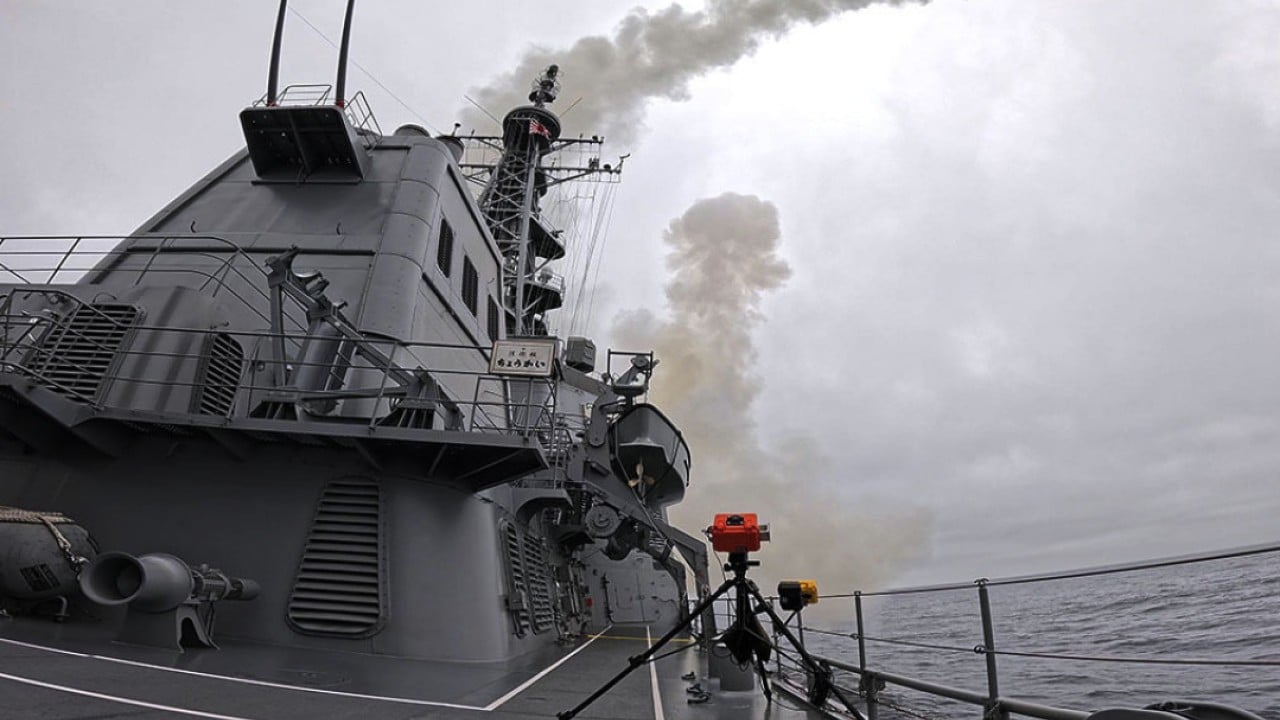
Tokyo’s ambition to double defense spending by 2027 is hitting a brutal industrial reality. Severe delivery delays for American-made missiles, paired with chronic shortages of domestic precision components, are actively stalling Japan’s fastest military buildup since World War II. While politicians sign historic budgets and approve offensive counterstrike capabilities, the actual hardware remains stuck on factory floors across the Pacific.
Money cannot buy speed when the global defense industrial base is already stretched thin. Japan is discovering that transforming decades of pacifist industrial policy into a wartime-ready supply chain takes far longer than passing legislation.
The Checkbook Versus the Assembly Line
In December 2022, Japan shattered its long-standing informal cap of spending roughly one percent of its gross domestic product on defense. The government committed to a massive 43 trillion yen five-year spending plan, aiming to hit the NATO standard of two percent by fiscal year 2027. On paper, the strategy looked decisive. Tokyo would buy off-the-shelf American long-range strike weapons immediately to deter regional aggression while simultaneously rebuilding its atrophied domestic arms industry to take over production later.
The execution has proved far messier.
Defense procurement operates on industrial timelines, not political cycles. When the Japanese Ministry of Defense placed urgent orders for hundreds of US-made Tomahawk cruise missiles and Joint Air-to-Surface Standoff Missiles, it stepped into a global queue already congested by war in Eastern Europe and escalating tensions in the Middle East. American defense primes are running near maximum capacity. You cannot simply wire billions of dollars to Washington and expect crates of precision-guided munitions to arrive at Yokosuka Naval Base the following quarter.
Delivery schedules for critical interceptors and strike munitions have repeatedly slipped to the right. Even when Tokyo negotiates to pull forward deliveries of older Block IV Tomahawks to bridge the gap before newer Block V variants arrive, the Self-Defense Forces still face a dangerous window of vulnerability. Hardware delayed is deterrence deferred.
Why American Factories Cannot Keep Up
To understand why Tokyo is waiting, you have to look at how the United States built its defense sector over the last thirty years. Following the Cold War, the Pentagon encouraged massive consolidation. Dozens of aerospace and defense contractors merged into a handful of mega-primes. These surviving companies optimized their operations for peacetime efficiency, adopting just-in-time manufacturing principles borrowed from the commercial automotive sector.
Just-in-time works brilliantly when demand is predictable and peace is the default state. It fails catastrophically when multiple allies suddenly demand tens of thousands of complex missiles at the exact same time.
Building a modern cruise missile or air-defense interceptor is nothing like assembling an artillery shell. A single missile requires specialized seekers, radiation-hardened microchips, composite airframes, and solid-fuel rocket motors. In the United States, the solid rocket motor sector shrunk down to essentially two major suppliers. When demand spiked, these facilities became instant bottlenecks. Expanding a rocket motor plant requires strict environmental permitting, specialized hazardous-material tooling, and years of safety certification.
Furthermore, American defense contractors are bound by strict export control regimes and Pentagon prioritization rules. Under the Defense Production Act, the US government can force manufacturers to prioritize American military orders over foreign military sales. While Japan enjoys privileged status as a treaty ally, its orders still compete against the Pentagon's own desperate need to replenish depleted stockpiles. Tokyo is essentially paying premium prices for a spot in a line that barely moves.
The Hollowed-Out Domestic Base
Washington’s bottlenecks would sting less if Japan could simply lean on its own manufacturing giants. Japan is an industrial superpower, renowned globally for robotics, precision machine tools, and advanced materials. Yet for decades, its defense sector was treated as an awkward stepchild.
Under strict postwar pacifist interpretations and a self-imposed ban on weapons exports, Japanese defense contractors had only one customer: the Japan Self-Defense Forces. Production runs were tiny. Profit margins were strictly capped by the Ministry of Defense, often hovering around a meager five to eight percent. For massive conglomerates like Mitsubishi Heavy Industries, Kawasaki Heavy Industries, and NEC, defense was a low-margin side business maintained largely out of civic duty.
Over the past twenty years, more than a hundred Japanese companies quietly exited the defense market entirely. The ones that stayed did not invest in modernizing their assembly lines or training a new generation of specialized engineers.
Consider a hypothetical example to see how this plays out on the factory floor. Imagine a mid-sized precision machining shop in Nagoya that produces specialized titanium fasteners for fighter jet airframes. For thirty years, the Ministry of Defense ordered only enough parts to build four aircraft a year. The shop kept two older machinists on the payroll and ran one dedicated lathe for three months annually. Suddenly, Tokyo triples its order and demands delivery in eighteen months. That shop cannot simply hire twenty certified aerospace machinists off the street, nor can it buy specialized titanium forging equipment that itself has a two-year lead time.
Now multiply that single Nagoya machine shop across thousands of tier-two and tier-three subcontractors. That is the exact crisis crippling Japan’s domestic procurement today.
The Raw Material and Component Squeeze
The domestic bottleneck extends well beyond labor and floor space. Modern weaponry relies heavily on specialized alloys, rare earth elements, and high-grade electronic components. While Japan dominates several niches of semiconductor manufacturing equipment and chemical precursors, it remains deeply exposed to global supply shocks for raw inputs.
- Specialty metals and composites: High-temperature alloys required for jet engines and missile exhaust nozzles face severe global shortages, driven simultaneously by a post-pandemic rebound in commercial aviation and surging global military orders.
- Microelectronics: Legacy chips—older, ruggedized semiconductors that power missile guidance and radar systems—are notoriously difficult to source because commercial foundries have largely moved on to smaller, more profitable nanometer nodes.
- Energetics and propellants: Domestic chemical manufacturers face strict regulatory hurdles and limited capacity when scaling up the production of high-grade explosives and missile propellants.
When a single fifty-dollar specialized capacitor or a batch of certified aerospace-grade aluminum is delayed by six months, the entire multi-million-dollar missile sits unfinished on the assembly floor.
The Workforce and Demographic Trap
Even if Tokyo solved every raw material shortage tomorrow, it would still face an intractable human problem. Japan possesses the oldest population in the developed world. The country is already experiencing acute labor shortages across construction, logistics, and general manufacturing.
Defense manufacturing requires a specific subset of that shrinking workforce: skilled technicians capable of passing rigorous security clearances. You cannot easily automate the intricate hand-wiring of a radar array or the final assembly of a guidance section, nor can you import foreign labor to work on classified military hardware.
Young Japanese engineering graduates overwhelmingly prefer working for commercial tech firms, automotive giants, or robotics startups where salaries are higher, innovation moves faster, and the social stigma historically attached to weapons manufacturing does not exist. Defense primes are struggling to replace retiring master craftsmen who hold decades of institutional knowledge in their heads—knowledge that was never fully digitized or written down in standard operating manuals.
Tokyo’s Scramble for Workarounds
The Japanese government is not blind to these failures. Behind closed doors in Ichigaya, where the Ministry of Defense is headquartered, officials have spent the past two years rewriting procurement rules that stood untouched for half a century.
First, Tokyo moved to fix the broken profit model. New legislation allows the Ministry of Defense to raise contractor profit margins up to fifteen percent if companies meet strict cost-control and delivery targets. The government is also directly subsidizing capital expenditures, paying to build new production lines and even taking ownership of certain defense facilities that contractors are hesitant to fund themselves.
Second, Japan is aggressively dismantling its remaining arms export restrictions. By allowing the export of lethal weapons co-developed with international partners—such as the Global Combat Air Programme sixth-generation fighter jet project with the United Kingdom and Italy—Tokyo hopes to give its domestic manufacturers access to larger economies of scale. More orders mean lower unit costs and stronger financial incentives for tier-three suppliers to stay in the game.
Third, Washington and Tokyo have launched joint industrial initiatives to co-produce air-defense interceptors, including Patriot PAC-3 missiles, directly in Japan. The logic is straightforward: if American factories are choked, use Japanese industrial capacity to build American designs, feeding both nations' stockpiles.
Why Policy Fixes Cannot Bend Physics
These reforms are necessary, pragmatic, and long overdue. They will also take years to bear fruit.
Co-producing complex missiles like the Patriot PAC-3 in Japan still depends on the availability of critical sub-components—most notably the seekers and rocket motors—that currently still originate in the United States. Moving final assembly to a Mitsubishi factory in Aichi Prefecture does not magically conjure more solid rocket motors out of thin air if the sole supplier in Arkansas is already backlogged until 2028.
Similarly, raising profit margins for domestic contractors acts as a vital long-term signal to corporate boards, encouraging them to keep their defense divisions open. Yet higher margins cannot compress the physical time required to pour concrete for a new munitions bunker, calibrate precision CNC machinery, or train an apprentice welder to meet military aerospace standards.
There is also a deeper strategic friction at play. For decades, Japan relied on the American nuclear umbrella and forward-deployed US forces while keeping its own military footprint deliberately light. That arrangement allowed Japanese industry to focus entirely on commercial dominance—building the cars, electronics, and industrial machinery that conquered global markets. Re-militarizing an industrial base is not like flipping a switch; it requires rewiring corporate culture, national budgets, and supply chains that were explicitly designed to avoid war production.
The Vulnerability Gap
For military planners in Tokyo and Washington, the calendar is the real adversary. Intelligence assessments consistently point toward the late 2020s as a period of maximum strategic danger in the Indo-Pacific, particularly regarding potential contingencies around Taiwan and the East China Sea.
Japan’s 2027 deadline to achieve a fundamentally reinforced defense posture was chosen specifically to get ahead of that window. The current supply chain chokehold threatens to push Japan’s true operational readiness well into the 2030s.
A military buildup exists in two distinct dimensions: the balance sheet and the magazine. On the balance sheet, Japan is already a resurgent military power, boasting one of the largest defense budgets on earth and an ambitious roster of next-generation programs. Inside the actual ammunition magazines, however, the racks remain dangerously bare.
Until those American crates clear customs and those Nagoya machine shops run at full tilt, Japan’s historic defense transformation remains largely an aspiration written on budget spreadsheets rather than steel sitting in silos.