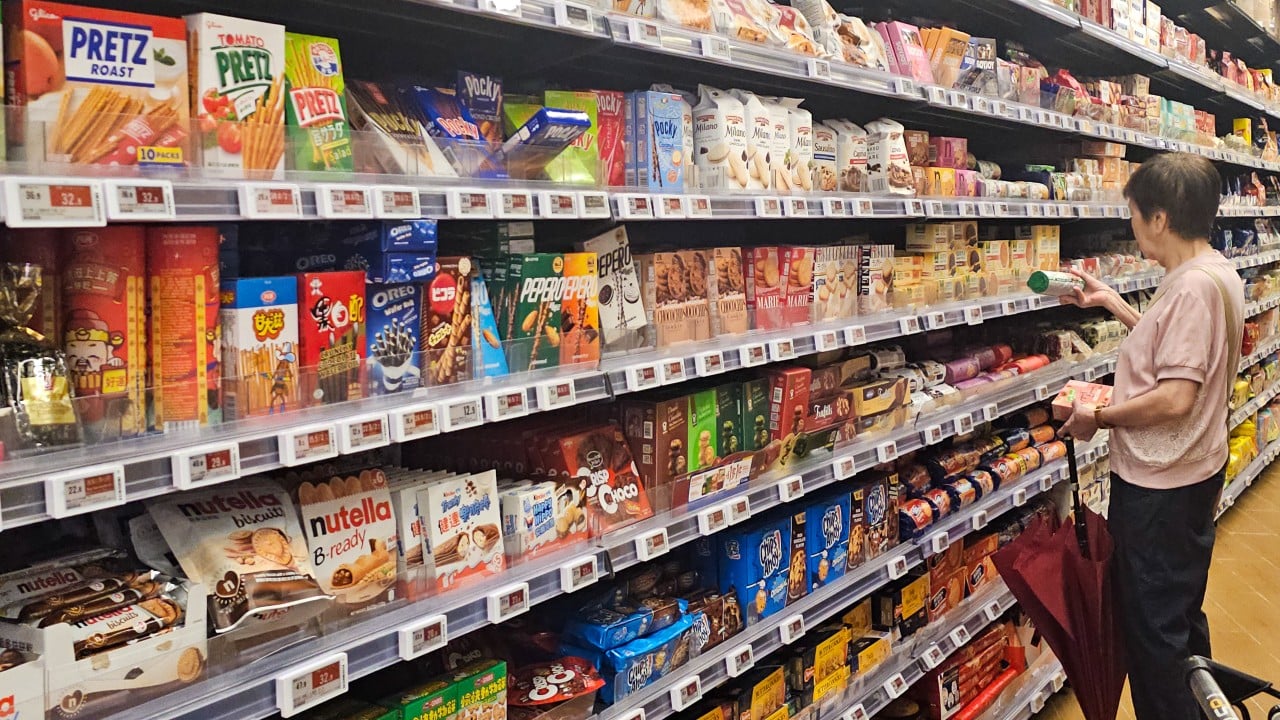
Hong Kong shoppers scrolling through online supermarket catalogs are facing an uncomfortable financial reality. Recent findings from the Consumer Council revealed that popular online "buy one, get one free" promotions frequently fail to offer genuine discounts, exposing how major grocery chains inflate baseline prices to mask marketing gimmicks. When a two-for-one label flashes across a screen, the immediate human reaction is triumph. A bargain has been secured. Yet, beneath the yellow promotional tags lies a complex web of retail pricing psychology, supplier pressure, and regulatory blind spots that leaves everyday households paying more than they bargained for.
For decades, the retail sector has treated promotional discounts as gospel. Shoppers assume that receiving a second item for free represents a mandatory fifty percent reduction in unit cost. That assumption is precisely where the illusion begins. Supermarkets operate under intense margin pressures in one of the most expensive real estate markets on Earth. Every square foot of shelf space must earn its keep. When grocery executives offer two-for-one deals, they are rarely absorbing the cost out of corporate goodwill. Instead, the baseline price of the initial item is often artificially elevated during non-promotional periods, or the promotion is engineered to move aging inventory right before expiration dates.
The Anatomy of a Discount That Is Not One
The Consumer Council's investigation tore open this quiet corner of the retail industry. By examining dozens of product categories across major online supermarket platforms, investigators discovered that the actual savings promised by promotional campaigns often evaporate upon closer inspection. In some instances, buying a single item during a standard non-promotional week costs significantly less than purchasing the mandatory paired items during a sale event. The math is obscured by clever visual hierarchy, bold typography, and the sheer velocity of modern consumer habits. People buy groceries on autopilot. They see a bright red or yellow banner, calculate a mental fifty percent discount, and drop the items into their virtual baskets without verifying the historical price point.
To understand how this dynamic persists, one must examine the mechanics of retail pricing strategy. Supermarkets do not price goods in a vacuum. Pricing teams utilize sophisticated algorithms that track consumer elasticity, competitor catalogs, and inventory turnover rates. When a product approaches the end of its optimal shelf life, distributors face a stark choice. They can write off the stock as a total loss, or they can package it into a multi-buy promotion that shifts the financial burden of disposal onto the consumer. By bundling two items together, the store effectively doubles the volume of expiring goods moved in a single transaction. The buyer feels victorious because they received extra product, while the retailer successfully clears warehouse space without taking a direct markdown hit on individual unit ledgers.
Behavioral Economics and the Trap of Excess
This practice intersects directly with the broader crisis of household waste. Behavioral economists have long noted that multi-buy deals alter human consumption patterns in subtle, destructive ways. When a consumer acquires twice the amount of perishable goods required for their immediate household needs, the probability of spoilage skyrockets. Fresh produce, dairy items, and bakery goods bundled into promotional offers frequently end up in municipal landfills rather than human stomachs. The shopper paid for two items, consumed one, and threw the other away. In economic terms, the effective unit price of the consumed item just doubled, destroying any nominal savings achieved at the checkout counter.
Retail defenders often argue that promotions give consumers choices. They contend that price-sensitive shoppers benefit from having structured avenues to stretch their monthly grocery budgets. That argument holds some weight for non-perishable goods like canned tomatoes, laundry detergent, or packaged paper products where shelf life is practically indefinite. However, applying the same promotional logic to perishable items creates a perverse incentive structure. The consumer trades cash today for potential waste tomorrow, while the supermarket locks in guaranteed cash flow and inventory clearance.
The Unit Pricing Blindspot in Hong Kong Retail
The opacity of Hong Kong's supermarket pricing structure exacerbates the problem. Unlike several overseas jurisdictions that enforce strict unit pricing transparency—requiring retailers to display the exact cost per 100 grams or 100 milliliters across all tags—Hong Kong lacks a universal mandate for standardized unit pricing. Without a clear, uniform metric displayed right next to the selling price, consumers are forced to perform mental arithmetic while pushing a cart down a crowded aisle or squinting at a mobile screen. Is a four-hundred-gram box at forty dollars a better value than a seven-hundred-gram box at seventy dollars with a secondary item bundled in? Without standardized unit pricing, the average shopper is flying blind.
Supermarket executives know this. The lack of standardized unit pricing creates fertile ground for optical illusions. Retailers can manipulate package sizes—a phenomenon known in the trade as shrinkflation—while simultaneously running multi-buy promotions on the modified containers. A manufacturer might reduce a package from five hundred grams to four hundred and fifty grams while keeping the price identical. A month later, that same product appears in a buy-one-get-one-free banner ad. The consumer sees a familiar brand, registers a massive promotional discount, and completely misses the fact that the underlying product volume has shrunk by ten percent. The discount is an accounting trick subsidized by the consumer's own diminished expectations.
Supplier Pressure and Margin Manipulation
Behind every supermarket promotion lies a complex negotiation between grocery chains and product suppliers. Small and medium-sized suppliers often find themselves caught in a vice grip. Supermarkets hold immense market power, acting as the primary gatekeepers to millions of local consumers. When a supermarket chain demands participation in a major promotional campaign, suppliers frequently have to absorb a substantial portion of the discount cost. If a supplier refuses to fund the markdown, they risk losing shelf space entirely, a fatal blow for consumer brands dependent on mass retail visibility.
This power asymmetry trickles down to product quality. To maintain profit margins under the weight of continuous promotional demands, suppliers may quietly alter ingredient formulations, substitute cheaper oils, or source lower-grade raw materials. The consumer thinks they are getting a premium brand at a discounted rate through a clever multi-buy promotion, but they are actually purchasing a degraded product whose manufacturing cost was cut to finance the discount itself. The entire promotional ecosystem operates on smoke and mirrors, where every concession extracted by the retailer is quietly balanced elsewhere in the supply chain.
Public awareness campaigns by consumer watchdogs are a vital counterweight, but they run up against entrenched habits. Most working adults in Hong Kong lead high-pressure lives characterized by punishing work hours and limited leisure time. Grocery shopping is treated as a logistical chore to be completed as quickly as possible, not an analytical exercise requiring spreadsheet analysis of historical price trends. Supermarket chains understand this psychological fatigue. They design online apps and physical store layouts to capitalize on cognitive overload. Bright colors, prominent banner placements, and urgent countdown timers are engineered to bypass critical thinking and trigger impulsive purchasing decisions.
Regulating the Aisles and Protecting the Consumer
Breaking out of this cycle requires a fundamental shift in how consumers approach grocery shopping, alongside stronger regulatory frameworks from policymakers. Relying solely on voluntary compliance from supermarket chains has proven insufficient. When left to self-regulate, retailers will naturally gravitate toward whatever marketing strategy maximizes basket size and gross revenue. Implementing mandatory unit pricing policies, similar to those standard across the European Union and parts of Australia, would instantly strip away the smoke and mirrors. When every product label clearly displays the baseline cost per standard unit of measurement, promotional illusions lose their power. Consumers can instantly compare a promotional bundle against a standard single item without needing a calculator or an investigative report.
Until regulatory standards catch up with modern retail tactics, individual shoppers must adopt a more skeptical posture toward grocery marketing. The burden currently rests entirely on the consumer to pierce the veil of corporate promotions. Experienced budget analysts recommend maintaining a mental archive of baseline prices for frequently purchased household staples. If an item's non-promotional price fluctuates wildly from week to week just before a major two-for-one event, that volatility is a flashing warning sign. Furthermore, shoppers should evaluate multi-buy offers through the lens of actual consumption capacity rather than immediate perceived savings. Buying two units of a perishable item because it looks like a bargain is a false economy if half of it ends up in the bin.
The Consumer Council's intervention served an important public service by dragging these opaque practices into the light. Yet, reports and warnings alone will not dismantle an entrenched commercial machine built on optical pricing strategies. Supermarkets will continue to invent new ways to package and market old inventory as long as consumers remain vulnerable to the psychological pull of getting something for nothing. The next time a bright promotional banner flashes across a screen offering a second item for free, pause for a moment, calculate the unit weight, check the historical baseline price, and ask whether the deal is serving your household budget or the retailer's quarterly profit margin.
Who Pays for That "Buy One, Get One Free" Deal?
This video explores the underlying financial mechanics and supplier cost-sharing structures behind common buy-one-get-one-free retail promotions.