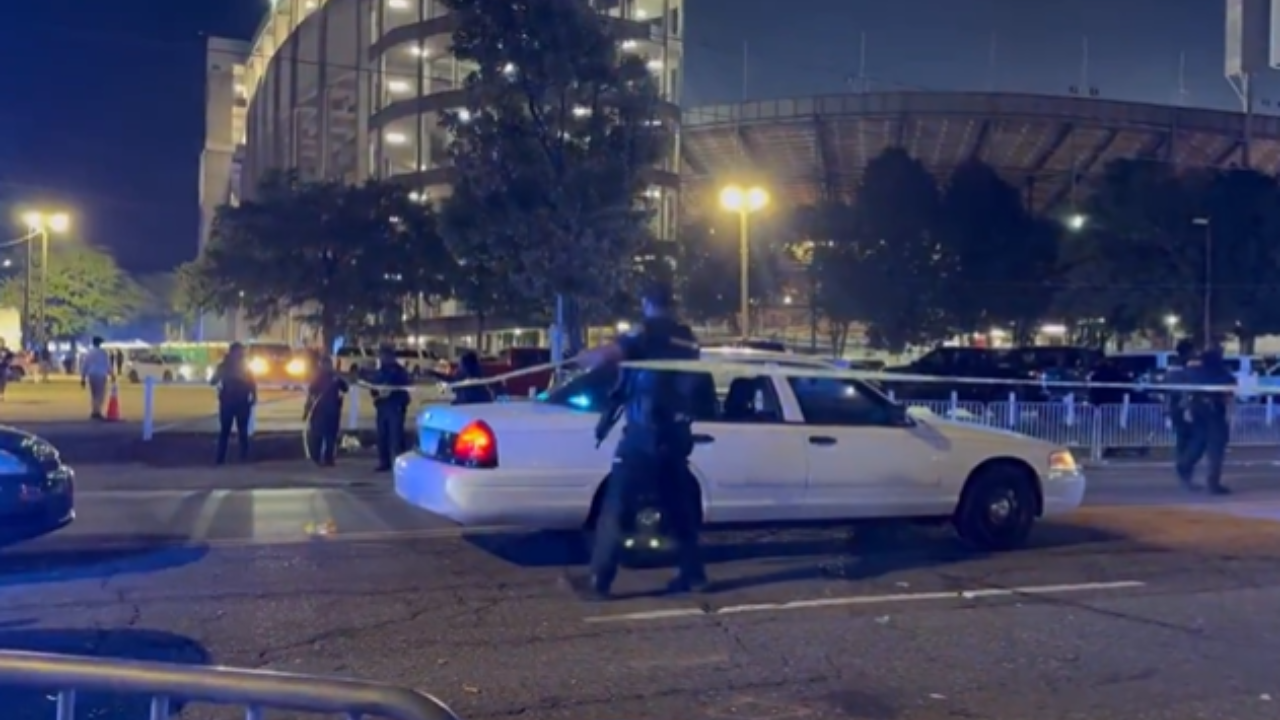
Gunfire shattered the post-game crowd following an Alabama high school football game, leaving one person dead and several others injured in a tragic incident that underscores a systemic failure in American stadium security. While initial wire reports focus strictly on the immediate casualty counts and emergency response timelines, the real story lies in the gaping operational vulnerabilities that allow weapons to penetrate high-density sporting venues across the country.
For decades, the standard security playbook at American stadiums—from local municipal fields to massive collegiate arenas—has relied on a fragile illusion of safety. Security planners spend millions hardening the inner bowl while leaving the outer perimeter completely exposed during the exact moments when crowds are most vulnerable.
The Anatomy of the Post-Game Vulnerability
A stadium is never more dangerous than in the fifteen minutes after the final whistle blows.
During the game itself, fans are relatively stationary, separated by seating sections, and monitored by security personnel positioned at predictable choke points. The moment the game ends, tens of thousands of people funnel simultaneously toward narrow exit gates, poorly lit parking lots, and congested transit corridors. Police officers, who spent the previous three hours focused inward on the field and the stands, are suddenly outnumbered and outmaneuvered by a rapidly dispersing crowd.
In the wake of the Alabama football game shooting, local law enforcement faced the exact nightmare scenario that stadium security directors quietly dread. When shots ring out in a dense crowd exiting a venue, panic spreads faster than information. Spectators stampede away from the sound of gunfire, often running directly into crossfire or trampling others in their path. Paramedics cannot reach the wounded because emergency lanes are choked with fleeing vehicles and terrified pedestrians.
Why Perimeter Security Fails
Most venues operate under a flawed philosophy known in the industry as hard-shell, soft-perimeter security. Walk-through metal detectors, clear-bag policies, and wanding stations are strictly enforced at the ticket gates. Once a fan crosses that threshold, the venue assumes the threat has been neutralized.
That assumption falls apart outside the gates.
- Unscreened Buffer Zones: Parking lots, tailgating fields, and ticket plazas rarely feature any physical screening. Anyone can walk up to the perimeter fence of a high school or municipal stadium carrying a concealed firearm without passing a single checkpoint.
- Staffing Drawdowns: To save on overtime costs, many school districts and municipal venue operators begin releasing auxiliary security staff and off-duty police officers during the fourth quarter. By the time the crowd exits, the visible law enforcement presence has often been reduced by thirty to forty percent.
- Lighting and Sightline Deficits: While the playing field is illuminated by broadcast-grade floodlights, the surrounding streets and overflow parking areas often suffer from dead zones, broken fixtures, and visual obstructions like parked buses or portable restrooms.
The Economics of Neglect in High School and Municipal Venues
While professional leagues like the NFL and major NCAA Division I programs boast multi-million-dollar security budgets, high school and local community games operate on shoestring funding. Yet these smaller venues routinely draw crowds of five to ten thousand people—making them soft targets with massive casualty potential.
A typical municipal athletic department cannot afford state-of-the-art millimeter-wave scanners or dedicated tactical response teams. Instead, they rely on a patchwork of local police overtime, volunteer boosters, and underpaid private event guards who receive minimal training in active-shooter response.
Consider a hypothetical scenario common across Friday night football games nationwide. A school district allocates $1,500 per game for security. That budget covers four off-duty sheriff's deputies and six unarmed event staffers. If the game is a major local rivalry drawing 8,000 spectators, that equals one trained officer for every 2,000 people. When an altercation breaks out near the concession stand or the parking lot exit, those four deputies are immediately overwhelmed, leaving the rest of the venue completely unguarded.
The Illusion of Deterrence
Visible policing is supposed to deter violence. In reality, a small contingent of officers stationed near the fifty-yard line does nothing to stop a targeted dispute or an impulsive shooting in the outer concourse.
Security analysts have repeatedly warned that reactive policing—waiting for a 911 call or the sound of gunfire before mobilizing—is obsolete in modern crowd management. Without elevated observation posts, integrated camera networks, and active perimeter patrols, officers are essentially blind until the first shot is fired.
How Weapons Bypass Modern Stadium Checkpoints
Even when venues invest in screening technology, determined individuals routinely find ways around it. The hardware is only as reliable as the human beings operating it, and human fatigue is a massive factor during a three-hour sporting event.
The Gate Rush Phenomenon
Kickoff times create artificial bottlenecks. When three thousand fans arrive within a twenty-minute window before the game starts, pressure mounts on gate staff to clear the lines quickly. Supervisors, worried about angry ticket holders missing the opening kickoff, routinely instruct screeners to lower the sensitivity thresholds on walk-through metal detectors or wave people through without manual bag checks.
Fence-Line Pass-Offs
At outdoor stadiums with chain-link or wrought-iron perimeters, screening at the front gate is easily defeated through simple coordination. An accomplice walks through the metal detector clean, walks over to an unmonitored section of the perimeter fence, and receives a firearm passed through the bars from someone standing on the public sidewalk outside.
Unmonitored Vendor and Media Entrances
While fans endure strict screening, side gates used by concession workers, equipment managers, and local media frequently operate on an honor system. A familiar face or a laminated lanyard is often enough to bypass a physical search entirely.
The Legal and Liability Fallout for Venue Operators
When a shooting occurs at a stadium, the criminal investigation is only the beginning. The civil litigation that follows often reshapes how entire regions manage public events.
Under premises liability law, venue owners and event organizers have a legal duty to provide reasonably safe conditions for invitees. Historically, courts shielded property owners from liability for third-party criminal acts, arguing that a shooting was an unforeseeable event. That legal shield is rapidly eroding.
Today, plaintiff attorneys examine the specific history of violence in the surrounding neighborhood, prior incidents at the venue, and whether the operator followed basic industry standards. If a school district or stadium authority knew about previous fights or weapons confiscations at games—and failed to implement basic countermeasures like adequate lighting or perimeter patrols—they face devastating financial exposure.
Insurance Markets Are Forcing Change
Where legislation fails, insurance underwriters are stepping in. Liability insurance premiums for school districts and municipal sports complexes have skyrocketed over the past five years. Insurers are increasingly refusing to underwrite policies for high-attendance events unless the venue operator proves compliance with strict security protocols:
- Mandatory metal detection at all entry points, including vendor gates.
- Strict clear-bag policies with zero exceptions for oversized purses or backpacks.
- Written emergency action plans rehearsed annually with local police and fire departments.
- Continuous perimeter patrols extending at least two hundred yards beyond the stadium gates until the parking lots are completely empty.
What Real Stadium Security Actually Requires
Fixing the crisis exposed by the Alabama football game shooting does not require turning high school stadiums into military bases. It requires abandoning performative security theater in favor of disciplined operational fundamentals.
First, venue operators must invert their staffing schedules. Instead of front-loading security for the pre-game rush and sending officers home in the fourth quarter, peak staffing must occur from the start of the fourth quarter until one hour after the final whistle. Every exit gate, pedestrian bridge, and parking lot intersection needs active, uniformed supervision during egress.
Second, perimeter boundaries must be expanded. Pushing the security check-in zone out to the edges of the parking facility—or establishing sterile pedestrian corridors between the stadium and the parking lots—eliminates the ability for armed individuals to loiter right outside the exit doors.
Third, communication systems must be unified. In too many post-game emergencies, stadium staff, private security guards, school administrators, and municipal police operate on completely separate radio frequencies. Seconds lost relaying a description of a shooter from a stadium usher to a police dispatcher cost lives. A unified command post with direct access to live surveillance feeds is non-negotiable for any venue hosting thousands of people.
The Human Cost of Institutional Complacency
Every time gunfire erupts at an American sporting event, the public script plays out with depressing predictability. Officials offer thoughts and prayers. Police promise a thorough investigation. School boards schedule emergency meetings to review their safety policies.
Then, within a few weeks, the news cycle moves on, budgets tighten again, and the gates open for the next Friday night game under the exact same conditions.
Until venue operators treat post-game crowd egress and outer perimeter control with the same urgency they apply to ticket sales and field maintenance, spectators walking out of an American stadium will remain dangerously exposed to the next preventable tragedy.