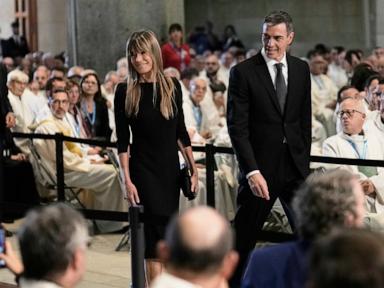
The political future of Spain hangs by a thread. A Madrid magistrate has pushed the investigation into Begoña Gómez, the wife of Prime Minister Pedro Sánchez, into a formal trial phase. While the international press frequently frames this as a routine European political skirmish, the reality cuts much deeper into the mechanics of Spanish state influence and judicial independence. Gomez faces serious allegations of corruption in the private sector and influence peddling. This case does not merely threaten a single political marriage. It threatens to dismantle a fragile governing coalition that relies on razor-thin legislative alliances to survive.
The Anatomy of the Allegations
At the heart of the judicial inquiry led by magistrate Juan Carlos Peinado are two specific threads of influence. The first involves a series of letters of recommendation signed by Gómez in 2020. These letters supported a joint venture led by businessman Carlos Barrabés, an entrepreneur who had previously helped set up a master’s degree program directed by Gómez at Madrid's Complutense University.
The joint venture subsequently secured €10.2 million in public contracts from Red.es, a government digital transformation agency.
The second thread examines Gómez’s relationship with Globalia, the parent company of the airline Air Europa. In mid-2020, as the pandemic paralyzed global aviation, Air Europa secured a €475 million bailout from the Spanish government. Investigators are probing whether Gómez’s private meetings with Globalia’s chief executive, Javier Hidalgo, during this exact window constituted an illegal use of her proximity to the presidency.
The legal mechanism in play is article 429 of the Spanish Penal Code. This statute penalizes any individual who exerts influence over a public official or authority by leveraging a personal relationship to obtain a financial benefit for themselves or a third party. The prosecution does not need to prove that money changed hands directly. They only need to demonstrate that the influence was exerted and that it altered the objective neutrality of public administration.
The Role of Private Accusations in Spanish Law
To understand how this case reached a courtroom, one must understand a unique feature of the Spanish legal system known as the acusación popular or popular prosecution. This constitutional right allows citizens or independent organizations to initiate criminal proceedings and participate in trials, even if they are not the direct victims of the alleged crime.
In this instance, the initial complaint was filed by Manos Limpias, a right-wing legal pressure group with a long history of targeting left-leaning politicians.
[Complaints Filed by Manos Limpias]
       │
       ▼
[Judicial Review by Judge Peinado] ──► [UCO Police Reports Find No Criminality]
       │
       ▼
[Case Expanded via Technical Testimonies]
Critics argue that the popular prosecution mechanism allows political actors to weaponize the judiciary. They point out that the initial filing by Manos Limpias relied almost entirely on newspaper clippings, some of which contained errors. However, under Spanish law, once a judge finds sufficient initial merit to open an investigation, the case takes on a life of its own. Judge Peinado has consistently pushed past the initial filings, expanding the scope of the inquiry even when report summaries from the Civil Guard’s elite judicial police unit, the UCO, suggested a lack of clear criminal behavior on Gómez's part.
The Defense Strategy and the Institutional Backlash
The response from the Moncloa Palace has been aggressive. Pedro Sánchez took the unprecedented step of publishing a five-page letter to citizens, pausing his public duties to contemplate resignation before deciding to stay in office. The prime minister frames the entire judicial proceeding as a coordinated campaign of "political-media mud" engineered by the conservative Popular Party and the far-right Vox party.
Legally, Gómez’s defense team, led by former Interior Minister Antonio Camacho, has repeatedly appealed the judge's decisions. They argue that the investigation is a "fishing expedition"—a broad, non-specific inquiry prohibited under Spanish jurisprudence. A central pillar of their defense rests on the fact that letters of support are common practice in public tenders. Dozens of other institutions, including the Madrid city council, signed similar letters for the same project.
Furthermore, the defense emphasizes that the Air Europa bailout was evaluated and approved by SEPI, the state industrial holding company, following strict European Union guidelines. They maintain that the prime minister's wife had no operational role in those institutional decisions.
Economic and Governance Fallouts
The instability generated by the trial extends far beyond the courtroom walls. Spain’s current minority government relies on a complex web of support from Basque and Catalan nationalist parties. Every legislative vote is a high-stakes negotiation.
- Budget Stagnation: The political oxygen consumed by the scandal has stalled negotiations for the national budget, forcing the government to roll over previous fiscal plans.
- Investor Hesitation: International markets dislike structural uncertainty. The spectacle of a prime minister's official residence being linked to criminal indictments raises the risk premium on long-term infrastructure investments.
- Judicial Polarization: The open warfare between the executive branch and sections of the judiciary has pushed public trust in the legal system to historic lows.
The European Commission is watching closely. Brussels has long raised concerns about the politicization of Spain’s judicial governance body, the General Council of the Judiciary. This case exacerbates those tensions, turning technical legal procedures into matters of survival for the state.
The High Court Precedents
History provides a grim context for Sánchez. Spain does not have a tradition of insulating its leaders from judicial consequences. In 2018, Mariano Rajoy became the first prime minister in modern Spanish history to be ousted by a vote of no confidence. That vote followed a court ruling that found the Popular Party guilty of benefiting from a massive, illegal kickback-for-contracts scheme known as the Gürtel case.
The judiciary proved then that it could topple a government. The current investigation operates under that historical shadow, meaning the legal maneuvers in Madrid are directly tethered to the survival of the executive power.
Spain now faces months of prolonged legal conflict. As witnesses testify and internal government emails face scrutiny, the boundary between legitimate commercial activity and illegal influence peddling will be redefined. The verdict will not just decide the fate of Begoña Gómez; it will dictate the rules of engagement for corporate and political power in Spain for the next generation.