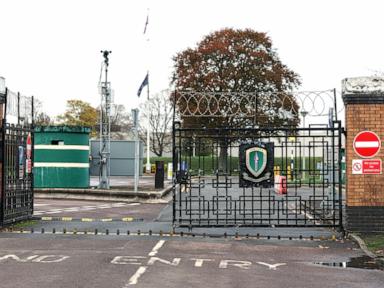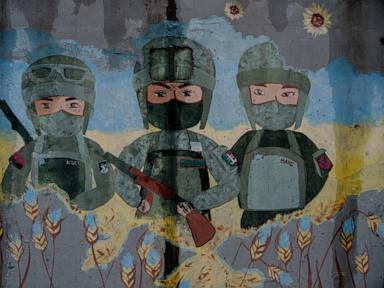
South African authorities have arrested a tenth suspect linked to an alleged recruitment network funnelling citizens into the Russia-Ukraine war, exposing a quiet, lucrative shadow industry operating right under the nose of Pretoria's security apparatus. The arrests, spearheaded by the Directorate for Priority Crime Investigation—commonly known as the Hawks—target individuals accused of violating the Regulation of Foreign Military Assistance Act. While headlines treat these detentions as isolated law enforcement wins, the reality on the ground points to a much deeper, structural failure. Economic desperation at home, combined with aggressive foreign recruitment tactics and a sluggish prosecutorial system, has turned South Africa into a prime hunting ground for private military contractors and foreign state recruiters alike.
To understand how ten people ended up in handcuffs over a war thousands of miles away in Eastern Europe, you have to look beyond the police blotter. You have to look at the mechanics of modern mercenary recruitment, the legal gray zones that allow middlemen to operate with near impunity, and the geopolitical tightrope Pretoria refuses to abandon.
The Anatomy of a Recruitment Pipeline
The arrests did not happen in a vacuum. They represent the culmination of months of intelligence gathering into how South African nationals—many of them former military personnel, private security guards, or simply unemployed young men—are persuaded to trade their passports for a rifle in the Donbas or on the outskirts of Kharkiv.
Recruitment rarely looks like a shady meeting in a dimly lit Johannesburg bar anymore. Today, the pipeline runs through encrypted messaging apps, targeted social media groups, and seemingly legitimate security logistics firms. Recruiters pitch the opportunity not as frontline infantry service, which carries an obvious death sentence, but as high-paying support work. Men are promised roles in perimeter security, drone operation, logistics driving, or facility protection far behind the active line of contact.
The financial math is brutally simple. In a country grappling with an official unemployment rate hovering above 30 percent, a signing bonus of a few thousand dollars and a monthly salary rivaling that of a senior corporate manager at home looks less like a gamble and more like a lifeline. Once a recruit signs on, the logistics machine takes over. Travel routes are carefully scrubbed to avoid raising red flags at O.R. Tambo International Airport. Recruits are frequently routed through third-party transit hubs in the Middle East or Central Asia on tourist or student visas before being processed into military units upon arrival.
By the time a South African recruit realizes that "rear-echelon security" actually means holding a muddy trench under constant artillery fire, their passport is gone, their contract is written in a language they cannot read, and the nearest South African embassy is entirely powerless to extract them.
Why the Law Keeps Falling Behind
South Africa actually possesses some of the strictest anti-mercenary legislation on the planet. Passed in 1998 in the wake of apartheid-era soldiers of fortune destabilizing neighboring African states, the Regulation of Foreign Military Assistance Act makes it a serious criminal offense for any South African citizen or permanent resident to offer military or security services abroad without explicit authorization from the National Conventional Arms Control Committee.
On paper, the law is airtight. In practice, it is full of holes.
The primary hurdle for prosecutors is proving intent and defining the exact nature of the work performed overseas. Modern warfare has blurred the line between a combatant and a contractor. If a recruitment agency hires a South African mechanic to repair armored vehicles in a border town, does that constitute illegal mercenary activity under a statute written nearly three decades ago? Defense attorneys routinely exploit this ambiguity, arguing their clients were facilitating legitimate civilian logistics or non-combat security roles.
Furthermore, gathering admissible evidence from an active war zone is a logistical nightmare for the Hawks and the National Prosecuting Authority. Confirming that a specific suspect recruited a specific individual who subsequently engaged in combat requires cross-border intelligence sharing that simply does not exist between Pretoria and Moscow, and remains strained with Kyiv. When suspects are arrested on home soil, prosecutors often have to rely on digital footprints—WhatsApp voice notes, bank transfers, and flight manifests—which take months of forensic accounting to piece together into a winnable case.
The Private Security Oversupply
South Africa's domestic security industry is one of the largest in the world, employing more registered private security officers than the South African Police Service and the South African National Defence Force combined. This massive labor pool is a double-edged sword.
On one hand, it provides vital protection in a high-crime environment. On the other, it produces tens of thousands of weapons-trained, tactically competent men who are severely underpaid. A seasoned armed response officer in Gauteng might earn a fraction of what a low-level contractor makes in an international conflict zone. Foreign recruiters know this. They actively poach from South Africa's private security sector, targeting men who already know how to handle firearms and operate under stress, saving foreign militaries months of basic training.
The Geopolitical Tightrope
Every arrest made by the Hawks carries immediate diplomatic weight. Since Russia's full-scale invasion of Ukraine in February 2022, the South African government has insisted on a posture of non-alignment. Pretoria has abstained from key United Nations resolutions condemning Moscow, hosted joint naval exercises with Russian and Chinese warships, and maintained warm bilateral ties through the BRICS bloc.
Yet, the presence of South African fighters on the battlefield threatens to shatter that carefully curated neutrality.
If South African citizens are captured or killed fighting for Russian forces, Kyiv and its Western allies view it as tacit complicity by Pretoria—a sign that South Africa is failing to police its own borders and enforce its own laws. Conversely, South Africans who have volunteered to fight alongside Ukrainian forces—often drawn by ideological solidarity or international legion recruitment drives—create a different set of diplomatic headaches when they return home or require consular assistance.
The government's enforcement actions, therefore, serve a dual purpose. They are genuine attempts to uphold domestic law, certainly, but they are also strategic signals to the international community. By arresting the tenth suspect in this latest sweep, Pretoria is demonstrating that it is not turning a blind eye to the export of its citizens as cannon fodder, even as it refuses to pick a side in the broader conflict.
What Happens to the Recruits Who Survive
Public attention naturally gravitates toward the dramatic arrests of recruiters and middlemen at home. Far less attention is paid to the grim reality awaiting the recruits themselves, and the legal purgatory they face if they manage to survive their contracts.
Consider a hypothetical scenario based on documented cases from similar conflicts. A 29-year-old former security guard from KwaZulu-Natal accepts an offer via Telegram to work as a "logistics coordinator" in Russia. He flies to Dubai, then on to Moscow, where he is handed a contract in Cyrillic and told he will receive his full payout after six months. Within two weeks, he is issued a rifle and sent to the front lines in Donetsk. If he survives his deployment and somehow makes it back to Johannesburg, he does not return as a hero or even a victim. Under South African law, he returns as a criminal suspect.
This creates a perverse incentive structure. Recruits who realize they have been trafficked or deceived cannot easily come forward to South African authorities for help without incriminating themselves under the very laws meant to stop the trade. Fear of prosecution keeps them silent, allowing the recruiters back home to continue operating unchecked until an intelligence tip or a family member's desperate plea to the Department of International Relations and Cooperation blows the cover off the operation.
The Real Bottleneck in Pretoria
Arresting ten suspects makes for strong headlines, but law enforcement insiders know that arrests alone will not dismantle the pipeline. The real test lies in what happens next inside South Africa's courtrooms.
Historically, prosecutions under the Regulation of Foreign Military Assistance Act have yielded mixed results. Several high-profile cases over the past twenty years have ended in plea bargains, suspended sentences, or outright dismissals due to technicalities and delays. When the worst-case scenario for a recruiter is a fine that represents a tiny fraction of their commission fees, the law ceases to act as a deterrent. It becomes just another cost of doing business.
For the Hawks' latest crackdown to actually disrupt the flow of fighters to the Russia-Ukraine war, the National Prosecuting Authority must secure convictions that carry severe custodial sentences. At the same time, intelligence agencies need to follow the money upstream, identifying not just the local fixers booking plane tickets in Pretoria or Cape Town, but the foreign shell companies and financial intermediaries funding the entire apparatus.
Until the financial rewards of trafficking desperate men into foreign wars are outweighed by the certainty of prison time at home, the tenth arrest will simply be a prelude to the eleventh.