A classified U.S. intelligence assessment distributed to policymakers reveals that Iran has successfully restored operational access to 90 percent of its underground missile storage and launch facilities, directly contradicting declarations of total victory by the White House.
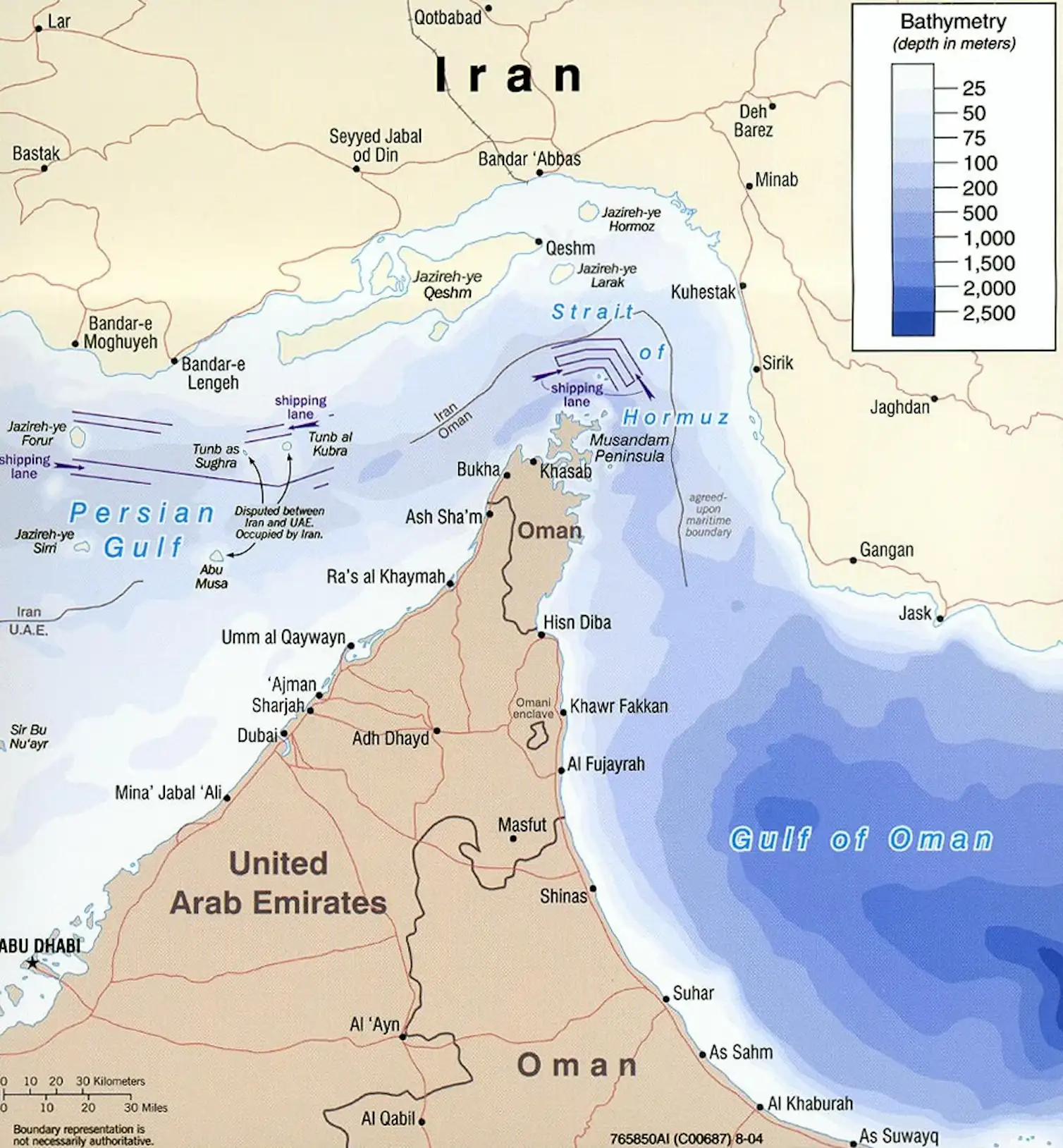
While President Donald Trump insists that the Iranian military has been soundly defeated and its missile infrastructure reduced to a scatter, the agencies responsible for monitoring the ground reality painted a grim picture. The documents show that Tehran has retained roughly 70 percent of its mobile missile launchers and 70 percent of its pre-war missile stockpile. Most alarming to naval planners, Iran has re-established operational access to 30 of its 33 missile sites along the vital Strait of Hormuz, maintaining a lethal chokehold on international shipping and American warships.
This massive intelligence disconnect exposes a deeper, more troubling friction inside Washington. While political leaders broadcast a message of definitive triumph achieved through Operation Epic Fury, military analysts and intelligence collectors are quietly sounding the alarm that the conflict has transformed into an expensive war of attrition. The United States has expended vast quantities of its most advanced ordnance, leaving critical domestic stockpiles at historical lows while the adversary demonstrates a terrifying capacity for rapid engineering recovery.
The Myth of the Shattered Arsenal
The public rhetoric from the administration has been unyielding. Defense Secretary Pete Hegseth recently asserted that joint U.S.-Israel strikes had rendered Iran’s military combat-ineffective for years to come. The president reinforced this stance before departing for a high-stakes summit in Beijing, stating publicly that the administration has the situation completely under control and that the naval blockade remains absolute.
The numbers collected by satellite imagery and signal intelligence tell a different story. The destruction of an underground bunker is a monumentally complex task. Air strikes can collapse a tunnel entrance, but the deep-subterranean architecture frequently remains structurally sound. Iranian engineering units have spent the weeks following the initial bombardment digging out entrances, clearing debris, and running temporary power cables back into buried command complexes.
A mobile launcher parked deep inside a mountain facility does not care if the dirt road leading out of the mountain was cratered three weeks ago. As soon as the earthmovers clear a path, that launcher is active again. Intelligence data indicates that only three facilities along the coastal cliffs of the Strait of Hormuz are completely inaccessible. The remaining 30 are fully capable of rolling out trucks and firing anti-ship cruise missiles into the narrow shipping lanes below.
The Cost of the Empty Silo
The true crisis hidden within these classified assessments is not just Iran's resilience, but the depletion of the American arsenal. Pentagon data reveals that the financial cost of the conflict has surged past 29 billion dollars. More critical than the dollar amount is the physical volume of advanced munitions poured into the campaign.
During the initial phases of the operation, U.S. forces launched more than 1,000 Tomahawk cruise missiles, over 1,100 long-range stealth cruise missiles, and fired more than 1,200 Patriot interceptor missiles to defend regional bases. To put these figures in perspective, the number of Patriot interceptors used over a ten-week period exceeds two full years of American manufacturing output based on recent production schedules.
The implications for global strategy are immediate. By exhausting its deep-magazine capacity against hardened, underground Iranian infrastructure, the Pentagon has severely degraded its readiness for a potential conflict in the Indo-Pacific. Replacing these long-range precision weapons is not a matter of turning a dial at a factory. Advanced Guidance systems, solid-rocket propellants, and stealth coatings rely on fragile, highly specialized supply chains that require years to fulfill contract orders.
Strategic Resilience Born of Foreign Lessons
Western analysts underestimated Tehran’s capacity for rapid recovery because they evaluated the Iranian military through an outdated lens. Intelligence reports suggest that Iranian planners spent the years preceding this conflict studying the war in Ukraine with extreme precision.
Tehran absorbed a fundamental lesson from Eastern Europe: physical decentralization and rapid engineering response can defeat high-tech, precision bombardment. Iran did not rely on central command nodes that could be wiped out in a single night of stealth strikes. Instead, they decentralized their launch authority, distributed their stockpiles across hundreds of micro-sites, and perfected the art of mobile concealment.
When U.S. and Israeli cruise missiles struck known warehouses, they often hit empty concrete shells or decoys. The actual components were buried in civilian industrial zones or hidden under agricultural canopies. This strategy has allowed Tehran to keep its ballistic and cruise missile inventories mostly intact, leaving them with plenty of ammunition to threaten regional energy corridors if the current, fragile ceasefire collapses completely.
The Politics of Intelligence Denial
The reaction from the political apparatus to these intelligence findings has been hostile. On social media, the president criticized the reporting of these facts, labeling the disclosure of Iranian military strength as an act of treason that provides false hope to an adversary. White House press staff dismissed the intelligence evaluations entirely, arguing that anyone asserting an Iranian military recovery is merely echoing foreign propaganda.
This creates a dangerous feedback loop inside the policymaking apparatus. When the executive branch publicly locks itself into a narrative of total victory, it becomes politically impossible to acknowledge setbacks or adjust strategy. Military commanders are forced to operate under a public mandate that claims the enemy is defeated, even as their own tactical radar systems track active missile movements across the Persian Gulf.
Meanwhile, Iran’s parliamentary national security representatives have begun raising the stakes. They are warning that any resumption of hostilities will push Tehran to immediately accelerate its uranium enrichment program toward weapons-grade purity. With diplomatic channels strained and the economic impact of the naval war driving domestic anxieties, the gap between official declarations and the reality on the ground has never been more perilous.
The war has not ended; it has simply paused. The assumption that high-volume airstrikes can permanently eliminate a decentralized, deeply entrenched adversary has proven false. If Washington policymakers continue to prioritize political messaging over the sober assessments delivered by their own intelligence agencies, they risk stumbling directly into a prolonged regional war for which the American conventional arsenal is increasingly unready to sustain.