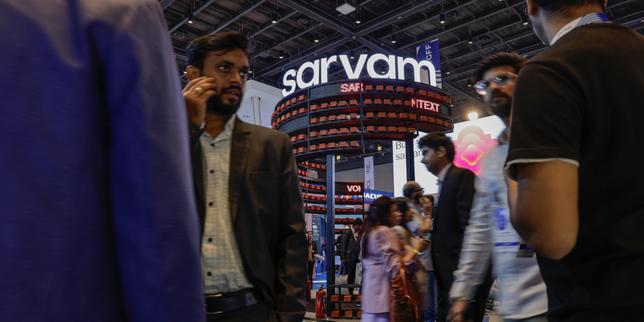
India wants its own artificial intelligence, and Sarvam AI is the company carrying that weight on its shoulders. Founded in August 2023 by Vivek Raghavan and Pratyush Kumar, the Bengaluru startup has quickly become the flagship of New Delhi’s push for sovereign AI—the idea that a nation must build, train, and host its own foundational models rather than renting intelligence from Silicon Valley. Backed by over $41 million from Lightspeed, Peak XV Partners, and Khosla Ventures, Sarvam is attempting to solve a problem Western labs largely ignore. It wants to make generative AI work natively across India's 22 official languages, prioritizing voice interfaces over text screens to reach hundreds of millions of people who have never typed a prompt in English.
That ambition sounds noble on a conference stage. In practice, it is a brutal engineering and financial gamble.
For decades, watching tech ecosystems rise and fall across Asia, a familiar pattern emerges whenever a government decides it needs a "national champion" in a capital-intensive sector. Politicians love the optics of self-reliance. Venture capitalists love the subsidized tailwinds and guaranteed public-sector contracts. Yet physics and economics rarely bend to national pride. Training frontier models requires staggering amounts of compute, clean data, and electrical power—resources where India faces structural deficits compared to the United States and China. To understand whether Sarvam AI represents a genuine technological breakthrough or an expensive exercise in digital nationalism, you have to look past the press releases and examine the architecture, the economics, and the linguistic reality on the ground.
Why Silicon Valley Models Fail the Indian Street
To appreciate why Sarvam exists at all, test a standard Western frontier model in rural Uttar Pradesh or Tamil Nadu. It stumbles almost immediately.
The failure is not merely about translation accuracy; it is embedded in the mathematical bedrock of how Large Language Models process text. Every LLM relies on a tokenizer—a mechanism that breaks words down into numerical chunks called tokens before the neural network processes them. Because Western labs train predominantly on English web scrapes, their tokenizers are heavily optimized for the Latin alphabet. Common English words take up a single token. When those same models encounter Hindi, Bengali, Marathi, or Telugu, the tokenizer shatters single words into fragments of individual characters or byte-level scraps.
The consequences are severe. An Indian language query often requires three to five times as many tokens as the exact same sentence in English.
More tokens mean higher latency. The user waits longer for a response. More tokens also mean higher inference costs, because cloud providers bill by the token processed. Worst of all, bloated token sequences eat up the model's context window, degrading its reasoning capabilities when handling complex instructions in regional languages. When you add code-mixing into the equation—the everyday reality of "Hinglish" or "Tanglish," where speakers fluidly switch between English and their mother tongue mid-sentence—standard commercial models lose the thread entirely.
Sarvam’s core technical thesis attacks this bottleneck directly. Instead of slapping a translation wrapper onto an English-centric architecture, the company builds custom tokenizers and trains models from the ground up on balanced Indic datasets. Their OpenHathi release demonstrated that open-source architectures could be adapted to handle Hindi with far greater token efficiency, cutting inference costs while maintaining reasoning performance. Later iterations, including Sarvam 2B and Sarvam-1, pushed this further by optimizing specifically for Indian linguistic structures across ten major languages, achieving token fertility rates comparable to English models.
Voice Is the Real Interface
Text is an elitist medium in a country where hundreds of millions of smartphone users struggle with reading comprehension or simply find typing in Indic scripts tedious on tiny glass keyboards. Typing Hindi or Kannada on a standard mobile layout is slow, clunky, and error-prone.
Voice changes everything.
Sarvam’s leadership realized early on that India’s internet revolution did not happen through desktop browsers; it happened through cheap Android phones, rock-bottom mobile data tariffs, and audio notes on WhatsApp. If AI is going to touch the next 500 million Indian users—farmers checking crop prices, mechanics ordering spare parts, citizens navigating welfare schemes—it cannot demand literacy. It must listen and speak.
This explains why Sarvam has poured immense engineering effort into speech-to-text and text-to-speech pipelines, notably through models like Bulbul and Saarika. Building voice AI for India is a nightmare of acoustic variance. Accents shift every fifty kilometers. Background noise—traffic, ceiling fans, crowded markets—is constant. Furthermore, Indians rarely speak pure, textbook versions of their languages. A conversation in Mumbai blends Marathi, Hindi, and English seamlessly within a single breath.
By integrating automatic speech recognition directly with their language models, Sarvam aims to bypass the clunky cascade of translating speech to English text, querying an American API, and translating the answer back into synthesized regional audio. Every step in that chain introduces latency. In a live phone conversation, a three-second pause feels broken. Getting voice-to-voice latency under a second while preserving local cadence, emotion, and regional dialects is where Sarvam’s true moat lies. If they crack natural, low-latency voice agents at a fraction of Western API pricing, they will own the plumbing for Indian customer service, banking, and public administration.
The Compute Bottleneck and the Sovereign Trap
Ambition does not run on patriotism; it runs on graphics processing units. And here, Sarvam faces an uphill climb that no amount of clever tokenization can entirely erase.
Training foundational models from scratch requires clusters of tens of thousands of high-end accelerators—specifically Nvidia’s H100s and Blackwell chips—running continuously for months. For its first year of existence, India lacked domestic supercomputing clusters at that scale. Startups had to rent compute from hyperscalers in data centers located in Singapore, Europe, or the United States, burning precious venture capital in dollars while hoping to generate revenue in rupees.
New Delhi recognized the vulnerability. Under the IndiaAI Mission, the government allocated over ₹10,300 crore (roughly $1.2 billion) to subsidize compute access, build domestic data sets, and support homegrown startups. Sarvam was selected as the very first recipient to build India's sovereign large language model under this framework, gaining access to thousands of subsidized GPUs to train a massive foundational model from scratch.
Government backing is a double-edged sword. On one hand, subsidized compute dramatically lowers Sarvam’s burn rate and gives it a fighting chance to train larger architectures without immediately diluting equity. On the other, becoming the state’s chosen champion carries invisible strings.
History across global tech markets offers a sobering warning. When startups rely heavily on sovereign subsidies and public-sector mandates, their engineering priorities subtly shift from ruthless market competition to bureaucratic compliance. State-backed AI initiatives in Europe, such as France’s Mistral or Germany’s Aleph Alpha, illustrate the divergence. Mistral thrived precisely because it ignored domestic protectionism, raised massive private capital, and competed head-to-head on global open-weight benchmarks. Aleph Alpha leaned heavily into European digital sovereignty narratives and government contracts, only to pivot away from frontier model training when it could no longer keep pace with Silicon Valley’s scaling laws.
Sarvam must walk a razor-thin line. If it builds models solely to satisfy government tenders—automating citizen helplines or translating parliamentary records—it risks becoming a glorified IT services contractor with a venture valuation. To survive long-term, its models must win on open commercial merit against free, open-weight alternatives from Meta, Google, and Chinese labs like DeepSeek and Qwen.
The Open-Weight Threat From Shenzhen and Menlo Park
The uncomfortable truth in the AI industry is that moats built around model weights evaporate within months.
When Sarvam launched in 2023, major global labs paid scant attention to Indic languages. That vacuum no longer exists. Meta’s Llama series, Google’s Gemma models, and Alibaba’s Qwen architectures have rapidly expanded their multilingual capabilities. More importantly, DeepSeek shattered the assumption that frontier-grade reasoning requires billion-dollar training runs. By optimizing mixture-of-experts architectures and reinforcement learning pipelines, Chinese engineers proved that small, lean teams could match top American models at a fraction of the compute cost.
For Sarvam, this global deflation in intelligence pricing is both a blessing and an existential threat.
It is a blessing because Sarvam’s founders—both veterans of AI4Bharat, the acclaimed research lab at IIT Madras—know how to squeeze maximum performance out of limited hardware. They do not need to waste hundreds of millions of dollars reinventing basic transformer mechanics; they can adopt open architectural innovations and focus their capital on Indic data curation and post-training alignment.
It is a threat because Indian enterprises are notoriously price-sensitive. A chief technology officer at an Indian bank or e-commerce giant does not care about digital sovereignty when choosing an API. They care about latency, accuracy, data privacy, and cost per million tokens. If a fine-tuned version of Llama or Qwen hosted on domestic servers delivers 95 percent of Sarvam’s Hindi performance while vastly outperforming it on complex coding, math, and English financial analysis, enterprises will choose the global open-weight model every time.
Sarvam’s answer to this dilemma is vertical integration and deployment pragmatism. Rather than chasing vanity leaderboard scores against GPT-class models on abstract physics exams, Sarvam is focusing on enterprise-grade orchestration. They are building platforms that allow Indian companies to deploy voice agents, document processors, and customer support bots inside secure domestic infrastructure, complying strictly with India's Digital Personal Data Protection Act.
The Data Scarcity Paradox
Every foundational model is only as good as the text and audio it consumes during pre-training. Here lies a quiet crisis that rarely makes headlines in New Delhi: the high-quality digital footprint of Indian languages is shockingly small.
English accounts for roughly half of the indexed internet, despite native speakers making up a tiny fraction of the global population. By contrast, languages like Hindi, Tamil, Bengali, and Marathi represent less than one percent of web text combined. Even worse, much of the Indic text available online is poorly digitized, riddled with optical character recognition errors from scanned government PDFs, or consists of machine-translated English articles that lack natural cultural nuance.
You cannot train a culturally fluent model on badly translated Wikipedia pages.
This is where Vivek Raghavan and Pratyush Kumar possess a distinct structural advantage over foreign competitors. Before founding Sarvam, Raghavan spent over a decade as a chief product manager and biometric architect at UIDAI, the agency behind Aadhaar—India’s massive digital identity system covering over a billion people. Kumar co-founded AI4Bharat, spearheading the collection of massive open-source datasets, speech corpora, and translation benchmarks across 22 Indian languages.
They understand that India’s data is not sitting neatly on the public web waiting to be scraped. It is locked inside analog archives, regional radio broadcasts, state government repositories, and millions of daily voice interactions.
To overcome data scarcity, Sarvam relies heavily on synthetic data generation and targeted human curation. By using high-performing teacher models alongside thousands of native linguistic annotators, they generate clean, culturally grounded training pairs—teaching their models not just vocabulary, but local idioms, social etiquette, agricultural terminology, and regional administrative jargon. Yet synthetic data has well-documented limits. Train a model too heavily on AI-generated text, and you risk model collapse, where outputs become repetitive, sterile, and detached from real human expression. Sourcing authentic, diverse vernacular audio and text remains an expensive, ongoing grind.
The Aadhaar Playbook and Infrastructure Realism
Look closely at Sarvam’s DNA, and you realize it is not trying to be the Indian OpenAI. It is trying to become the AI layer of the India Stack.
Over the past fifteen years, India pulled off one of the most audacious digital infrastructure experiments in modern history. Through Aadhaar (identity), UPI (instant digital payments), and DigiLocker (verifiable documents), the country built public digital rails that allowed private fintech companies to scale to hundreds of millions of users at near-zero transaction costs. UPI did not succeed because it had the prettiest user interface; it succeeded because it worked on cheap phones, settled instantly, and solved a universal friction point.
Sarvam’s founders are explicitly applying that same philosophy to artificial intelligence.
In a hypothetical scenario where a rural smallholder farmer in Maharashtra needs crop insurance after unseasonal hail, a Western chatbot is useless. The farmer does not want a five-paragraph essay on meteorological trends. They need a voice interface in Marathi that understands their local dialect, verifies their identity via voice biometrics or OTP, pulls their land records automatically, fills out the claim form in the background, and confirms submission via an audio message.
That workflow requires deep integration with India’s messy public and private digital plumbing—legacy banking cores, state land registries, telecom networks, and payment gateways. Silicon Valley labs have zero incentive to build custom connectors for state-level agricultural portals in Karnataka or Odisha. Their margins come from selling general-purpose intelligence to Fortune 500 corporations and wealthy Western consumers.
Sarvam is betting that owning this last-mile complexity will create a defensible business. By offering tailored enterprise agents—like Sarvam Agents for automated customer calls and Sarvam Samvaad for conversational workflows—the startup is positioning itself as the indispensable bridge between raw foundational models and real-world Indian commerce.
What Could Break the Model
For all its strategic clarity, Sarvam faces three severe vulnerabilities that could stall its momentum over the next twenty-four months.
First is the talent retention battle. India produces extraordinary AI researchers, and Bengaluru is teeming with engineering talent. However, compensation packages at top global labs and well-funded American startups dwarf what an Indian Series A company can pay. Retaining senior machine learning architects who know how to stabilize multi-billion-parameter training runs requires constant equity dilution and mission-driven loyalty.
Second is the monetization gap. Building sovereign infrastructure is capital-intensive, yet the domestic market is notoriously reluctant to pay high software margins. Government contracts bring scale and prestige, but they are plagued by slow procurement cycles, delayed payments, and razor-thin margins. Meanwhile, Indian consumers expect digital services—especially AI assistants—to be completely free, subsidized by ads or telecom bundles. Sarvam must prove it can extract high-margin recurring revenue from private banks, insurers, telecom operators, and healthcare networks before its venture capital cushion thins out.
Third is multimodal commoditization. As frontier models evolve into native multimodal engines—processing raw audio, video, and text simultaneously within a single unified neural network—the advantage of specialized speech-to-text pipelines could shrink. If future open-source models natively understand regional Indian dialects out of the box without needing specialized tokenizers or acoustic front-ends, Sarvam will have to move rapidly up the value chain into proprietary enterprise software to avoid being crushed between global open-weight models and local IT integrators.
The Verdict on India’s AI Flagship
Sarvam AI carries an unfair burden. Every time a policymaker in New Delhi talks about India becoming a global AI powerhouse rather than a back-office data labeling hub, Sarvam’s name gets invoked as proof of concept.
No single startup can carry the technological sovereignty of 1.4 billion people. Expecting a three-year-old company with $41 million in private funding and a slice of government compute grants to out-muscle tech giants spending $50 billion a year on data centers is pure fantasy.
Yet dismissing Sarvam as mere political theater misses the point entirely. You do not need to build the world's smartest model to transform a nation's economy. You need to build intelligence that is cheap enough, fast enough, and culturally fluent enough to work for the person standing on a dusty street corner holding a $100 smartphone. Silicon Valley has neither the economic incentive nor the local intuition to solve that problem. Sarvam does. Whether it emerges as a generational enterprise giant or gets outpaced by relentless open-source commoditization will depend on one ruthless metric: getting Indian businesses to pay real money for vernacular intelligence before the subsidies run dry.