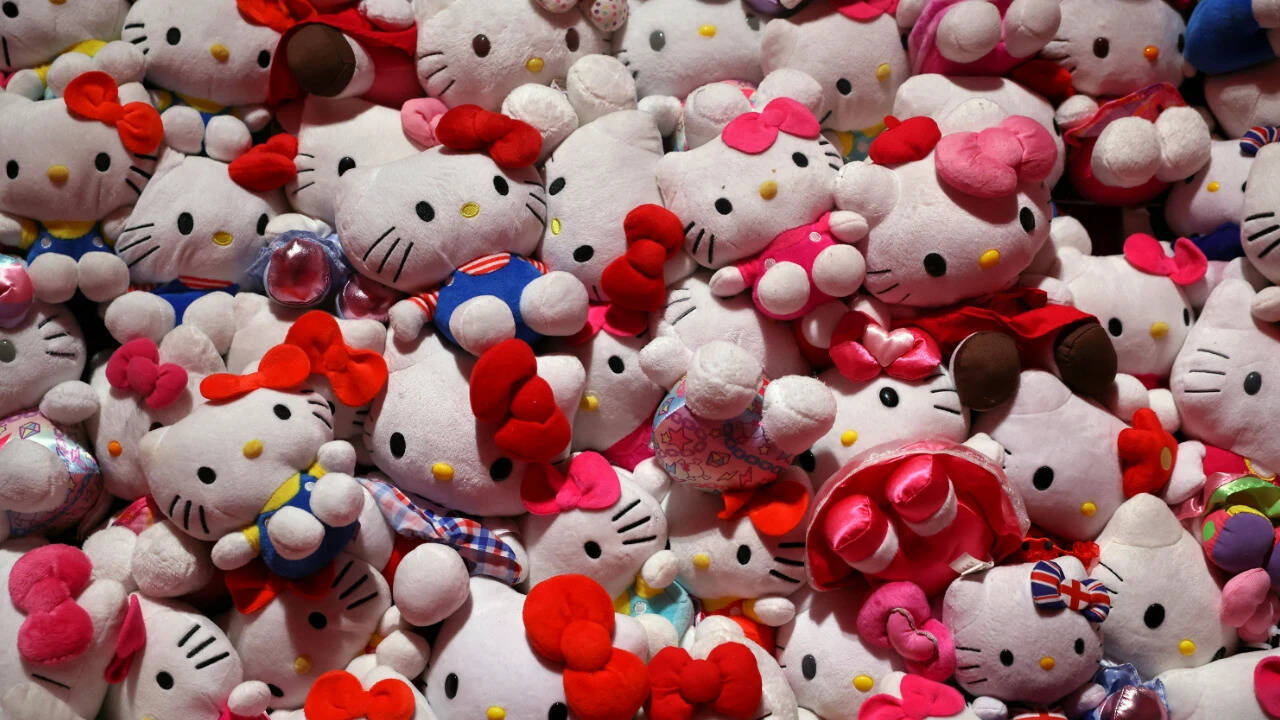
Sanrio stumbled into a firestorm in mainland China when a mobile game collaboration and adjacent spy-themed promotional imagery collided with heightened national security sensitivities. Chinese netizens and state-adjacent commentators accused the Japanese character giant of trivializing espionage and ignoring historical friction, sparking boycott calls across Weibo and Xiaohongshu. The controversy did not happen in a vacuum. It exposed a structural flaw in how foreign intellectual property holders manage localization in China, proving that cute aesthetics cannot insulate global brands from nationalist scrutiny when political subtext—real or perceived—enters the frame.
To understand how a cartoon cat without a mouth became the center of an espionage row, you have to look beyond the surface of a single marketing misstep. Foreign brands operating in China often treat character licensing as politically neutral territory. That assumption is dead wrong.
The Anatomy of a Cross-Border Licensing Misfire
When Sanrio's intellectual property appeared alongside spy and covert-operation motifs in promotional tie-ins aimed at East Asian audiences, the reaction on Chinese social media was swift and unforgiving. Users dissected character outfits, prop designs, and promotional copy line by line. Within hours, hashtags questioning Sanrio's sensitivity to Chinese national security laws began trending.
The timing could not have been worse. Over the past several years, Beijing has aggressively expanded its anti-espionage legal framework, launching public awareness campaigns urging ordinary citizens to report suspicious foreign activity. State media regularly runs dramatizations of foreign agents infiltrating domestic industries. Against that backdrop, any Japanese corporate entity—given the deeply rooted historical tensions between Tokyo and Beijing—associating its flagship characters with espionage tropes was guaranteed to trigger alarm bells.
Marketing teams in Tokyo frequently approve global or regional creative assets through a purely commercial lens. They look at aesthetic cohesion, brand safety in Western terms, and youth appeal. Espionage is a staple of Japanese anime and manga; from Spy x Family to Lupin III, covert operatives are standard entertainment fare.
Mainland Chinese consumers, however, consume media inside an entirely different regulatory and cultural atmosphere. What reads as playful mystery in Shibuya reads as tone-deaf provocation in Shanghai.
Why Foreign IP Holders Keep Failing the Localization Test
Sanrio is hardly the first foreign entertainment company to step on a geopolitical landmine in China, and it will not be the last. The root cause is almost always the same: centralized creative approval paired with decentralized, under-empowered local oversight.
Consider how typical licensing deals work in the character merchandising industry. A parent company in Tokyo, Burbank, or London owns the master style guides. Local agencies or regional subsidiaries in China are tasked with executing campaigns, securing brand partnerships, and driving licensing revenue. Yet when a creative concept originates outside the mainland—or gets greenlit by executives who do not monitor daily shifts in Chinese internet sentiment—local teams are left scrambling to contain the fallout after the assets go live.
There is also the translation and context gap. Even when local teams review campaigns, commercial pressure to hit quarterly licensing targets often overrides risk assessment. China represents one of Sanrio's most lucrative growth engines outside Japan. With domestic consumption in Japan constrained by demographic decline, the mainland market—driven by Gen Z collectors, blind-box collaborations, and themed cafes—has become essential to Sanrio's bottom line.
When revenue targets are aggressive, compliance becomes a rubber stamp. Nobody wants to be the regional manager who kills a high-margin gaming or retail collaboration over a hypothetical political risk. Until the boycott starts.
The Real Stakes Behind the Boycott Rhetoric
Online outrage in China follows a predictable lifecycle, yet Western and Japanese observers routinely misread its actual business impact. Not every trending boycott destroys a brand overnight, but the cumulative damage to brand equity and regulatory standing is severe.
First, commercial partners panic. Domestic Chinese companies—whether beverage chains, cosmetics brands, or mobile game developers—rely heavily on Sanrio collaborations to drive foot traffic and digital engagement. The moment a foreign IP becomes politically radioactive, local partners pause campaigns, pull digital banners, and delay product launches to protect themselves from collateral damage. You do not need an official government ban to lose millions in licensing fees; self-censorship by risk-averse domestic partners achieves the exact same result within forty-eight hours.
Second, regulatory friction increases quietly behind the scenes. Trademark approvals, pop-up event permits, and import clearances for limited-edition merchandise suddenly move slower. Regulators rarely announce punitive measures for minor cultural controversies. They simply apply administrative scrutiny where discretion previously favored speed.
The Double-Edged Sword of Nostalgia and Nationalism
Sanrio's core demographic in China sits squarely in the crosshairs of two competing cultural forces. On one hand, young urban consumers love Japanese kawaii culture. Hello Kitty, Kuromi, and Cinnamoroll dominate accessories, phone cases, and lifestyle stores across tier-one and tier-two cities. On the other hand, this exact generation has grown up in an era of assertive Chinese digital nationalism, where calling out perceived disrespect from foreign corporations is treated as a civic duty.
These two impulses coexist peacefully until a trigger event forces consumers to choose between their aesthetic preferences and their patriotic identity. When forced to make that choice publicly on platforms like Weibo or Douyin, patriotism wins every single time. Even fans who continue buying merchandise privately will distance themselves online, starving the brand of the organic social media amplification it relies on to sustain hype.
What Crisis Playbooks Get Wrong About the Chinese Market
When backlash hits, foreign companies almost universally reach for the corporate ambiguity playbook. They issue vaguely worded statements expressing regret over "misunderstandings," quietly delete the offending promotional materials, and hope the news cycle moves on.
That approach backfires in China. Ambiguity is interpreted as arrogance.
Chinese netizens are remarkably adept at tracking corporate communications across borders. If a company issues a watered-down apology on Weibo while leaving the original promotional campaign intact on X (formerly Twitter) or Instagram, screenshots circulate within minutes. The narrative immediately shifts from "insensitive mistake" to "two-faced corporate hypocrisy."
Conversely, issuing a sweeping political apology carries massive blowback in the company's home market and among Western investors. Japanese corporations face intense domestic scrutiny if they appear to capitulate too easily to foreign nationalist pressure. Executives find themselves trapped in a geopolitical vise: say too little and lose Chinese retail partners; say too much and trigger a domestic PR crisis at home.
How Global Licensing Giants Must Rebuild Risk Management
Avoiding the next Sanrio-style implosion requires tearing down the wall between commercial licensing and geopolitical intelligence. Cute characters do not exist in a vacuum, and treating them as immune to politics is a luxury the global market no longer affords.
Give Local Risk Teams Veto Power
Local market analysts in Shanghai and Beijing cannot merely function as translators or PR firefighters. They need formal veto authority over creative concepts, character themes, and partner pairings before a single asset enters production. If a theme touches military motifs, espionage, historical periods, or territorial imagery, it should be killed at the storyboard stage.
Audit Third-Party Collaborators Rigorously
In modern licensing, brand damage rarely comes from the parent company's own channels. It comes from third-party game studios, apparel licensees, and regional distributors who take liberties with character lore to stand out in a crowded market. Licensing agreements must include strict thematic guardrails and mandatory pre-launch cultural audits for every piece of promotional copy and visual art.
Separate Regional Creative Pipelines
A campaign built for Tokyo or Los Angeles should never be blindly ported into mainland China. Rather than adapting global themes for the Chinese market, IP holders need dedicated creative pipelines built from the ground up around local cultural sensibilities, domestic holidays, and safe lifestyle categories like food, fashion, and wellness.
Sanrio will survive this controversy, just as other global consumer brands have weathered similar storms before it. Hello Kitty's commercial appeal is too deeply embedded in Asian pop culture to vanish over a single botched promotional tie-in. Yet the episode serves as a blunt warning for every executive profiting from cross-border intellectual property. In an era where every corporate image is scrutinized through a national security lens, the most dangerous assumption a brand can make is believing its products are too innocent to offend.