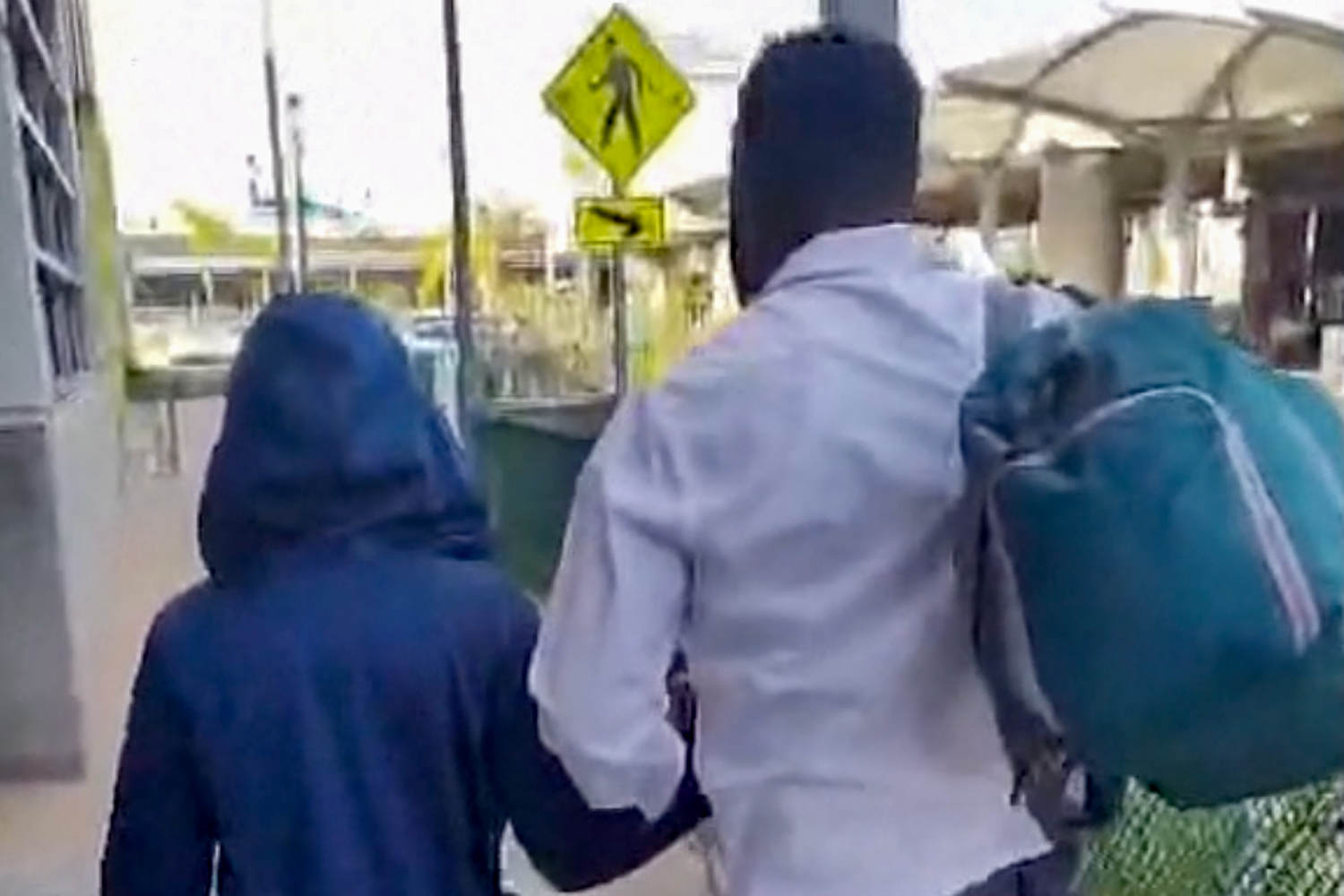
An 8-year-old Haitian boy detained by U.S. Immigration and Customs Enforcement in San Diego has been released and returned to his family after legal advocates intervened to challenge his custody. The incident highlights how administrative enforcement sweeps, overlapping federal custody protocols, and shifting immigration policies routinely ensnare minors despite long-standing federal protections meant to keep children out of adult detention settings.
Most coverage of cases like this stops at the emotional relief of a family reunion. That framing misses the structural machinery that placed a third-grader into federal custody in the first place. When an 8-year-old ends up inside an ICE processing pipeline in Southern California, it is rarely a simple clerical error. It is the predictable outcome of how border enforcement, interior apprehension, and family separation guidelines collide on the ground. If you enjoyed this post, you should check out: this related article.
How a Child Ends Up in ICE Custody in San Diego
San Diego sits at the epicenter of modern American immigration enforcement. The region operates as both a primary port of entry along the U.S.-Mexico border and a major interior hub with multiple federal holding facilities, including the Otay Mesa Detention Center and local ICE field offices.
Under federal law, ICE does not legally operate long-term detention facilities for unaccompanied children. That responsibility belongs to the Office of Refugee Resettlement (ORR), a division of the Department of Health and Human Services. Yet ICE regularly takes initial custody of minors during targeted enforcement operations, traffic stops, routine check-ins, or border apprehensions before transferring them to ORR or releasing them to vetted sponsors. For another angle on this event, check out the latest update from NBC News.
The friction happens in the gap between apprehension and transfer.
When agents detain an adult caregiver—or encounter a child whose legal guardianship documentation is incomplete, translated poorly, or held by another relative—federal officers default to containment. If the adult accompanying the child is not a biological parent with immediate, verifiable proof of custody, ICE protocol frequently treats the minor as unaccompanied. Once that classification is triggered, the child enters a bureaucratic funnel designed for administrative processing rather than child welfare.
For Haitian families in San Diego, that bureaucratic friction is compounded by distinct systemic barriers:
- Language gaps during initial screening: Federal field offices routinely lack immediate access to Haitian Creole interpreters, relying instead on Spanish or English screening forms that obscure critical details about family relationships and legal status.
- Fragmented migration routes: Many Haitian families arrive in Southern California after years spent in Brazil, Chile, or Mexico, resulting in multi-jurisdictional birth certificates, transit visas, and humanitarian parole documents that confuse standard database checks.
- Rapid transfer timelines: ICE holding cells—often referred to internally as "hold rooms"—are legally restricted to short-term stays, typically under 72 hours, creating intense pressure on officers to move detainees quickly before local legal aid networks can intervene.
The Legal Framework Supposed to Prevent This
To understand why the release of an 8-year-old boy required external intervention, you have to look at the Flores Settlement Agreement.
Established in 1997, the Flores agreement governs the detention, release, and treatment of all minors in federal immigration custody. Its core mandate is straightforward. The government must place minors in the least restrictive setting appropriate to their age and special needs, and it must release them without unnecessary delay to a parent, legal guardian, or licensed program.
On paper, Flores is ironclad. In practice, enforcement agencies exploit its gray areas every single day.
Federal agencies distinguish between "detention" and "processing." While a child sits inside a cold holding room at an ICE field office in downtown San Diego, the government classifies that time as temporary processing. During this window, parents and attorneys often struggle to locate the child in the public ICE Online Detainee Locator System, which explicitly excludes information on minors under 18 for privacy reasons.
Privacy rules meant to protect children inadvertently make them disappear from public view.
When an 8-year-old vanishes into that black box, family members cannot simply call a front desk and ask for their son. Lawyers must file formal notices of appearance, track down specific supervisory detention and deportation officers, and prove family ties through birth certificates or sworn affidavits while the clock ticks toward a transfer to an out-of-state ORR shelter.
The Specific Vulnerability of Haitian Migrants in Southern California
San Diego has become a primary destination for Haitian asylum seekers over the past several years, driven by escalating political collapse, gang violence, and economic devastation in Haiti. Unlike migrants from Central America or Mexico, Haitian families rarely have deep, multi-generational community infrastructure waiting for them in Southern California.
Local mutual aid groups and faith-based shelters in San Diego have stepped in to fill the void, housing hundreds of Haitian families navigating asylum claims, Temporary Protected Status (TPS), and humanitarian parole renewals. Yet the legal standing of many Haitian residents remains precarious.
Policies governing Haitian nationals have swung wildly across administrations. Programs offering humanitarian parole or TPS extensions operate on strict deadlines and complex filing requirements. A missed biometric appointment, an unrecorded change of address after moving out of an emergency shelter, or a pending renewal application can leave a parent vulnerable to an enforcement action.
Consider a hypothetical scenario that mirrors dozens of real cases handled by San Diego immigration attorneys. A Haitian mother moves from a temporary shelter in El Cajon to an apartment in City Heights. She updates her address with U.S. Citizenship and Immigration Services, but the database does not sync with ICE's Enforcement and Removal Operations division. When she appears for a routine check-in with her 8-year-old son, the officer's screen flags an outdated compliance record. Within minutes, the mother is placed into custody, and the child is separated into an adjacent holding area while officers debate whether to release him to a family friend waiting in the lobby.
No laws were broken by the family. No violent offense triggered the arrest. Yet an 8-year-old child still ends up behind secure federal doors.
Inside the San Diego Enforcement Apparatus
San Diego's immigration enforcement architecture is uniquely aggressive because of its geographic proximity to the border. Within 100 miles of any U.S. land or coastal border, federal agents exercise expanded authority to conduct stops and verify immigration status. All of San Diego County falls inside that 100-mile zone.
This geographic reality blurs the line between border enforcement and interior policing. Agents operating in neighborhoods miles north of the San Ysidro Port of Entry routinely apply border-style containment tactics to families who have already been processed, vetted, and released into the interior months or years earlier.
Once inside a San Diego ICE facility, the physical environment is entirely unsuited for an elementary school student. Holding rooms feature concrete benches, fluorescent lighting that never dims, mylar blankets, and zero educational or recreational materials. Even when stays are measured in hours rather than days, the psychological impact on an 8-year-old is acute. Pediatricians and child trauma specialists who have evaluated children released from federal custody consistently document sharp spikes in acute anxiety, regression, sleep disruption, and separation terror following even brief detentions.
Federal officials consistently defend these operations by pointing to statutory mandates and public safety priorities. From the agency's perspective, officers cannot simply leave a minor unattended on a sidewalk if an accompanying adult is taken into custody, nor can they hand a child over to an unverified third party without risking child trafficking or abuse.
That counter-argument carries real weight. Child welfare verification is not optional; releasing a minor to the wrong adult carries catastrophic risks.
The failure lies in how ICE executes that verification. Rather than deploying trained child welfare specialists at field offices or establishing rapid-release protocols with vetted local family advocates, the agency relies on armed enforcement personnel trained in detention and removal. When your only institutional tool is custody, every administrative ambiguity ends in a locked room.
Why Release Does Not Mean Resolution
The boy's return home in San Diego marks the end of his physical detention, not the end of his legal jeopardy.
When ICE releases a minor from custody, the agency typically issues an Order of Supervision, an Order of Release on Recognizance, or places the family into the Alternatives to Detention (ATD) program. ATD sounds benign, yet it subjects families to intensive surveillance—including GPS ankle monitors, facial recognition check-ins via smartphone apps like SmartLINK, and unannounced home visits by private contractors.
Furthermore, the underlying removal proceedings remain active. An 8-year-old child who has been processed through ICE custody still carries an Alien Registration Number (A-Number) and a scheduled date in immigration court. Under current U.S. immigration law, children—even 8-year-olds—have no constitutional right to government-appointed legal counsel in deportation proceedings. If the family cannot afford a private attorney or secure scarce pro bono representation from overwhelmed San Diego nonprofits, that child must navigate federal removal defense without a lawyer.
Public attention vanishes the moment a child walks out of a federal building into the arms of a relative. News cycles move on. Fundraising appeals quiet down. Meanwhile, the family returns home to mounting legal fees, lingering trauma, and an immigration court docket backlogged by millions of cases.
Until federal agencies decouple child welfare screening from armed enforcement operations—and guarantee immediate legal representation for every minor taken into custody—an 8-year-old returning home in San Diego will remain an exception rather than a rule.