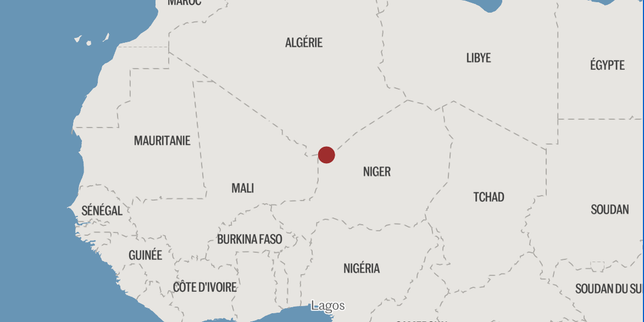
The breakdown of a single cargo truck in the Agadez region of Niger routinely seals the fate of dozens of migrants, exposing a systemic enforcement failure that transforms the Sahara Desert into a vast, unmonitored graveyard. When forty-nine people died of thirst after their vehicle stalled mid-journey, the incident was reported as an isolated mechanical tragedy. It was not. This loss of life is the direct, predictable consequence of regional security crackdowns that have forced smuggling networks off established wells and into the most treacherous, waterless corridors of the desert.
For decades, the transit route through Niger served as the primary artery for West Africans seeking work in Libya or passage to Europe. Human mobility was a visible, regulated piece of the local economy. That changed when external political pressure transformed migration from a management issue into a criminal enterprise. When you criminalize a trade that has deep economic roots, you do not stop the flow. You merely drive it into the shadows.
The Displacement of Danger
To understand why a mechanical breakdown becomes a death sentence, one must look at how enforcement maps have shifted over the last decade. Historically, migrant convoys moved along known tracks. They stopped at recognized water points. Drivers navigated routes where help was a day's travel away.
When Niger, under heavy international pressure, implemented strict anti-smuggling legislation known as Law 2015-036, the traditional routes became police checkpoints. The immediate result was not a reduction in people trying to cross. Instead, it triggered a rapid displacement of the transit lines.
Drivers seeking to avoid military patrols began bypassing the towns of Seguedine and Dirkou. They steered their heavily overloaded trucks deep into the open dunes of the Ténéré desert. In these areas, GPS signals are unreliable, tracks shift with the wind, and water sources do not exist.
A standard transport truck in this region carries cargo, fuel drums, and up to eighty passengers packed onto the flatbed. When an axle breaks or an engine overheats in the deep sand, the clock begins ticking immediately. The midday sun routinely pushes temperatures past 45 degrees Celsius. Without a reliable communication network or a known path, a delay of forty-eight hours evaporates the group's meager water supply.
The Economics of Abandonment
The mechanics of the smuggling trade itself exacerbate the mortality rate during a breakdown. Drivers are rarely the owners of the vehicles. They are operators working on tight margins, paid by networks that view both the trucks and the passengers as expendable assets.
When a vehicle suffers a catastrophic failure in the deep desert, the driver faces a brutal calculation. Staying with the truck means certain capture if a military patrol finds them, or slow dehydration if they do not. Frequently, drivers take the remaining functional transport, or the only satellite phone, and promise to return with spare parts or help. They rarely do. Returning means risking arrest under anti-smuggling laws that carry sentences of up to thirty years.
The passengers are left behind without navigation tools, shelter, or clear directions to the nearest oasis. The desert quickly disorients even the determined. Walking in search of water without a landmark usually results in circles, accelerating exhaustion and fatal dehydration.
The international community has poured millions into border security infrastructure, drone surveillance, and regional police training. Yet, this high-tech apparatus is designed for detection and exclusion, not search and rescue. Satellites monitor the expanses for security threats, but there is no coordinated mechanism to deploy emergency water or medical aid to stranded civilian vehicles before it is too late.
The Mirage of Regional Stabilization
External policies often operate on the assumption that halting migration at the Nigerien border solves a broader geopolitical challenge. This perspective ignores the economic reality of the Sahel. For towns like Agadez, the transit economy replaced the tourism industry after it collapsed due to regional instability. Drivers, fixers, compound owners, and local merchants all relied on the movement of people to survive.
When the legal framework criminalized this economy overnight, it offered no viable alternative livelihoods. The trade did not vanish; it became more lucrative due to the increased risk. High risks mean higher fees for passengers, which in turn means migrants have fewer resources left to secure safe transport or adequate supplies for the journey.
The current strategy relies heavily on the assumption that making the journey sufficiently dangerous will act as a deterrent. The data suggests otherwise. Desperation overrides deterrence. As long as economic stagnation and insecurity persist in West Africa, people will board the trucks.
The Limits of Humanitarian Intervention
Humanitarian organizations face massive logistical and political hurdles when attempting to mitigate this crisis. Operating search and rescue missions in the Ténéré requires specialized equipment, heavy security escorts, and explicit government clearance, which is rarely granted swiftly.
The vastness of the terrain makes random patrols ineffective. A truck stranded in a depression between dunes is invisible from a few kilometers away. Without precise coordinates, finding a disabled vehicle is a matter of luck, and luck is a poor strategy when lives depend on hours.
Even when bodies are found, the lack of documentation makes identification nearly impossible. Families in Senegal, Nigeria, or Mali are left with permanent ambiguity, never knowing if their relatives are working in Libya, held in detention centers, or buried under the sand.
The focus on stopping the trucks has created a dead end. Border enforcement without an equal commitment to humanitarian rescue corridors guarantees that the number of unrecorded deaths in the Sahara will continue to match, or exceed, the casualties documented in the Mediterranean Sea. The desert leaves fewer traces, masking the true scale of a quiet catastrophe.