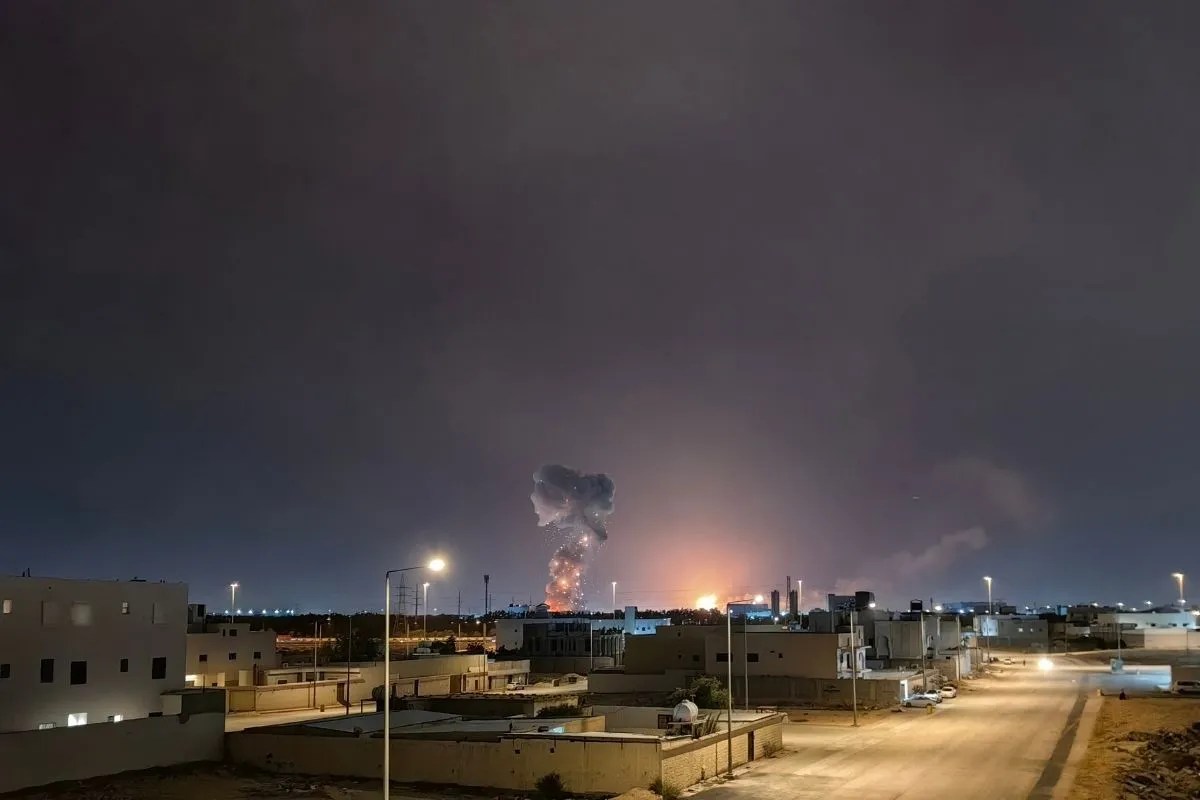
Geopolitical shockwaves rarely stay contained within government war rooms. When ballistic threats or explosive projectiles breach civilian infrastructure, the real cost is paid by migrant labor populations thousands of miles away from home. Following the October 10 attack on Riyadh's King Khalid International Airport, which resulted in multiple casualties including Indian nationals, diplomatic cables and embassy statements quickly pivoted to damage control. Yet, diplomatic reassurance often masks a deeper vulnerability embedded within the transnational workforce driving the Gulf's economic engine.
The incident at King Khalid International Airport is not an isolated security failure. It is part of an escalating pattern of regional volatility targeting critical civilian hubs. For the millions of expatriate workers from South Asia living across the Arabian Peninsula, civil aviation facilities,
Inside the Riyadh Airport Security Breach That Left Eleven Indians Injured You might also find this related article insightful: When the Lights Go Out Before the Storm.
news
Eleven Indian nationals sustained injuries during an incident at Riyadh International Airport, triggering an immediate diplomatic response from New Delhi and raising urgent questions regarding regional aviation security. The Indian Embassy in Saudi Arabia confirmed the casualty figures and stated that officials are closely monitoring the situation while providing necessary medical assistance to the affected citizens. As discussed in recent reports by NBC News, the effects are significant.
Security disruptions at major international transit hubs rarely happen in isolation. When an incident of this magnitude occurs at a high-traffic aviation node like Riyadh, the ripple effects extend far beyond local tarmac protocols. Analysts must examine the intersection of regional geopolitical tensions, airport perimeter vulnerabilities, and the rapid deployment of consular protection networks.
The Anatomy of the Incident
Details surrounding the event remain heavily scrutinized by international aviation authorities. Transport hubs in the Gulf region operate under immense pressure, handling millions of travelers annually through complex logistical corridors. When normal operations face sudden disruption, the friction between passenger safety protocols and emergency response times becomes painfully apparent.
Official statements from the Indian Ministry of External Affairs indicate that the injured individuals are receiving treatment in local medical facilities. Consular teams were dispatched immediately to coordinate with Saudi authorities, ensuring that passport replacements, medical clearances, and communication channels with families back home remained prioritized.
Yet, the primary question centers on prevention. How did a security breakdown compromise passenger safety in a zone typically fortified by multi-layered defense systems?
Geopolitical Realities of Gulf Transit Corridors
The Middle East aviation network functions as the connective tissue between East and West. Millions of South Asian expatriates rely on hubs like Riyadh, Dubai, and Doha for employment commutes and family visits. This heavy reliance means that any localized security failure directly threatens a massive diaspora population.
When regional stability fluctuates, international airports often serve as primary stress indicators. Intelligence agencies track these vulnerabilities closely, knowing that civilian infrastructure remains an attractive target for bad actors seeking maximum disruption.
- Transit Dependency: South Asian workforce populations represent a substantial percentage of daily travelers through Gulf airspace.
- Response Latency: The speed of consular intervention depends entirely on pre-existing diplomatic frameworks between New Delhi and Riyadh.
- Infrastructure Stress: High-volume passenger movement frequently challenges the threshold of emergency management protocols.
Diplomatic Mobilization and Consular Realities
Managing a crisis involving foreign nationals requires a delicate balance of assertive advocacy and diplomatic decorum. The Indian Embassy's swift activation of emergency helplines demonstrates a well-practiced playbook honed by years of handling regional contingencies.
However, consular officials often operate with constrained access during the initial hours of an active investigation. Local security agencies lock down critical information to preserve evidence and maintain operational security. This creates an information vacuum that fuels anxiety among families waiting thousands of miles away in India.
Bridging this communication gap remains one of the toughest challenges for modern foreign service officers. Social media amplifies unverified rumors instantly, forcing embassies to issue rapid clarifications even as ground facts continue to shift.
The Broader Implications for Aviation Safety
Incidents of this nature force global regulatory bodies to re-evaluate baseline security assumptions. Standard operating procedures designed a decade ago no longer suffice in an environment marked by asymmetric threats and rapid technological shifts.
Airlines operating routes through the region are reviewing their contingency plans, particularly regarding crew safety and passenger evacuation protocols during sudden disruptions. The financial cost of heightened security measures is high, but the alternative—compromised traveler safety—carries a price no carrier can afford to pay.
As the investigation in Riyadh proceeds, the focus shifts from immediate triage to long-term structural hardening. International pressure will likely mount for transparent reporting on the security lapses that permitted this breach to occur, ensuring accountability and preventing future compromises of vital transit infrastructure.