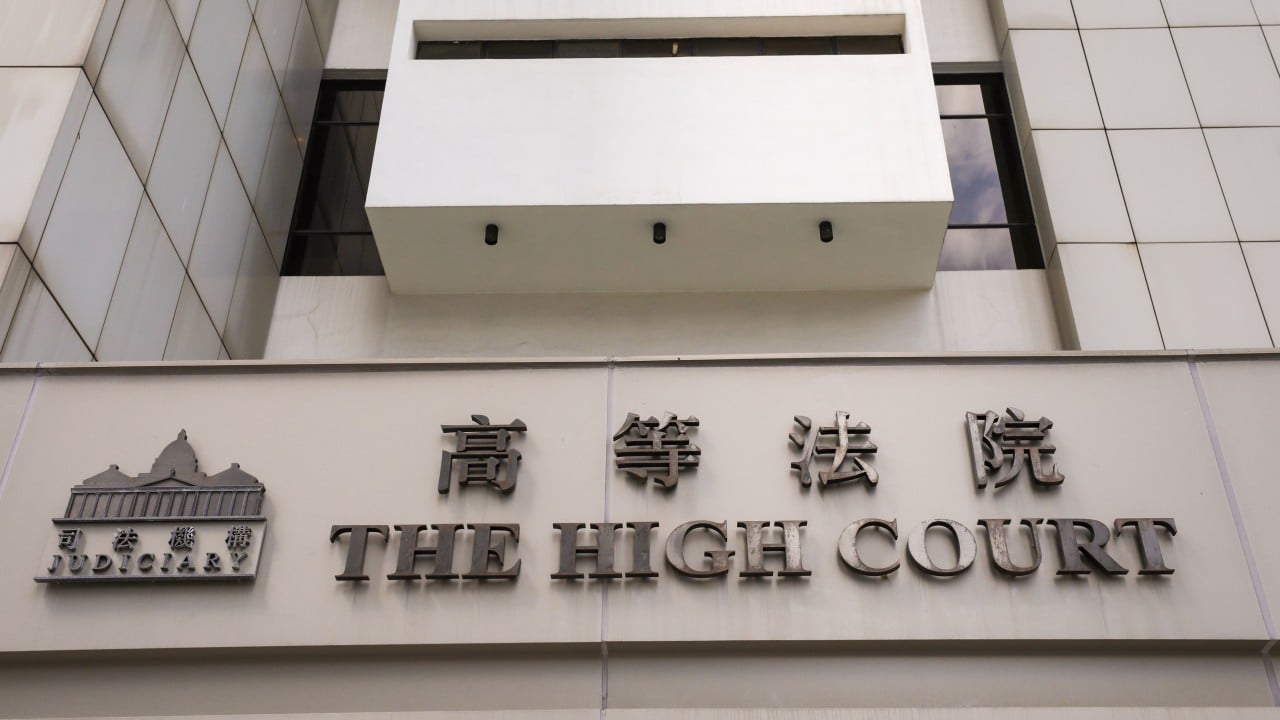
On October 29, 2026, Hong Kong’s Judiciary released a routine four-paragraph personnel notice announcing that Mr. Justice Alex Lee Wan-tang, a 60-year-old Judge of the Court of First Instance, would be elevated to Justice of Appeal of the Court of Appeal of the High Court effective the very next morning.
To the casual observer, it looked like standard bureaucratic progression for a veteran jurist who had served on the bench since 2013. In reality, the promotion of Alex Lee represents one of the most consequential institutional shifts in Hong Kong’s post-2020 legal order. Over the past six years, Lee has sat at the center of almost every major national security prosecution in the territory—shaping bail doctrine, presiding over juryless trials, and delivering verdicts in the cases of Jimmy Lai, the Hong Kong 47, and the Hong Kong Alliance.
By moving him upstairs to the Court of Appeal, Hong Kong’s judicial leadership is not merely rewarding a heavy caseload. It is embedding the primary architect of first-instance national security jurisprudence directly into the appellate bench that reviews lower-court rulings and sets binding precedent across the city.
From Crown Counsel to the Center of the National Security Bench
To understand how Alex Lee became indispensable to Hong Kong’s modern courts, look at his institutional pedigree. Born in Hong Kong in 1966, Lee earned his Bachelor of Laws and Postgraduate Certificate in Laws from the University of Hong Kong in 1989 and 1991. Unlike commercial barristers who spent decades in private chambers before taking the bench, Lee grew up inside the government’s prosecution apparatus.
He joined the then-Legal Department as Crown Counsel in 1993 and rose to Senior Crown Counsel by 1995. Though he was called to the Hong Kong Bar in 2000, his foundational years were spent mastering criminal procedure from the state’s side of the courtroom. He entered the judiciary as a District Judge in 2013 and was elevated to the Court of First Instance in 2019—just months before street protests convulsed the city and Beijing imposed the National Security Law (NSL) in June 2020.
When the Chief Executive began selecting a pool of designated judges to hear national security cases under Article 44 of the NSL, Lee’s criminal law background made him an immediate choice. What few anticipated was how frequently his name would appear on the cause lists of the territory’s most politically sensitive trials.
The Bail Ruling That Defined an Era
Lee’s career as a national security judge began with a paradox that still complicates simplified Western narratives about Hong Kong’s courts. In December 2020, while sitting in chambers, Lee granted bail to media tycoon Jimmy Lai, who had been charged with foreign collusion and fraud. It was the first time any defendant charged under the NSL had been granted bail.
That decision was short-lived. Prosecutors immediately challenged the ruling, and the Court of Final Appeal overturned Lee’s order in early 2021, establishing a strict threshold under Article 42(2) of the NSL that effectively flipped the traditional common-law presumption in favor of bail. Under the top court’s interpretation, a judge could grant bail only if convinced the accused would not continue to commit acts endangering national security.
Lee adapted quickly to the new constitutional reality. Within months, he was sitting alongside fellow designated judge Anderson Chow to reject habeas corpus and judicial review bids brought by Tong Ying-kit, the first person prosecuted under the NSL. Those early skirmishes over bail and jury trials established the procedural architecture that would govern every subsequent national security prosecution—and placed Lee squarely at the helm of that machinery.
Three Trials That Reshaped Hong Kong Law
Most Court of First Instance judges spend their years rotating through commercial disputes, personal injury claims, and routine criminal trials. Between 2021 and 2026, Alex Lee became the judicial workhorse of Hong Kong’s three defining political prosecutions.
First came the Hong Kong 47 subversion case. Alongside Judges Andrew Chan and Johnny Chan, Lee presided over the sprawling, 118-day trial of pro-democracy politicians and activists accused of conspiring to subvert state power through an unofficial legislative primary. The panel’s rulings stripped away conventional common-law defenses regarding legislative immunity and broadened the definition of "other unlawful means" under Article 22 of the NSL to include non-violent political tactics aimed at paralyzing government operations.
Second was the marathon trial of Jimmy Lai. Sitting on a three-judge panel without a jury, Lee scrutinized thousands of pages of editorial meetings, WhatsApp messages, and Apple Daily broadcasts. During hearings in August 2025, Lee drew a sharp doctrinal line from the bench, telling defense counsel that while opposing the government was not inherently wrong, using what he termed "nefarious means" to damage Hong Kong crossed into criminality. In December 2025, the panel convicted Lai on foreign collusion and sedition charges, dismissing his testimony as inconsistent and unreliable. Two months later, in February 2026, the court handed the 78-year-old publisher a 20-year prison sentence.
Third came the subversion prosecution of the Hong Kong Alliance in Support of Patriotic Democratic Movements of China and its former leaders, Lee Cheuk-yan and Chow Hang-tung. In August 2026, Lee and his fellow judges convicted the organizers of the city’s annual Tiananmen Square vigils of inciting subversion. In that judgment, Lee’s panel solidified an expansive interpretation of constitutional breach—holding that inciting people to end Communist Party leadership constituted "other unlawful means" even in the absence of force, threats of violence, or an underlying criminal offense.
Few judges in any common-law jurisdiction have authored so much foundational doctrine on state security in so compressed a timeframe.
Why the Promotion Matters Now
Standard news reports framed Lee’s October 2026 elevation as a routine merit-based promotion recommended by the Judicial Officers Recommendation Commission (JORC) and approved by the Chief Executive. That explanation misses the strategic timing and institutional mechanics of Hong Kong’s appellate system.
By late October 2026, the colossal first-instance trials that had consumed the High Court’s docket for nearly five years were finally concluding. With verdicts and sentences delivered in the Hong Kong 47, Jimmy Lai, and Hong Kong Alliance cases, the center of gravity in Hong Kong’s national security litigation was shifting decisively upward—from trial courts to the Court of Appeal.
Under Hong Kong’s appellate rules, a judge cannot sit on an appeal against their own trial verdict. Lee will be recused from reviewing his own decisions in the Lai or Alliance cases. However, the Court of Appeal handles dozens of interlocutory appeals, sentencing reviews, magistrate appeals, and related public-order and sedition cases arising under both the 2020 NSL and Hong Kong’s domestic Safeguarding National Security Ordinance (enacted under Article 23 in 2024).
Putting Lee on the Court of Appeal serves two immediate institutional functions:
- Doctrinal continuity at the appellate tier. As older appellate justices retire, the judiciary needs jurists intimately familiar with the factual records and statutory frameworks of post-2020 security laws. Lee brings encyclopedic knowledge of how those statutes have been litigated at trial.
- Bench capacity amid talent constraints. Recruiting senior practitioners from the private Bar to join the High Court bench has grown noticeably harder since 2020, particularly for criminal and public-law dockets. Promoting seasoned career judges from within the Court of First Instance is the most reliable way for the judiciary to prevent appellate backlogs.
The Shadow of Sanctions and Judicial Isolation
Any honest assessment of Alex Lee’s career must also confront the geopolitical friction surrounding Hong Kong’s designated judges.
Since 2023, lawmakers in Washington—including members of the Congressional-Executive Commission on China—have repeatedly urged the U.S. government to impose targeted sanctions on dozens of Hong Kong prosecutors and designated national security judges, explicitly naming Alex Lee among them. In May 2023, then-Hong Kong Bar Association chairman Victor Dawes warned publicly that foreign sanctions against local judges posed a genuine threat to the territory’s ability to recruit top legal talent.
Inside Hong Kong’s legal community, Lee’s reputation remains nuanced rather than monolithic. Barristers who have appeared before him frequently describe a sharp, well-prepared criminal lawyer who maintains firm control over his courtroom, presses prosecutors on evidentiary gaps, and writes meticulous, tightly reasoned judgments. Critics outside the city, including international human rights organizations and foreign legal scholars, argue that those very qualities—methodical common-law reasoning applied to sweeping security statutes—have given judicial legitimacy to the dismantling of political opposition.
Both observations can be true at once. Lee did not write the National Security Law, nor did he initiate the prosecutions brought by the Department of Justice. Yet through hundreds of pages of rulings on bail, trial procedure, and statutory interpretation, he translated Beijing’s legislative text into enforceable Hong Kong case law.
What Changes on the Appellate Bench
Moving from the Court of First Instance to the Court of Appeal changes a judge’s daily work in subtle but powerful ways. Trial judges manage witnesses, rule on evidence in real time, and find facts. Appellate justices sit in panels of three, test the outer boundaries of legal arguments through Socratic questioning of senior counsel, and write opinions that bind every magistrate, District Judge, and Court of First Instance judge below them.
In Hong Kong’s legal hierarchy, the Court of Appeal is the final stop for the vast majority of criminal litigants, since the Court of Final Appeal grants leave to appeal only on points of law of great and general importance or where substantial and grave injustice has occurred.
As of October 30, 2026, Alex Lee occupies one of those appellate chairs at 38 Queensway. His promotion ensures that the legal philosophy forged in the crucible of Hong Kong’s most divisive trial courtrooms will now help govern the city’s appellate jurisprudence for years to come.