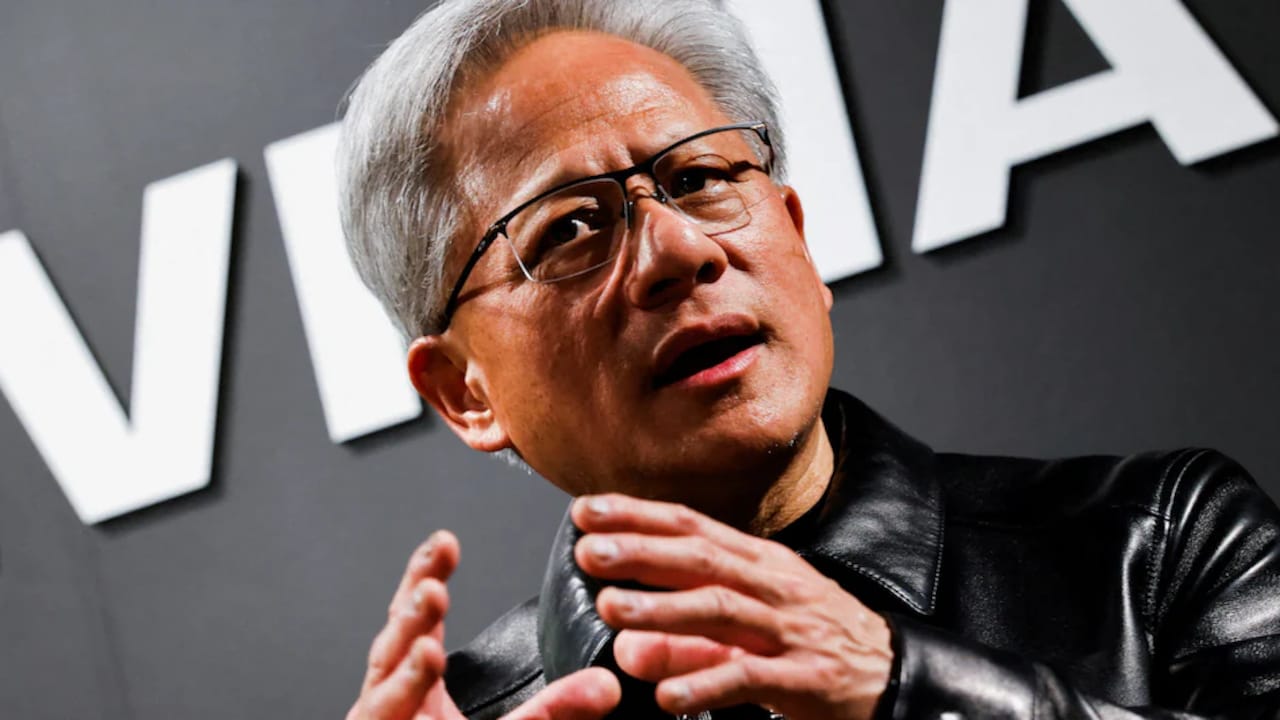
The rumor mill in Santa Clara rarely stops grinding, yet the whispers echoing through Nvidia’s campus carry an unusual edge of anxiety. A recent report suggesting that Chief Financial Officer Colette Kress faces a divided workforce—with pockets of staff allegedly clamoring for the return of founder Jensen Huang—highlights a profound structural tension inside the world's most valuable chipmaker, even if the premise relies on a distorted reading of corporate reality. Huang never left the building. Rather, the friction stems from the growing pains of an engineering juggernaut transitioning from a scrappy, founder-led hardware innovator into a trillion-dollar financial institution where capital allocation dictates product velocity.
Understanding this internal friction requires looking past sensationalized headlines and examining how power actually operates inside modern semiconductor giants. When an organization scales at breakneck speed, the friction between engineering intuition and financial discipline inevitably sparks turf wars. Employees accustomed to the unfiltered, flat hierarchy long championed by Huang suddenly find themselves answering to layers of operational bureaucracy, margin targets, and institutional risk management. That cultural shift, often personified by the growing influence of the finance office, is the real root of the unrest.
The Myth of the Absent Founder
To grasp why rumors of a "return" gain traction among observers, you have to understand the cult of personality surrounding Jensen Huang. For over three decades, Huang has operated less like a traditional chief executive and more like a chief architect who happens to sign the checks. He famously eschews conventional status reports, maintains dozens of direct reports, and plunges into the granular details of silicon design and software stacks.
When a company explodes in valuation and headcount, however, no single human can remain the sole bottleneck for every operational decision. Delegation becomes a mathematical necessity. As Huang increasingly spends his days acting as a global statesman—negotiating sovereign artificial intelligence infrastructure deals with heads of state, managing geopolitical supply chain choke points, and evangelizing the platform to Wall Street—the day-to-day gravitational pull inside the company naturally shifts.
To veteran engineers who joined when Nvidia was fighting for survival against graphics rivals, this delegation feels like abandonment. When a manager rejects a speculative research budget or demands stricter return-on-investment metrics before greenlighting a new silicon tape-out, frustrated staff instinctively blame the accountants. They pine for the "old Jensen," forgetting that the old Jensen was running a company a fraction of its current size. The call for Huang’s return is not a literal demand to reinstate a departed leader; it is a nostalgic plea to restore an era when engineering ambition superseded spreadsheet conservatism.
The CFO as the Lightning Rod
Colette Kress did not arrive at Nvidia yesterday. Since joining as Chief Financial Officer in 2013 after stints at Cisco and Microsoft, she has been the steady hand guiding the company’s financial architecture through cryptocurrency booms, gaming busts, and the unprecedented generative artificial intelligence surge. By every traditional Wall Street metric, her tenure is a masterclass in capital management. She oversaw the disciplined allocation of research and development funds that allowed Nvidia to build its software moat long before competitors realized artificial intelligence would consume the data center.
Yet in high-growth technology companies, the finance chief inevitably becomes the primary villain when rapid expansion meets organizational reality. As Nvidia’s market capitalization ballooned, the stakes of every product cycle multiplied. A delayed chip architecture or a miscalculated wafer order with foundry partners no longer just dents a quarterly earnings report; it wipes out hundreds of billions of dollars in shareholder value overnight.
Consequently, the office of the CFO wields immense structural power over resource allocation. Kress and her lieutenants are tasked with enforcing discipline across sprawling divisions that have grown accustomed to blank checks. When engineering teams face tighter scrutiny over server cluster allocations, headcount freezes in non-core divisions, or strict adherence to gross margin targets, the finance department takes the heat.
Consider a hypothetical scenario common in hyper-growth chipmakers. Imagine a team of senior researchers developing a novel interconnect fabric that will not generate meaningful revenue for four years. Under a pure founder-driven ethos, that project gets funded on gut instinct and technical elegance alone. Under a mature, institutional framework, the finance team demands milestone-based funding, supply chain viability assessments, and clear cannibalization analyses against existing product lines. To the researchers, that scrutiny feels like suffocation. To the CFO, it is fiduciary survival.
The Golden Handcuffs Dilemma
Money changes everything inside a corporate culture, and few workforces have experienced wealth creation on the scale of Nvidia’s rank and file. Over the past several years, astronomical stock appreciation turned thousands of mid-level engineers and managers into multimillionaires overnight. While media narratives often portray this windfall as a retention superpower, veteran industry analysts recognize it as a double-edged sword that quietly corrodes organizational cohesion.
When half the engineering floor no longer needs to work to pay their mortgage, traditional management levers lose their potency. You cannot motivate a financially independent principal architect with a standard annual bonus or a modest promotion. They stay for only two reasons: the thrill of solving impossible technical problems, and direct proximity to visionary leadership.
This dynamic creates a stark generational and financial divide within the workforce:
- The Vested Veterans: Early and mid-tenure employees sitting on massive, fully vested equity packages who prioritize technical autonomy, work-life balance, and the purity of the original engineering mission.
- The Hungry Arrivals: Recent hires recruited at peak valuations whose compensation packages rely heavily on future stock appreciation, making them fiercely protective of quarterly financial performance and institutional stability.
- The Middle Management Buffer: Directors caught between demanding executives who expect relentless execution and wealthy subordinates who can walk out the door the moment a meeting turns overly bureaucratic.
When veterans clash with newly minted managers over process and financial oversight, the friction turns personal. The veterans view the newer, process-oriented leadership as mercenaries protecting a stock price, while the newer cohort views the old guard as undisciplined relics refusing to adapt to the realities of a multi-trillion-dollar enterprise. Kress, as the ultimate steward of shareholder value and financial predictability, naturally becomes the symbolic figurehead for the institutional camp.
Wall Street Expectations Versus Silicon Reality
The tension inside Santa Clara is magnified by the relentless pressure of public markets. When a company becomes the bellwether for the entire global technology sector, beating earnings estimates is no longer enough; you must obliterate them, raise guidance, and prove that the growth trajectory has no ceiling. This environment breeds an intense institutional obsession with gross margins and supply chain predictability.
Maintaining gross margins north of seventy percent in a physical hardware business is a feat that defies semiconductor history. Hardware is cyclical, capital-intensive, and plagued by manufacturing yields, packaging bottlenecks, and fluctuating component costs. Achieving software-like margins on physical silicon requires ruthless pricing power, tight inventory control, and zero tolerance for bloated operational expenses.
Every decision made inside the company now filters through the prism of protecting that financial profile. When engineering teams want to experiment with custom silicon configurations for niche clients or absorb higher manufacturing costs to accelerate a product launch by six weeks, the financial calculus pushes back. The finance organization must weigh the immediate margin compression against the long-term strategic gain.
For engineers who view their work as an existential race to build the foundational compute layer of human civilization, quibbling over basis points of gross margin feels absurd. They see hyperscale cloud providers designing custom in-house chips and agile startups attacking specialized inference workloads. From the trenches, any hesitation dictated by financial prudence looks like handing ammunition to the enemy.
Historical Echoes in Silicon Valley
We have seen this exact movie play out across Silicon Valley for forty years. Whenever a founder-led technology company achieves monopolistic dominance, an internal civil war erupts between the builders and the operators.
Look back at Apple during the mid-1980s, when the friction between Steve Jobs’s uncompromising product obsession and John Sculley’s operational and financial discipline tore the company apart. Or examine Microsoft in the early 2000s, when the transition from Bill Gates’s technical stewardship to Steve Ballmer’s commercial and financial optimization stifled innovation for a decade while maximizing short-term profits. Even Intel, once the undisputed king of semiconductors, suffered a slow decline largely because financial engineering and margin protection gradually replaced manufacturing risk-taking in the boardroom.
| Corporate Phase | Primary Decision Driver | Cultural Dynamic | Primary Failure Mode |
|---|---|---|---|
| Founder-Led Ascent | Technical intuition and speed | Flat hierarchy, high tolerance for chaos | Cash burn, missed deadlines, operational fragility |
| Institutional Scale | Margin protection and predictability | Process-heavy, specialized silos, risk management | Bureaucratic paralysis, loss of top creative talent |
| Post-Founder Transition | Shareholder return and market defense | Political turf wars, defensive product roadmaps | Disruption by hungrier, irrational competitors |
Nvidia is currently standing squarely on the fault line between the first and second phases of this lifecycle. The company has not yet fallen prey to the stagnation that doomed Intel, precisely because Jensen Huang remains actively at the helm, constantly injecting urgency and technical direction into the bloodstream of the organization. However, the sheer scale of the enterprise means the institutional machinery represented by Kress and the executive leadership team is growing heavier by the quarter.
The Succession Shadow
Underlying all the chatter about internal divisions is the elephant in every boardroom meeting: succession. Jensen Huang is in his sixties. While he exhibits the stamina of an executive half his age, institutional investors and board members cannot ignore actuarial reality. A company worth trillions of dollars cannot rely indefinitely on a single charismatic leader operating with sixty direct reports and an idiosyncratic management style that nobody else can replicate.
Preparing for a post-Huang era requires building an institutional framework capable of surviving without him. That means codifying decision-making processes, empowering operational executives, and ensuring that financial governance is rock-solid. Colette Kress is a central pillar of that institutionalization. Her steady, transparent communication with institutional investors provides the exact counterbalance Wall Street demands to offset Huang’s theatrical, visionary keynotes.
To many insiders, however, the process of building a succession-ready company feels indistinguishable from dismantling the culture that made Nvidia great in the first place. When systems replace intuition, the company becomes safer for pension funds, yet far less exciting for rebellious engineers. The whispers about employees wanting Huang to "return" to direct, unfiltered control are, at their core, a subconscious rejection of Nvidia’s inevitable maturation. Staff members are mourning the passing of the startup ethos, even as they cash the checks made possible by its corporate transformation.
The Geopolitical and Supply Chain Chokehold
Another overlooked factor driving internal friction is the brutal reality of modern semiconductor supply chains. In the past, if Nvidia designed a superior chip, it simply bought more manufacturing capacity and flooded the market. Today, the company operates inside a geopolitical vice. Export restrictions limit what can be sold to major Asian markets, while advanced packaging capacity at foundries remains fiercely contested.
Managing these constraints is as much a financial and legal puzzle as an engineering one. When wafer supply is finite, deciding which customer gets priority allocation—and which product line gets sidelined—becomes a high-stakes financial optimization problem. Kress and the operations team must balance immediate revenue recognition against long-term strategic relationships with hyperscalers, sovereign buyers, and enterprise clients.
Engineers working on architectures that get deprioritized due to packaging bottlenecks or margin optimization naturally feel sidelined. They do not sit in the meetings where sovereign trade compliance and multi-billion-dollar supply prepayments are negotiated; they only see their pet projects starved of resources. Without transparent communication bridging the gap between the executive suite and the engineering labs, resentment festers and metastasizes into rumors of leadership rifts.
Navigating the Impossible Balance
There is no clean administrative fix for the friction gripping Nvidia. If Huang were to suddenly dismantle the financial controls and operational processes built over the last decade to appease nostalgic engineers, Wall Street would punish the stock mercilessly at the first sign of margin slippage or inventory bloat. Conversely, if the finance and operations teams tighten the screws too aggressively, Nvidia risks triggering an exodus of the exact architectural talent that keeps it two generations ahead of rivals.
The reality is that a divided workforce is not necessarily a sign of impending collapse; in hyper-successful technology companies, it is the natural byproduct of success. Creative friction between those who want to spend infinitely to invent the future and those who must ensure the business remains profitable enough to fund that invention is healthy, provided neither side achieves total victory.
Nvidia’s true test over the coming years will not be fending off rival chipmakers or navigating shifting regulatory winds. It will be proving that an organization can institutionalize its financial and operational backbone without suffocating the irrational, founder-driven urgency that built its empire. Until leadership finds a way to make wealthy, restless engineers feel like builders rather than cogs in a margin-generating machine, the whispers in the hallways of Santa Clara will only grow louder.