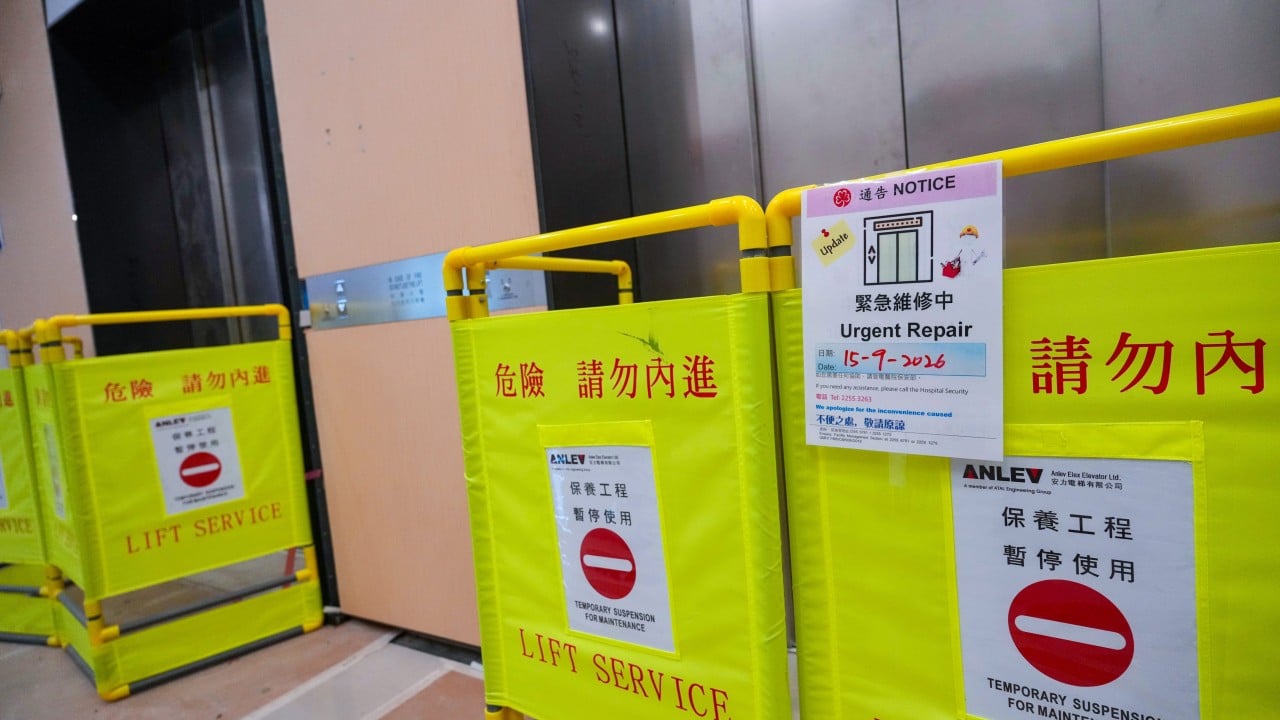
An official investigation into a sudden elevator plunge at Hong Kong's flagship Queen Mary Hospital has uncovered suspected illegal acts, falsified maintenance records, and severe regulatory blind spots. When a lift carrying hospital staff dropped unexpectedly in early 2024, initial public messaging framed the event as an isolated mechanical failure. Subsequent forensic engineering reviews and statutory inquiries revealed a much darker reality—one involving alleged document forgery, bypassed safety protocols, and a procurement system that rewards the lowest bidder at the expense of human life.
The Anatomy of a Preventable Plunge
Hospital elevators are not ordinary vertical transport. They are critical life-support arteries moving trauma patients, surgical teams, blood supplies, and heavy diagnostic machinery across dozens of floors every minute. When one fails, the consequences ripple through emergency rooms and operating theaters instantaneously.
In the Queen Mary Hospital incident, the elevator did not merely stall between floors. According to findings from the Electrical and Mechanical Services Department (EMSD) and internal hospital reviews, the carriage experienced an unintended downward movement caused by brake system anomalies and improper maintenance execution. Nobody died. That single fact is the only reason this story did not trigger immediate criminal manslaughter proceedings.
Investigators examining the post-incident paper trail noticed glaring discrepancies between the physical state of the braking components and the pristine inspection logs signed off by registered lift workers. Parts that showed months of unmitigated wear were listed as freshly serviced. Safety checks that require physical testing under load conditions had been ticked off in impossibly short timeframes.
This is where routine negligence crosses into statutory crime. Under Hong Kong's Lifts and Escalators Ordinance (Cap. 618), falsifying maintenance records or signing certificates of examination without actually performing the mandated tests carries severe criminal penalties, including heavy fines and imprisonment. When the probe shifted from mechanical diagnostics to forensic handwriting and digital timestamp analysis, the hospital authority was forced to refer the matter to law enforcement.
How Low-Bid Procurement Breeds Corner-Cutting
To understand why a technician would risk a prison sentence by faking a safety log at a major public teaching hospital, you have to follow the money. Public infrastructure maintenance in Hong Kong operates almost exclusively on competitive tendering, where price carries disproportionate weight.
Big-name original equipment manufacturers (OEMs) build the lifts, install them at thin margins, and expect to recoup profits over decades through proprietary maintenance contracts. Rival third-party contractors undercut those bids aggressively to win public sector volume. Once a contractor locks in a multi-year hospital contract at a razor-thin margin, the math becomes brutal.
Labor costs in the vertical transport sector have climbed steadily for over a decade, driven by an aging workforce and strict licensing requirements. If a contractor bids 30 percent below market rate to win a Hospital Authority tender, they cannot magically make brake pads cheaper or double the speed of gravity. They squeeze the only variable they control—time on site.
A thorough, by-the-book preventive maintenance session on a high-speed hospital traction lift takes two licensed technicians several hours. It requires taking the car out of service, entering the hoistway pit, inspecting governor ropes, measuring brake lining thickness with calipers, and testing emergency overspeed governors. In a hospital running at 110 percent capacity, taking a primary lift offline for four hours triggers immediate pushback from facility managers dealing with ward congestion.
The technician gets caught in a vise. Management demands twelve inspections per shift instead of six. Hospital staff demand the lift back in service within forty minutes. The contractor's profit margin evaporates if overtime is logged. So the technician wipes down the cab, checks the call buttons, signs the logbook, and moves to the next tower. Over months, minor wear compounds into catastrophic failure.
The Myth of Self-Policing in Critical Infrastructure
Regulatory frameworks across the developed world rely heavily on a model of delegated compliance. The government does not inspect every elevator every month. Instead, the state licenses engineers and workers, empowers them to certify safety on the state's behalf, and conducts random audits to keep everyone honest.
This model collapses the moment financial incentives align against compliance. Consider a hypothetical example of how this plays out across a large medical complex. Suppose a facility houses eighty lifts managed by a single subcontractor employing twenty field technicians. If the regulator audits two percent of those lifts annually, the statistical probability of any single falsified logbook being caught before a mechanical failure occurs is near zero.
At Queen Mary Hospital, the warning signs were embedded in operational data long before the carriage dropped. Frequent minor fault codes, door sensor resets, and erratic leveling behavior are the early symptoms of deteriorating mechanical health. Yet maintenance contractors often treat fault logs as nuisance metrics to be cleared rather than diagnostic evidence requiring root-cause teardown.
When the EMSD stepped in following the incident, they did not just inspect the damaged unit. They widened the dragnet to inspect sister units maintained by the same contractor across the public healthcare network. That broader sweep uncovered systemic procedural lapses—proof that the Queen Mary failure was a symptom of an organizational culture, not a rogue employee having a bad day.
Why Hospital Lifts Face Unique Mechanical Stress
Standard commercial office towers experience predictable traffic spikes at 9:00 AM, noon, and 6:00 PM. Between those peaks, elevators sit idle, allowing traction motors, brake coils, and hydraulic fluids to cool down.
Public hospitals never sleep, and Queen Mary Hospital is one of the busiest acute-care facilities in Asia. Its elevators operate under continuous duty cycles twenty-four hours a day. Worse, the load profiles are violent and erratic.
- Asymmetric Heavy Loads: Rolling a fully equipped intensive care bed with portable ventilators, infusion pumps, and four medical staff into a lift places sudden, uneven point-loads on the car frame and guide shoes.
- Impact Trauma: Heavy stainless-steel food carts, laundry bins, and surgical supply trolleys slam against door sills and inner walls hundreds of times daily, knocking door interlocks out of alignment.
- Aging Shaft Infrastructure: Queen Mary Hospital spans buildings constructed across vastly different eras, from mid-twentieth-century blocks to modern clinical wings. Retrofitting high-speed, microprocessor-controlled lift systems into older, narrower concrete shafts creates thermal dissipation problems and tight mechanical tolerances that punish sloppy maintenance.
When you combine relentless 24/7 duty cycles with deferred component replacement, brake linings glaze over, electromagnetic brake plungers stick due to accumulated carbon dust, and electronic relays fail under heat stress. In a properly maintained system, redundant dual-circuit brakes catch the car within milliseconds of an anomaly. When both circuits suffer from identical neglect, the redundancy exists only on paper.
The Legal Fallout and Criminal Liability
Naming "suspected illegal acts" in an official investigation report changes the stakes entirely for everyone involved—from the field technician holding the wrench to the registered lift engineer who countersigned the periodic examination certificate.
Under Hong Kong law, statutory responsibility is bifurcated. The registered lift worker performs the hands-on maintenance, while the registered lift engineer conducts periodic examinations and signs the statutory forms submitted to the government. If an engineer signs a form attesting that safety gear was tested when no such test occurred, that engineer faces disciplinary tribunals, permanent revocation of their license, and criminal prosecution for making false declarations.
Corporate directors also face heightened scrutiny. While contractors historically insulated themselves by blaming individual technicians for "violating company policy," prosecutors increasingly look at whether impossible workload quotas effectively forced workers to falsify records. If internal emails, GPS tracking logs, or timesheet records show that management routinely billed the Hospital Authority for four-hour maintenance blocks while dispatching the same crew to three different districts in a single afternoon, liability climbs straight up the corporate ladder.
For the Hospital Authority, the scandal exposes an embarrassing governance gap. Hospital administrators manage billions in public funds, yet facility management oversight often relies on passive contract administration—checking whether invoices match service schedules rather than auditing physical engineering quality.
What Must Change Before Someone Dies
Suspending a contractor from bidding on new tenders for six months is standard bureaucratic theater, and it rarely fixes anything. Large contractors simply absorb the penalty, restructure under a slightly different corporate entity, or wait out the suspension while continuing to collect revenue on existing multi-year contracts.
Real reform requires dismantling the structural incentives that make cheating profitable. First, public healthcare tenders must eliminate lowest-price weighting for life-safety systems. Contracts should mandate minimum staffing ratios tied directly to the number and age of lifts in a facility, backed by biometric check-in systems inside machine rooms and hoistway pits that verify a licensed worker physically spent the required hours on site.
Second, maintenance logs must move off paper clipboards and into tamper-proof digital telemetry. Modern elevator controllers already record every door cycle, brake actuation, motor current spike, and fault code in real time. Giving hospital facility managers and government regulators direct, read-only API access to raw controller data makes it impossible for a contractor to claim a lift was serviced when the controller telemetry shows the unit never entered inspection mode.
Third, independent third-party commissioning engineers—paid directly by the Hospital Authority rather than the maintenance vendor—must conduct unannounced physical tear-down audits every quarter. When contractors know that any lift in the hospital could be stripped down by a hostile inspector tomorrow morning, corner-cutting becomes financial suicide.
Queen Mary Hospital dodged a mass-casualty tragedy because the mechanical failure happened when the car was lightly loaded and the emergency buffers held. Relying on luck is not a safety strategy, and until regulators treat falsified maintenance logs with the same severity as drunk driving or industrial sabotage, passengers stepping into public elevators are placing their lives on the honesty of an underpaid technician racing against a broken clock.