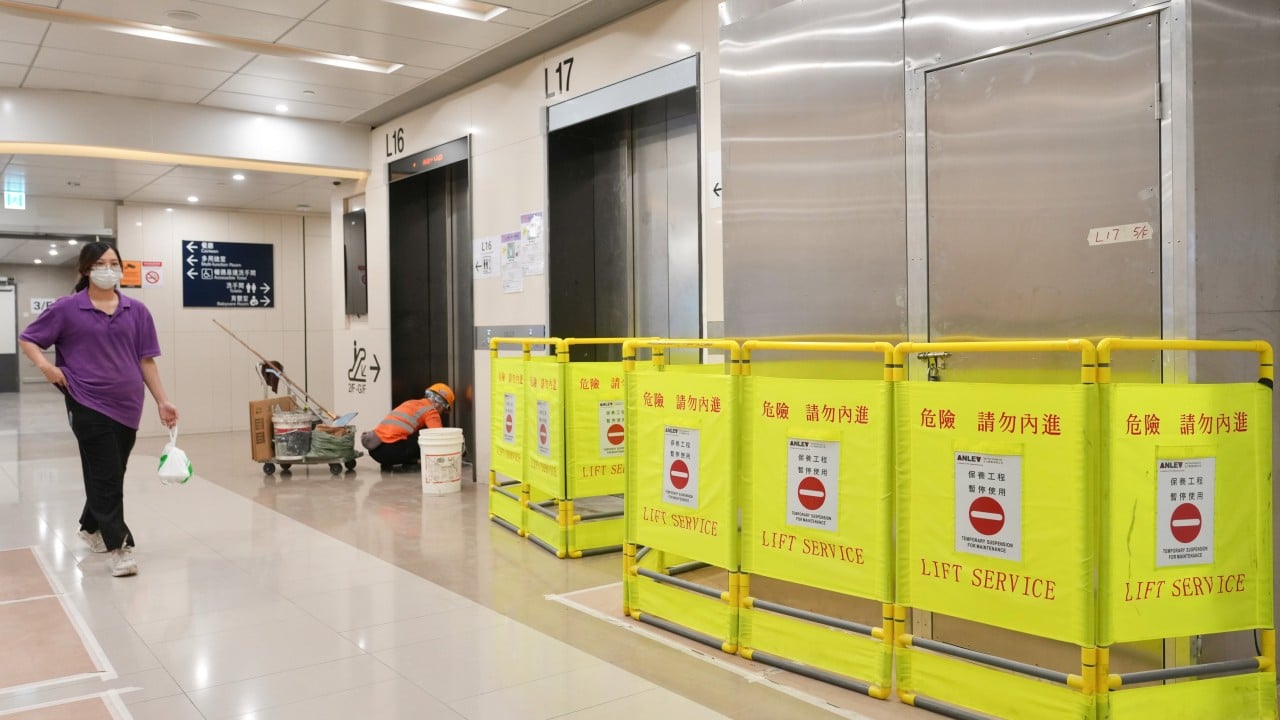
The modernization of Queen Mary Hospital was billed as a crown jewel for public healthcare infrastructure, a HK$13.5 billion redevelopment designed to secure decades of advanced medical capability. Instead, the flagship project has hit a wall of mechanical failure. Out of 28 newly installed elevators in the complex's premier clinical block, only a tiny fraction remain operational, stalling the migration of critical patient care services and throwing government oversight into sharp relief. Behind this administrative paralysis lies a cascading series of component faults, trapped passengers, and intense scrutiny directed squarely at major contractors.
When critical infrastructure fails before it even admits its first patient, the breakdown points to systemic vulnerabilities within procurement, installation oversight, and quality assurance.
The Anatomy of a Vertical Collapse
Modern medical architecture relies entirely on uninterrupted vertical mobility. A multi-story clinical block cannot function when horizontal transfer is fast but vertical transit is non-existent. Equipment transport, emergency bed movement, surgical team deployment, and daily patient foot traffic depend on high-reliability lift engineering.
Yet, reports tracking the new clinical block revealed that out of 28 vertical transit systems, up to 25 suffered chronic operational disorders. Multiple units ground to sudden halts, trapping passengers inside enclosed shafts for extended durations. Anlev Elevator Limited, the contractor tied to the installation, recorded numerous specific failure reports over a twelve-month window.
These were not minor cosmetic flaws or trivial software glitches. These incidents involved core component malfunctions. When a lift designated for a premier medical facility traps hospital staff or visitors repeatedly, the safety margins built into public tenders evaporate.
Beyond the Contractual Default
Government bodies, including the Architectural Services Department, the Electrical and Mechanical Services Department (EMSD), and the Hospital Authority, issued coordinated statements demanding comprehensive structural and mechanical rectifications. They pointed squarely at missed contractual requirements.
However, regulatory warnings and threats of financial compensation obscure a deeper operational reality. Public infrastructure projects of this scale operate under intense scheduling pressure. Deadlines stretch across decades, budgets face constant political calibration, and site management teams juggle hundreds of simultaneous sub-contractor dependencies.
When a multi-system vertical transport network fails on this magnitude, the root cause typically traces back to a breakdown in integrated testing. Elevators are rarely manufactured in isolation; they integrate mechanical hoisting gear, complex electrical relay architectures, safety governors, and proprietary software controllers. If installation occurs under rushed conditions or if interface testing between building power supplies and car controls is truncated, latent defects survive long past the initial handover phase.
Furthermore, the shadow of previous workplace tragedies hangs heavy over the site. An industrial fatality inside a lift shaft during the early phases of construction forced immediate halts and triggered independent inquiries. While site safety investigations and mechanical performance reviews are distinct administrative processes, cumulative disruptions inevitably fracture project momentum, diluting quality control focus precisely when complex verification is most required.
The Cost of Delayed Integration
The immediate casualty of this mechanical gridlock is clinical capacity. Clinical Block 1 was intended to absorb heavy patient volumes, relieving chronic congestion across legacy hospital wards. Because the vertical transit spine remains crippled, the building sits largely underutilized, restricted to peripheral non-clinical functions like basic laboratories and retail spaces.
Public representatives have voiced sharp frustration over the lack of early transparency. When complex projects drift off schedule due to fundamental component failures, institutional opacity breeds public distrust. The official remediation timeline now points toward the final quarter of the year for full defect rectification, but meeting that target requires flawless execution from engineering teams that have already missed primary benchmarks.
Fixing the hardware is only the surface requirement. The deeper challenge rests on whether traditional procurement models can effectively penalize systemic underperformance without crippling the broader supply chain needed to keep public facilities running. Until accountability matches the scale of the failure, multi-billion-dollar expansions will remain vulnerable to single-point engineering collapses.