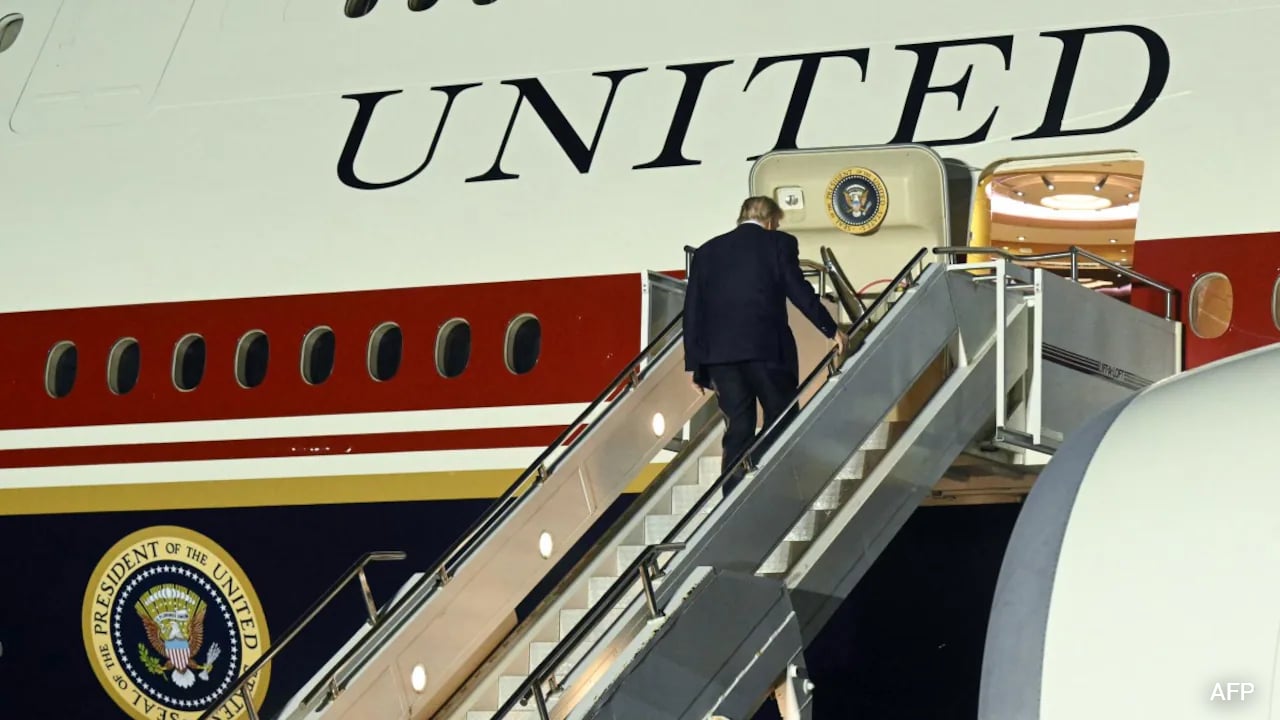
President Donald Trump accepted a $400 million Boeing 747-8 aircraft from Qatar to serve as a presidential transport while Boeing's official replacement program remains years behind schedule, turning a decades-old aerospace bottleneck into a constitutional and national security flashpoint.
Look past the cable-news outrage and the headline insults. Both sides of the argument are missing the real story. Critics treat the jet like a simple brown bag of cash handed over in the dead of night, while defenders treat it like a clever real-estate flip that outsmarts Washington procurement. Neither captures what actually happens when a foreign sovereign hands a head of state a used widebody airframe that has spent over a decade flying in royal service.
An airplane is not a watch or a painting. A four-engine jumbo jet is a flying command post, a surveillance surface, a diplomatic bargaining chip, and a multi-hundred-million-dollar maintenance obligation all rolled into one pressurized aluminum tube. When a commander in chief steps aboard an airframe previously operated by Qatar Amiri Flight, the question isn't merely whether someone broke a rule on paper. The question is who controls the machinery of American power—and what it costs to make a foreign-flown jet safe for the leader of the free world.
Why a Used Jumbo Jet Looked Tempting
Washington's presidential airlift fleet has been aging in plain sight for years. The existing VC-25A aircraft are built on 1970s-era 747-200 airframes that have logged decades of grueling global missions. Replacing them with custom-built VC-25B jets has turned into one of the most notorious defense acquisition headaches in modern aviation, plagued by supply-chain snags, labor shortages, cost overruns, and multi-year delays that pushed deliveries well past original targets.
From the perspective of a president impatient with defense contractors, a ready-built Boeing 747-8 sitting in Qatar's royal fleet looks like an instant shortcut. Originally manufactured in the United States and delivered to Qatar Amiri Flight in 2012, the jet already has widebody range, VIP cabin fittings, and a familiar airframe pedigree. Why wait years for a slow-moving contractor when a luxury widebody is already sitting on the tarmac?
That logic makes intuitive sense if you think of an airplane like a corporate charter. Buy or borrow the cabin, skip the factory line, and get moving.
It falls apart the moment you understand how a true presidential aircraft works. A real Air Force One isn't just leather couches and conference tables. It is hardened against electromagnetic pulse effects, wired for encrypted global command-and-control communications, equipped with defensive countermeasures, and swept from nose cone to tail fin to ensure no unauthorized sensors, transmitters, or compromised components are hidden inside.
What Nobody Wants to Admit About the Price Tag
Calling a $400 million aircraft "free" is an accounting illusion. Even if a foreign government transfers title without charging a dime for the hull, turning a former VIP transport into a secure executive aircraft demands heavy spending on inspections, communications suites, security clearances, and ongoing maintenance.
Consider a hypothetical example to see how those numbers stack up. Suppose a municipality is given a decommissioned luxury tour bus for zero dollars. The bus looks sharp on the outside, yet it lacks commercial radios, needs a full mechanical teardown, requires custom security hardware, and burns heavy fuel every mile. By the time mechanics finish rebuilding systems and certifying it for high-stakes duty, the "free" vehicle can cost tens of millions of dollars before it ever runs a dependable route.
The aviation version of that math is far steeper. Auditing an aircraft that has spent years outside U.S. military custody requires painstaking physical and electronic inspection. Every wire harness, panel, and avionics bay raises a counterintelligence question. When an aircraft has been grounded or cycled in and out of upgrade work amid security concerns, the gap between cosmetic readiness and operational security becomes glaring.
The Security Tradeoff in Plain Sight
Presidential travel always balances speed and comfort against survivability and communications security. A commercial-derived VIP jet offers plush accommodations and immediate availability compared to a delayed military build. Yet rushing a converted airframe into high-profile missions before every security layer is locked down invites tough questions from intelligence professionals and the Secret Service alike.
- Counter-surveillance sweeps: Any airframe operated abroad must be checked thoroughly for covert hardware or altered components.
- Command communications: Presidential travel requires resilient, encrypted links that civilian VIP interiors were never designed to house out of the box.
- Schedule reliability: Grounding a converted jet for additional technical and security work undercuts the exact speed advantage it promised.
The Constitutional Line That Keeps Getting Stretched
For two centuries, the Foreign Emoluments Clause has existed for a straightforward reason. Founders who lived through European court intrigue understood how easily gifts from foreign rulers could cloud a leader's judgment or create the appearance of divided loyalty.
The legal debate around Qatar's aircraft revolves around structure and intent. Administration backers argue the plane is tied to the U.S. government or a foundation rather than personal enrichment, framing it as a practical asset for the country rather than a private windfall. Critics counter that accepting a high-value gift from a Gulf monarchy—especially amid overlapping diplomatic, defense, and regional security dealings—crosses a constitutional line without explicit congressional consent.
Here is the gray area that partisans rarely acknowledge. Modern legal arguments can dress up almost any transfer with clever paperwork, routing titles through entities or labeling assets as government property. Yet constitutional norms aren't fragile glass that breaks only when someone writes a check to a personal bank account. They erode when leaders normalize accepting extraordinary favors from foreign states and dare critics to stop them.
| Angle of Debate | Proponents' Argument | Skeptics' Counterpoint | Practical Reality |
|---|---|---|---|
| Fleet Timing | Bridges the gap while Boeing's new jets are delayed. | Creates a distraction from fixing defense procurement. | Delays persist, leaving pressure on existing fleet assets. |
| Upfront Cost | Avoids paying hundreds of millions for the airframe itself. | Retrofitting and security work still cost taxpayers heavily. | "Free" rarely means cheap once security and upkeep hit. |
| Foreign Influence | Framed as a state-to-state transfer, not a personal bribe. | Invites leverage and quid-pro-quo suspicion from Doha. | Perception of obligation lingers regardless of legal labels. |
| Security Readiness | Gives the president a modern widebody cabin quickly. | Raises questions about vetting and security upgrades. | Security work and operational pauses expose ongoing friction. |
Why Qatar Wanted the Plane Off Its Books
Follow the incentive on the other side of the ledger. Qatar is a small, wealthy peninsular state that punches far above its geographic weight through diplomacy, energy wealth, hosting major U.S. military infrastructure, and high-profile investments. Handing a U.S. president a gleaming 747-8 does something money alone rarely buys in Washington: it puts Doha at the center of the conversation and builds goodwill at the highest level of the executive branch.
There is also a cold commercial reality behind the gesture. Large VIP widebodies are notoriously expensive to operate, crew, and maintain, and their resale market is thin and slow-moving. Offloading an airframe that had already seen years of service while gaining outsized geopolitical return is sharp statecraft from Doha's perspective.
That asymmetry is what makes the arrangement so consequential. Even if every legal box is checked or contested in court, the diplomatic ledger isn't neutral. A favor of that scale carries an unspoken expectation of warmth, access, or reciprocity when regional crises flare or defense deals are negotiated.
What This Reveals About Washington's Bigger Failure
The Qatari jet controversy is a symptom as much as a cause. A superpower that struggles for years to deliver a replacement presidential transport has a contract management problem that invites improvisation. When standard institutional channels move at a crawl, executives look for workarounds—and foreign capitals happily supply them.
Real accountability requires more than trading insults over cable news or passing symbolic resolutions that go nowhere. Congress would have to enforce clear statutory rules on foreign gifts of high-value hardware, insist on transparent accounting of retrofit costs, and force Boeing and the Pentagon to fix the underlying acquisition failures so no future president is tempted to fly on a foreign monarch's castoff.
Until Washington fixes both its ethics enforcement and its defense contracting bottlenecks, a foreign-gifted jumbo jet will remain less a bargain than a mirror reflecting how easily convenience can crowd out sovereignty.