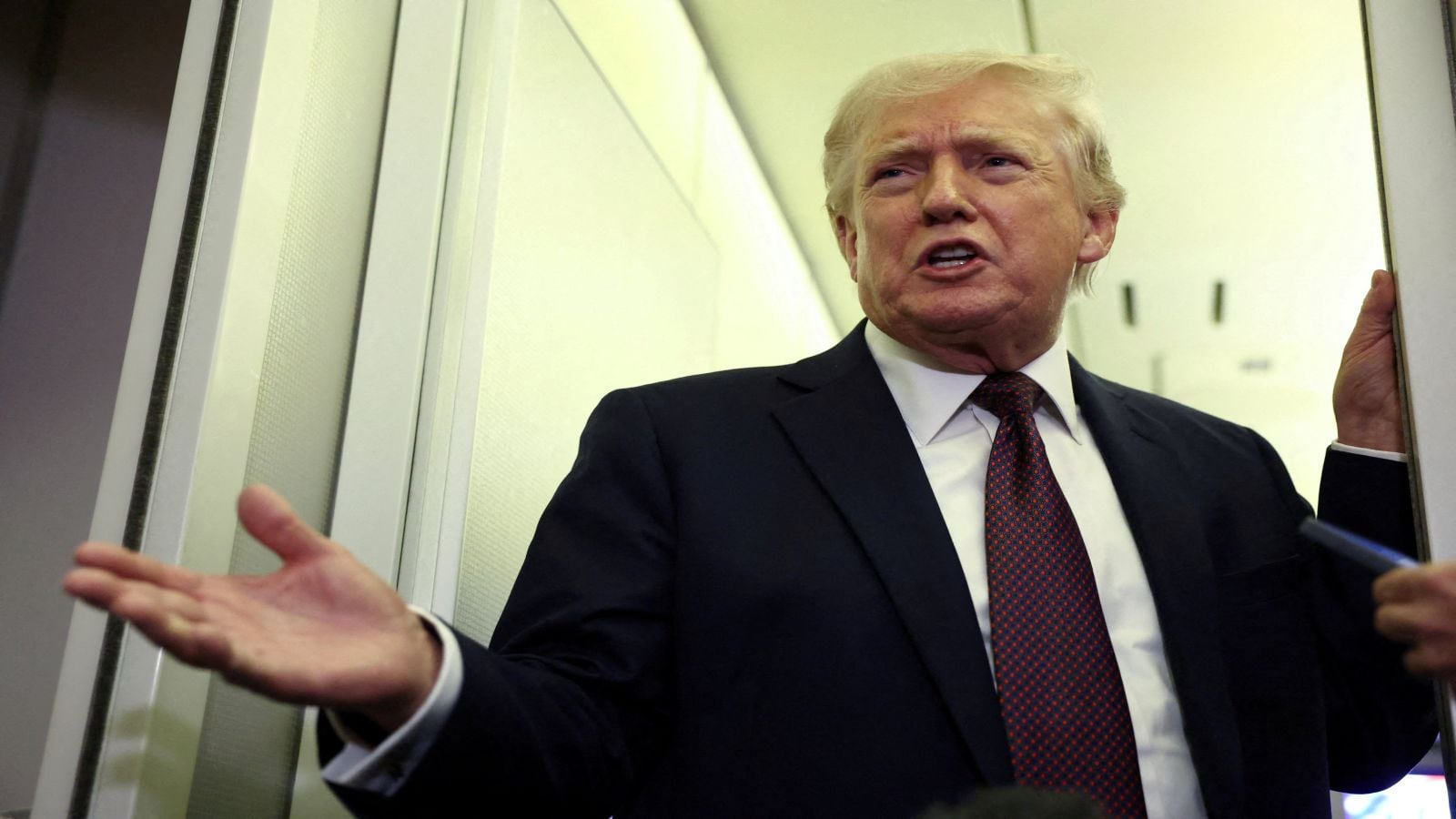
President Donald Trump acquired between $15,001 and $50,000 in SpaceX shares on June 23, according to a financial disclosure signed in August and released by the Office of Government Ethics. This transaction emerged from a staggering volume of over 1,000 securities trades executed by the president throughout that single month, totaling tens of millions of dollars in movement. While headline writers immediately fixated on the intersection of the White House and Elon Musk’s private aerospace titan, the mechanics behind these trades reveal a much wider story about automated executive wealth management and the blurry boundaries of modern public office.
Federal filing rules require assets and transaction values to be reported in broad numerical tiers rather than exact figures, masking the precise scale of individual trades. Yet, the inclusion of SpaceX—following its massive public offering earlier that month—thrusts the rocket manufacturer back into the center of executive branch scrutiny.
The Automated Portfolio Engine
How does a sitting president buy and sell thousands of stocks in a matter of weeks? The answer lies in discretionary third-party management rather than active day-trading from the Resolute Desk.
White House officials maintain that third-party financial institutions independently manage the presidential portfolio. These accounts reportedly replicate recognized benchmarks like the Schwab 1000, using systematic algorithms to rebalance holdings. Representatives for the administration emphasize that neither the president nor his family members possess the operational ability to direct, influence, or time specific buy-and-sell orders.
Hypothetically, if an automated index model triggers a rebalance when a multi-billion-dollar enterprise enters public markets or shifts weighting inside a tracked tier, the algorithm executes the trade regardless of who sits in the Oval Office. This separation provides a structural firewall on paper, though it rarely satisfies critics who watch high-frequency financial churn involving major federal contractors.
A Web of Defense and Tech Holdings
SpaceX was far from the only high-profile name crossing the presidential ledger during that busy summer month. The June disclosure documents outline heavy activity across multiple defense and technology sectors that routinely interface with federal procurement officers.
The filing details transactions involving Palantir Technologies, a prominent software contractor deeply embedded in intelligence and military logistics. Records show initial purchases, subsequent sales, and further accumulation clustered around shifting geopolitical developments. Similar patterns appeared across other corporate giants, including Meta Platforms, Berkshire Hathaway, and Coinbase Global.
This high-frequency activity underscores a fundamental tension of modern executive governance. Wealthy leaders often arrive in office with sprawling asset architectures that defy simple, static holding patterns. When automated portfolio managers churn through thousands of transactions, the sheer velocity of movement creates an endless stream of theoretical intersections with federal policy.
The Contracting Paradox
The inclusion of SpaceX highlights a unique reality of contemporary economic power. SpaceX operates as a premier U.S. military contractor, securing multi-billion-dollar payloads and communication infrastructure awards from the Space Force. At the same time, the administration actively pushes policies designed to accelerate commercial space launch approvals, creating a dual environment where regulatory oversight and market expansion walk hand in hand.
Critics argue that even passive investments in critical contractors create unavoidable perceptual conflicts. Defenders counter that prohibiting a president from holding broad market indexes would effectively bar anyone without liquidated cash holdings from holding high office. This policy debate has persisted across multiple administrations, intensifying as technology firms swallow traditional defense and infrastructure spaces.
As public scrutiny over executive financial disclosures sharpens, the focus rarely shifts back to the core operational reality. Algorithms dictate the moves, disclosures capture the aftermath, and the machinery of government hums onward beneath a constant microscope.
For a closer look at how these market-moving federal disclosures unfold and are analyzed by financial experts, watch this breakdown President Trump's June Stock Trades.
http://googleusercontent.com/youtube_content/1