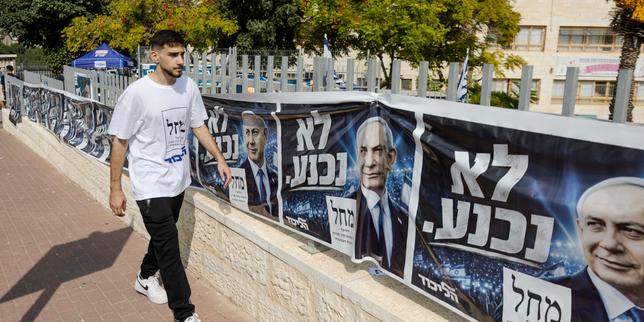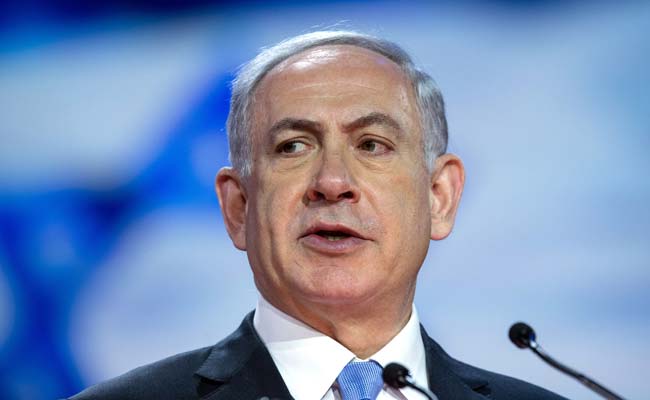
Accusations of widespread election fraud leveled by Israeli Prime Minister Benjamin Netanyahu and his Likud party against Arab politicians and voters stem from intense electoral math, not verified evidence of systemic tampering. For years, Israeli election cycles have hinged on razor-thin margins in the Knesset, turning voter turnout among Israel’s Arab citizens—who make up roughly twenty percent of the population—into a decisive factor. By alleging that Arab parties stole elections and sought the destruction of the state, Netanyahu and his allies mobilized their right-wing base while attempting to depress turnout in Arab municipalities through aggressive polling-station surveillance.
The political mechanics behind these claims are straightforward. In Israel’s proportional representation system, a party or bloc needs 61 out of 120 Knesset seats to form a governing coalition. When Arab turnout rises, the center-left and anti-Netanyahu blocs gain an easier path to blocking a right-wing majority. Conversely, when Arab voters stay home, right-wing parties secure a mathematical advantage without winning a single additional vote.
The Anatomy of the Allegations
During multiple consecutive election cycles starting in 2019, Prime Minister Benjamin Netanyahu publicly accused Arab political parties and voters of orchestrating massive ballot-stuffing campaigns. In statements broadcast to supporters and posted on social media, Netanyahu asserted that his political opponents were attempting to "steal the election" through fraudulent voting in Arab towns and villages. He further framed the participation of Arab lawmakers in potential governing coalitions as an existential threat, arguing that these politicians "want an end to Israel" as a Jewish and democratic state.
Likud officials echoed these claims, alleging that lax oversight at polling stations in predominantly Arab localities allowed individuals to cast multiple ballots or vote on behalf of deceased citizens. The party used these assertions to justify deploying hundreds of activists equipped with hidden body cameras to polling places in Arab communities during the April 2019 election. Likud representatives argued that the cameras were necessary to deter fraud and ensure the integrity of the vote.
Election officials, legal experts, and Arab political leaders rejected both the premise and the methods. Central Elections Committee Chairman Justice Hanan Melcer ruled that the covert filming of voters violated Israeli election law and functioned as a form of voter intimidation. Subsequent police investigations and official reviews by the Central Elections Committee found isolated irregularities across the country—affecting both Jewish and Arab localities—but uncovered zero evidence of organized, large-scale election fraud capable of altering national results.
Electoral Math and the Turnout Factor
To understand why these accusations surfaced repeatedly, analysts look at the demographic and mathematical realities of Israeli politics. Israel’s Arab citizens hold full voting rights, yet their historical turnout rates have consistently trailed those of the Jewish majority. Socioeconomic disparities, disillusionment with national politics, and internal debates over whether participating in Knesset elections legitimizes state policies have traditionally kept Arab turnout around 50 to 60 percent, compared to roughly 70 percent among Jewish voters.
Everything changed when fractious Arab parties unified under the Joint List banner. Consolidation reduced wasted votes—ballots cast for small parties that fail to cross Israel’s 3.25 percent electoral threshold—and energized disillusioned voters. When the Joint List secured 15 seats in the March 2020 election on the back of a 64.8 percent Arab turnout, the right-wing bloc fell short of a governing majority.
Numbers tell the story clearly. A five-percentage-point shift in Arab turnout translates to roughly three or four Knesset seats. In a parliament deadlocked for years at 59 or 60 seats per bloc, three seats determine who becomes Prime Minister, who controls key ministerial budgets, and who appoints judges.
The Surveillance Controversy and Legislative Push
Following Justice Melcer’s ban on unauthorized cameras inside polling stations, Netanyahu and Likud attempted to pass emergency legislation—dubbed the Camera Bill—ahead of the September 2019 repeat election. The proposed law sought to explicitly permit party observers to film inside polling stations across the country.
Proponents of the bill argued that transparency is the ultimate safeguard of democracy. Likud lawmakers maintained that if no fraud was occurring, opposing parties should have no objection to cameras recording the voting process. They framed resistance to the bill as proof that political rivals had something to hide.
The legislative effort collapsed. Israel’s Attorney General, Avichai Mandelblit, warned that the bill was unconstitutional, violated the secrecy of the ballot, and would deter eligible citizens from exercising their democratic rights. Even traditional right-wing allies, including Avigdor Lieberman’s Yisrael Beiteinu party, refused to back the measure, citing concerns that partisan surveillance would delegitimize the authority of the state-run Central Elections Committee.
How Arab Politicians Responded
Arab lawmakers treated the fraud allegations and camera deployments not as good-faith efforts to protect election integrity, but as targeted suppression tactics designed to alienate an already marginalized minority. Ayman Odeh, then-leader of the Joint List, accused Netanyahu of incitement and of treating one-fifth of the country's citizenry as fifth-column enemies rather than equal stakeholders in the state.
Other Arab leaders pointed out the inherent contradiction in Netanyahu’s rhetoric. While portraying Arab politicians as existential threats during election campaigns, Netanyahu simultaneously engaged in quiet political outreach to secure the external support—or at least the abstention—of Arab lawmakers when it suited his tactical needs.
This dynamic reached a turning point in 2021 when Mansour Abbas, leader of the Islamist Ra'am party, broke away from the Joint List. Abbas pursued a pragmatic strategy focused on securing municipal funding, fighting organized crime in Arab towns, and improving infrastructure rather than centering his platform on the Israeli-Palestinian conflict. Ironically, Netanyahu initially courted Abbas’s support to form a right-wing government, temporarily softening his rhetoric toward Arab political participation before Abbas ultimately joined the opposing "change coalition" led by Naftali Bennett and Yair Lapid.
The Institutional Safeguards of Israeli Elections
Claims of widespread ballot stuffing collide with the structural realities of how Israel administers its elections. Unlike decentralized systems where local municipalities set varying rules, Israeli elections are managed centrally by the Central Elections Committee, an independent body chaired by a sitting Supreme Court justice and composed of representatives from every party currently sitting in the Knesset.
Every single polling station across Israel—whether in Tel Aviv, Jerusalem, Nazareth, or Umm al-Fahm—is staffed by a multi-party polling committee. Representatives from rival political factions sit side by side at the table, checking voter ID cards against printed registries, handing out official envelopes, and signing off on the final tally sheets once the polls close.
For systemic fraud to succeed at a local polling station, representatives from Likud, center-left parties, religious factions, and Arab parties would all have to actively conspire together to falsify the count, and their fabricated numbers would still have to survive secondary audits conducted by regional election committees. While minor clerical errors or isolated attempts at double-voting occur in almost every democratic election globally, the multi-party oversight structure makes coordinated, large-scale ballot stuffing virtually impossible to conceal.
Long-Term Consequences for Democratic Trust
The recurring battles over election integrity have left lasting scars on Israel’s political culture. When senior leaders repeatedly claim that elections are rigged without producing verifiable evidence in court, public confidence in state institutions erodes across the political spectrum.
Among right-wing voters, persistent messaging about unverified fraud entrenched the belief that electoral defeats are the result of illegitimate manipulation rather than demographic or political shifts. Among Arab citizens, aggressive rhetoric labeling their elected representatives as enemies of the state deepened political alienation, contributing to sharp drops in turnout during subsequent cycles—such as the March 2021 and November 2022 elections—which ultimately paved the way for Netanyahu’s return to power.
In Israeli politics, accusations of election fraud rarely stay confined to the mechanics of ballot boxes. They serve as a high-stakes instrument of political mobilization, redefining who belongs inside the bounds of legitimate democratic participation and turning voter turnout itself into the central battleground of the state.