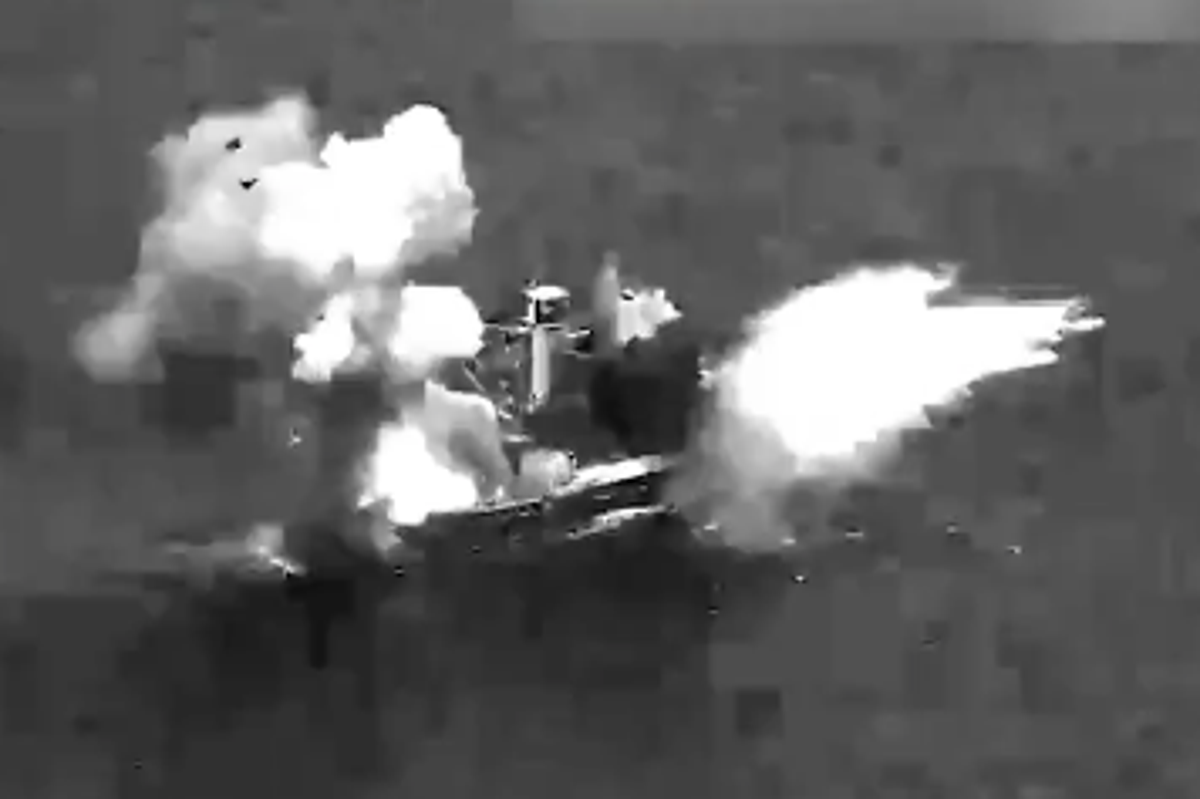
The United States military has escalated its kinetic campaign across the Eastern Pacific, systematically tracking, boarding, and sinking vessels accused of fueling the logistical lifelines of Ecuador’s notorious Los Choneros cartel. Operating under the banner of Joint Task Force Western Hemisphere, U.S. Southern Command (SOUTHCOM) has made naval interdiction look less like traditional law enforcement and more like open-combat targeting.
Yet behind the high-definition videos broadcasted on social media showing projectiles vaporizing aging hulls, a darker operational reality persists. Families in coastal Ecuadorian towns like Manta are gathering at docks to search for missing relatives, questioning whether the vessels destroyed by the Pentagon were genuine narco-traffickers or simply artisanal fishing boats caught in the crosshairs of an aggressive, expanding geopolitical strategy.
To understand why the U.S. military is blowing up civilian-style craft thousands of miles from the American mainland, one must examine the shifting doctrines of the current administration. Operation Southern Spear, launched roughly a year ago, treats transnational drug cartels not merely as criminal enterprises, but as designated foreign terrorist organizations. Under this framework, naval assets in the Caribbean Sea and the Eastern Pacific have been granted extraordinary latitude. The objective is simple on paper, but fraught with legal and humanitarian complications in execution: apply total systemic friction to the supply chains moving South American cocaine northward.
The targets are rarely multi-million-dollar semi-submersibles or high-speed go-fast boats rigged with quad-outboards. Instead, the U.S. military has increasingly focused on what it defines as floating refueling stations. These are often modified commercial or fishing craft capable of lingering in international waters for weeks, dispensing fuel, provisions, and communication support to trafficking vessels darting toward Central America and Mexico.
For Washington, neutralizing a floating fuel depot starves the entire transit network of operational range. Without offshore refueling, smuggling craft cannot complete the grueling multi-thousand-mile voyage from the Ecuadorian coast to lucrative intermediate drop zones.
The political alignment between Washington and Quito has provided the administrative lubricant for these aggressive maneuvers. Ecuadorian President Daniel Noboa has staked his political survival on an uncompromising domestic crackdown against gangs like Los Choneros, which have transformed Ecuador from a peaceful transit nation into one of the most violent murder hubs in South America. By inviting U.S. military forces to operate in tandem with local authorities, Noboa has signaled that national sovereignty takes a back seat to total eradication of the cartel infrastructure.
When a joint interdiction occurs, the standard protocol involves naval boarding teams securing the vessel, detaining the crew, transferring them to allied custody, and subsequently scuttling or blowing up the hull to ensure it never returns to service. SOUTHCOM leadership defends these dramatic demolitions as essential precision operations.
Critics and legal scholars, however, point to a glaring opacity in the execution. Civil rights organizations and maritime lawyers have repeatedly questioned the legal baseline of sinking vessels in international waters without transparent, publicly reviewed evidentiary thresholds. When entire crews are detained, transferred to third countries like El Salvador, or left unaccounted for in the immediate aftermath, the boundaries between warfighting and due process blur dangerously.
The human cost on the ground in Ecuador reveals the immediate friction points of this maritime strategy. In Manta, relatives of crews aboard vessels such as the María Candelaria and other targeted hulls tell a starkly different story from the Pentagon's press releases. They describe modest fishermen who set out to harvest mahi-mahi or tuna, only to vanish into a Kafkaesque bureaucratic void after encountering military helicopters.
While intelligence agencies maintain that intercepted vessels are meticulously vetted through intercepted communications, satellite tracking, and informant networks, the margin for error at sea is razor-thin. In an environment where artisanal fishing boats frequently cross paths with cartel logistics networks, distinguishing a commercial fisherman from a narco-collaborator often relies on circumstantial surveillance feeds interpreted miles away in command centers.
The campaign shows no signs of slowing down. Defense officials have made it clear that the theater of operations is expanding from maritime interdictions onto sovereign land across the region. Agreements are being pursued with regional partners to allow direct U.S. military action against cartel strongholds inland.
As the Pentagon continues to detonate hulls across the Eastern Pacific, it is reshaping the architecture of counter-narcotics enforcement. Yet, by substituting traditional criminal prosecution with kinetic military destruction, Washington is betting that absolute force can permanently suppress a multi-billion-dollar illicit economy—leaving a trail of sunken wreckage, shifting alliances, and unanswered questions in its wake.