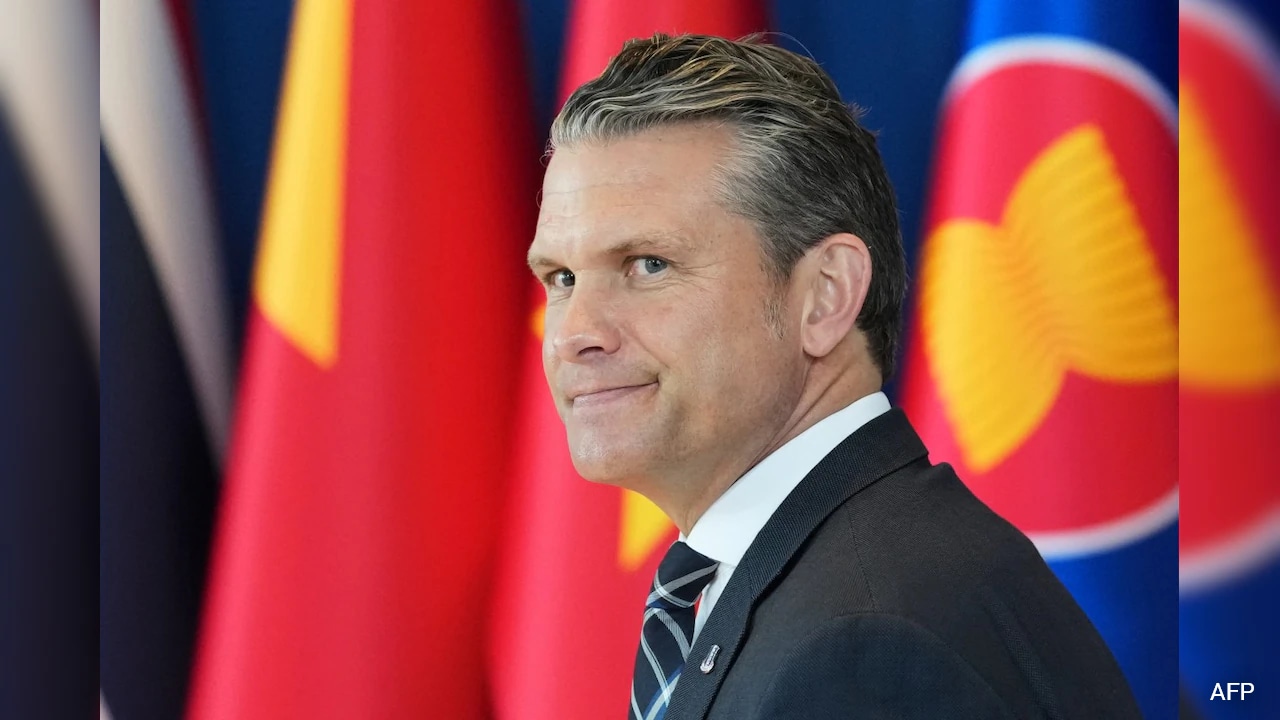
The nomination and tenure of Pete Hegseth as U.S. Secretary of Defense has ignited one of the most fiercely contested debates over civilian-military leadership in modern American history. Critics point to his background as a Fox News co-host, past controversies regarding personal conduct, and financial management disputes at veterans' advocacy groups as evidence that he lacks the administrative experience required to run a nearly trillion-dollar bureaucracy. Supporters, including President Donald Trump and allied lawmakers, argue that Hegseth’s combat service in Iraq and Afghanistan, combined with his outsider status, makes him uniquely qualified to disrupt an entrenched defense establishment and restore a focus on combat readiness.
This clash is about far more than one man’s resume. It sits at the intersection of political loyalty, institutional inertia, and competing visions of what the United States military should be in an era of global instability.
The Traditional Path Versus the Outsider Mandate
For decades, the unwritten rule in Washington held that the Pentagon’s top civilian post belonged to individuals with deep experience in defense contracting, congressional oversight, or senior military command. Figures like Robert Gates, Leon Panetta, and Lloyd Austin spent years navigating the complex machinery of the Department of Defense before taking the oath of office. The logic was straightforward. Managing roughly three million military and civilian personnel while overseeing global operations requires intimate familiarity with procurement cycles, alliance management, and nuclear deterrence.
Hegseth’s selection shattered that precedent. An Army National Guard veteran who served in Guantanamo Bay, Iraq, and Afghanistan, Hegseth rose to national prominence not through the Pentagon’s E-Ring, but through morning television on Fox & Friends Weekend.
To his detractors in Congress and the defense policy community, this trajectory represented a dangerous elevation of media messaging over operational competence. Opponents argued during his confirmation battle that running a television segment does not prepare an executive to manage an organization larger than most Fortune 500 companies combined.
His defenders saw the exact same resume as an asset. From the perspective of the administration and populist conservatives, the traditional defense establishment had presided over two decades of inconclusive wars in the Middle East, massive cost overruns on weapons systems like the F-35, and persistent recruiting shortfalls. According to allies in the Senate, bringing in someone from outside the Beltway defense complex was the only way to force accountability onto a bureaucracy that rarely polices itself.
Scrutinizing the Record Before the Pentagon
The controversy surrounding Hegseth did not begin when he entered the Pentagon; it was rooted in detailed reporting and Senate inquiries into his life before public office. Journalists and Senate Armed Services Committee investigators examined several distinct areas of his background, creating a fiercely divided record.
Financial Management at Veterans Nonprofits
Before joining Fox News full-time, Hegseth led two prominent veterans' advocacy organizations: Vets for Freedom and Concerned Veterans for America (CVA). Reporting by outlets such as The New Yorker and The New York Times, based on tax filings and accounts from former colleagues, alleged patterns of financial mismanagement, excessive spending on travel and events, and workplace culture issues during his tenure.
Hegseth and his legal team strongly disputed those characterizations. They maintained that the organizations grew significantly in fundraising and political influence under his leadership, dismissing the allegations as politically motivated smears from disgruntled former employees.
Personal Conduct Allegations
A central flashpoint during the vetting process involved a 2017 police report from Monterey, California, regarding an allegation of sexual assault following a Republican women's event. Local prosecutors reviewed the case and declined to file criminal charges, citing insufficient evidence. Hegseth consistently denied the allegation, stating the encounter was consensual, though he acknowledged paying a financial settlement to the accuser years later to avoid a lawsuit that he believed would jeopardize his television career.
Additional reports surfaced alleging excessive alcohol consumption at work-related events during his time at nonprofits and television networks. Hegseth rejected claims that he had an alcohol problem, pledging publicly and to senators that he would not drink a drop of alcohol while serving as Secretary of Defense.
Views on Military Standards and Combat Roles
Beyond personal conduct, policy analysts focused heavily on Hegseth’s published writings, particularly his 2024 book, The War on Warriors. In it, he argued that diversity, equity, and inclusion (DEI) initiatives had weakened military cohesion and distracted commanders from warfighting. He also drew sharp criticism for past podcast remarks stating that women should not serve in direct ground combat roles—a position he later softened during confirmation hearings by stating that women have access to those roles so long as physical standards are not lowered.
Critics, including several retired four-star generals and Democratic lawmakers, contended that rolling back integration policies and targeting senior officers over perceived ideological alignment would damage morale and politicize a strictly nonpartisan force. Supporters countered that uniform physical standards and merit-based promotion are essential to battlefield lethality.
The Structural Challenges Inside the Building
Regardless of where one stands on his qualifications, any Secretary of Defense faces an institution designed to resist rapid change. The Pentagon is not a top-down corporation where a chief executive issues a memo and the workforce immediately pivots. It is a massive federation of competing military services, entrenched acquisition offices, and congressional districts dependent on defense spending.
Consider how defense procurement actually works. When the Pentagon wants to build a new destroyer or fighter jet, the process involves years of requirements validation, congressional appropriations, defense contractor lobbying, and testing protocols. A defense secretary can set strategic priorities, but altering major weapons programs requires sustained cooperation from Capitol Hill. Even seasoned veterans of the building often find their initiatives stalled by bureaucratic friction.
For a leader without prior experience managing large federal agencies, this environment presents acute operational risks. Effective oversight requires knowing which deputy secretaries control the budget levers, how the Joint Chiefs of Staff coordinate operational plans, and where acquisition bottlenecks hide. Critics warn that if a secretary relies too heavily on a small circle of loyalists rather than institutional experts, critical details in nuclear modernization, cyber defense, or Indo-Pacific logistics can slip through the cracks.
Conversely, proponents of disruption argue that institutional experts are often the very people protecting broken systems. They point out that the Pentagon failed multiple consecutive independent financial audits prior to Hegseth’s arrival, demonstrating that conventional credentials do not guarantee sound fiscal stewardship.
Civil-Military Relations Under Pressure
Perhaps the most consequential aspect of the debate involves the delicate balance of civil-military relations in the United States. The American system rests on civilian control of the military, paired with the expectation that the armed forces remain strictly insulated from domestic partisan politics.
The friction surrounding Hegseth highlights how fragile that balance has become. When senior military leaders are scrutinized or replaced over perceived alignment with previous administrations' policies, observers on both sides interpret the moves differently:
- The Institutionalist Critique: Former defense officials and military historians warn that purging or sidelining senior officers based on ideological litmus tests erodes trust within the chain of command. They argue that officers must feel secure offering candid, apolitical military advice to civilian leaders, even when that advice contradicts political messaging.
- The Reformist Argument: Supporters of the administration’s approach contend that the military brass had already drifted into politics by embracing social initiatives and failing to hold generals accountable for strategic setbacks, such as the chaotic 2021 withdrawal from Afghanistan. From their viewpoint, assertive civilian oversight is necessary to re-establish accountability.
This tension plays out daily in policy directives, personnel appointments, and public communications from the Pentagon podium. Every decision regarding base naming, training curricula, or general officer promotions is immediately filtered through the lens of the broader American culture war.
Alliances and Global Deterrence
While Washington debates domestic personnel controversies, foreign adversaries are watching closely. The primary job of the Secretary of Defense is not managing domestic political narratives; it is deterring aggression from peer competitors like China and Russia while managing regional crises in the Middle East and Europe.
Allied defense ministries in NATO and the Indo-Pacific rely on predictability from the Pentagon. Long-term deterrence depends on joint exercises, intelligence sharing, and coherent force posture decisions. During periods of intense political controversy in Washington, foreign counterparts often question whether U.S. defense policy will remain consistent or shift abruptly based on domestic political pressures.
Supporters argue that a defense secretary closely aligned with the president’s worldview actually strengthens deterrence because adversaries know he speaks directly for the commander-in-chief without bureaucratic filtering. When allies are pressed to increase their own defense spending—a central pillar of the administration’s foreign policy—an outsider unburdened by diplomatic pleasantries can deliver that message with unmistakable clarity.
Detractors counter that alliance management requires nuanced diplomacy and deep institutional trust built over years. They warn that alienating key partners or creating uncertainty around U.S. security commitments weakens the very coalitions needed to counter Chinese expansion in the Pacific or Russian aggression in Eastern Europe.
The Reality of Running the Pentagon
Strip away the cable news commentary and partisan talking points, and the fundamental test of any Secretary of Defense comes down to measurable outcomes. Can the department fix its broken acquisition pipeline to deliver drones, munitions, and ships at the speed modern warfare demands? Can it reverse years of military recruiting struggles without compromising standards? Can it maintain readiness across multiple global theaters while managing a massive national debt?
Pete Hegseth entered the Pentagon with a clear mandate from the president to shake up the status quo, paired with intense skepticism from critics who viewed his background as a liability. His tenure represents a live stress test of a central question in modern governance: whether an outsider with strong political backing can force reform onto an entrenched bureaucracy, or whether the sheer complexity of global defense eventually overwhelms those who have not spent a career mastering its machinery. The answer will not be decided on television panels, but in the quiet, unforgiving metrics of military readiness and global stability.