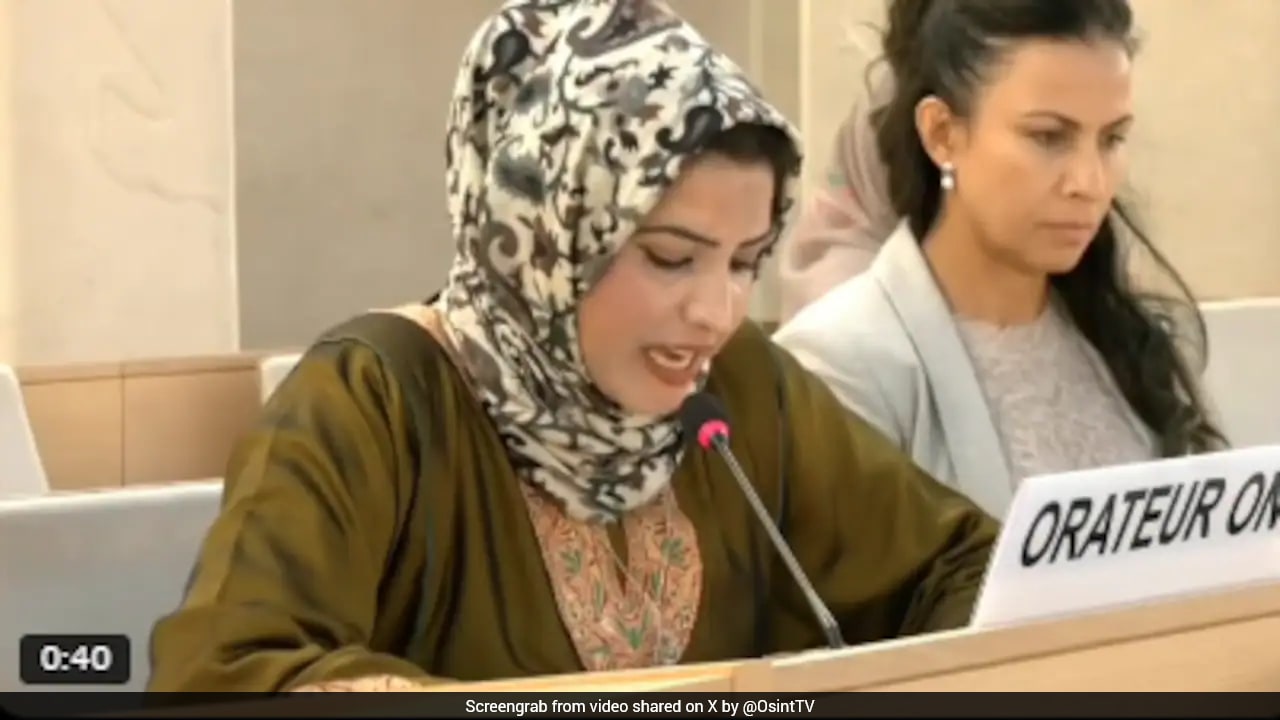
When a Kashmiri activist stood before the United Nations Human Rights Council to condemn Islamabad's violent suppression of demonstrations in Pakistan-occupied Kashmir, she did more than deliver a standard diplomatic rebuke. Her testimony pierced through decades of calculated institutional opacity. For years, the administrative apparatus running Azad Kashmir and Gilgit-Baltistan managed to insulate its domestic security operations from intense international scrutiny. That shield cracked open as civilian casualties mounted, supply lines choked under communications blackouts, and regional economic grievances boiled over into open civil resistance.
The roots of the unrest trace back to deep structural inequities that central authorities in Islamabad chose to ignore until streets erupted. Protests spearheaded by the Jammu Kashmir Joint Awami Action Committee (JAAC) began as a mobilization against exorbitant electricity tariffs, skyrocketing food prices, and acute shortages of basic civic amenities. In a region rich with hydroelectric potential, local populations have long watched power generated by their rivers light up distant urban centers while their own homes face chronic load-shedding and inflated utility bills. When civil society groups demanded subsidized electricity and wheat, along with the structural dismantling of privileged refugee seats that skew local legislative representation, the response from the state apparatus was swift, heavy-handed, and militarized.
Instead of engaging in political dialogue, security forces deployed tear gas, baton charges, and live ammunition. Reports from international human rights bodies indicate that multiple civilians have been killed during successive waves of demonstrations, particularly during aggressive crackdowns on long marches heading toward Muzaffarabad and subsequent clashes in areas like Rawalkot. The deployment of security personnel to quell what began as peaceful civic mobilization transformed administrative districts into garrison zones. Activists have documented internet blackouts, arbitrary detentions of prominent local leaders such as Shaukat Nawaz Mir, and systematic attempts by state media to frame political dissent as anti-state subversion.
This domestic containment strategy backfired on the international stage. When Kashmiri delegates take global platforms like the UNHRC to state that Islamabad has turned the territory into a security graveyard, they expose a stark contradiction in Pakistan's regional posture. While federal officials routinely position themselves as the vanguard of Kashmiri rights across the Line of Control, the reality inside the territory under their direct administrative control reveals an entrenched pattern of disenfranchisement, economic neglect, and police-state tactics.
The economic metrics underpinning the crisis tell a grim story of structural failure. Infrastructure development in Pakistan-occupied Kashmir has stagnated due to systemic corruption, debt distress at the federal level, and the diversion of resources toward security overheads. Schools lack basic roofs and clean water infrastructure, healthcare facilities suffer from severe supply shortages, and youth unemployment hovers at unsustainable highs. Citizens are caught between an unresponsive local bureaucracy and a federal military establishment that views every local demand for autonomy or economic relief through the paranoid lens of national security.
International bodies, including the United Nations and independent human rights monitors, have repeatedly called for transparent, independent investigations into the protest-linked deaths. Yet, those calls have largely met administrative stonewalling. No meaningful accountability mechanisms have been established, and security personnel implicated in excessive force continue to operate with absolute immunity.
As local resistance movements adapt to digital-era communication methods, hiding these suppression campaigns becomes increasingly difficult. The testimony at the UN was not an isolated diplomatic incident; it was a symptom of a systemic fracture. Islamabad can no longer rely on geopolitical rhetoric to mask the structural rot and violent policing happening inside Pakistan-occupied Kashmir. The cost of maintaining control through the barrel of a gun is a steadily eroding mandate of legitimacy, leaving a generation of Kashmiris alienated and defiant.


