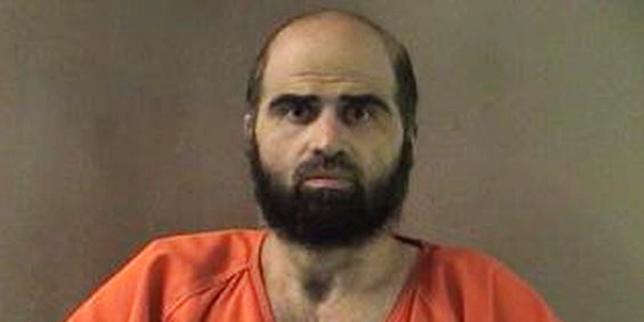
The modern appetite for public spectacle nearly crossed a chilling legal and ethical boundary. When the Pentagon floated the idea of streaming a military execution online, it triggered a massive firestorm across political lines, international human rights organizations, and military veterans. We are talking about the scheduled capital punishment of Nidal Malik Hasan, the former Army major convicted of the 2009 mass shooting at Fort Hood, Texas, where 13 people died.
Defense Secretary Pete Hegseth initially championed the livestream as a powerful deterrent, arguing that transparency brings accountability. But the proposition immediately fractured public discourse. Turning a state-sanctioned execution into digital content raises deep questions about voyeurism, state power, and the evolution of punishment in the digital age.
Why a Firing Squad Changes the Equation
Capital punishment in the United States typically invokes lethal injection or, in rare states, the electric chair. Military executions, however, operate under distinct codes and traditions. The use of a firing squad is exceptionally rare in modern American history. The last military execution of any kind took place decades ago, and bringing back the method alone would have drawn intense scrutiny.
Adding a public livestream took the controversy into uncharted territory. Proponents argued that modern citizens deserve to witness the full weight of state justice. If the government takes a life in the name of the public, the public should watch.
Critics saw it differently. Broadcasting a death crosses a line from justice into medieval spectacle. The United Nations Human Rights Office swiftly condemned the plan, calling it a potential form of torture. Legal scholars pointed out that turning an execution into online media turns human suffering into viral entertainment, degrading the gravity of the legal system.
The Pushback From Inside the Ranks
The most compelling resistance didn't just come from human rights activists. Retired military leaders stepped forward to halt the broadcast. A coalition of dozens of retired generals, admirals, and high-ranking officers urged the administration to scrap the livestream.
Their argument focused on institutional integrity. The United States military operates under a code of honor and discipline. Turning an execution into a media event risks turning armed forces into agents of theatrical retribution rather than defenders of national security. Soldiers train to protect life, not to manage public executions for domestic political consumption.
Furthermore, even within conservative and Republican circles, the plan raised alarms. Many traditional conservatives who strongly support the death penalty drew a hard line at turning capital punishment into public broadcasting. They argued that dignity, even in execution, separates a constitutional republic from authoritarian regimes.
The Retreat and the Reality
Faced with mounting pressure from military veterans, legal experts, and international bodies, the administration reversed course. Donald Trump announced that the execution would proceed as planned at Fort Hood, Texas, but the cameras would stay off. The punishment remains scheduled, but the broadcast was canceled.
Family members of the victims retain the option to witness the event in person, preserving a traditional closed-witness model rather than opening the doors to millions of internet viewers.
This episode exposes a broader cultural shift. As digital platforms demand constant engagement, the boundaries separating private state functions from public entertainment continue to blur. The debate over the Fort Hood execution proves that even as state penalties grow harsher, society still draws a line at televising death.
If you want to track how modern legal systems handle capital punishment, look past the political rhetoric. Watch how courts balance public transparency against the preservation of basic human dignity. The rules governing state-sponsored death continue to shift, and the pressure to digitize justice won't disappear simply because this particular broadcast was stopped.


