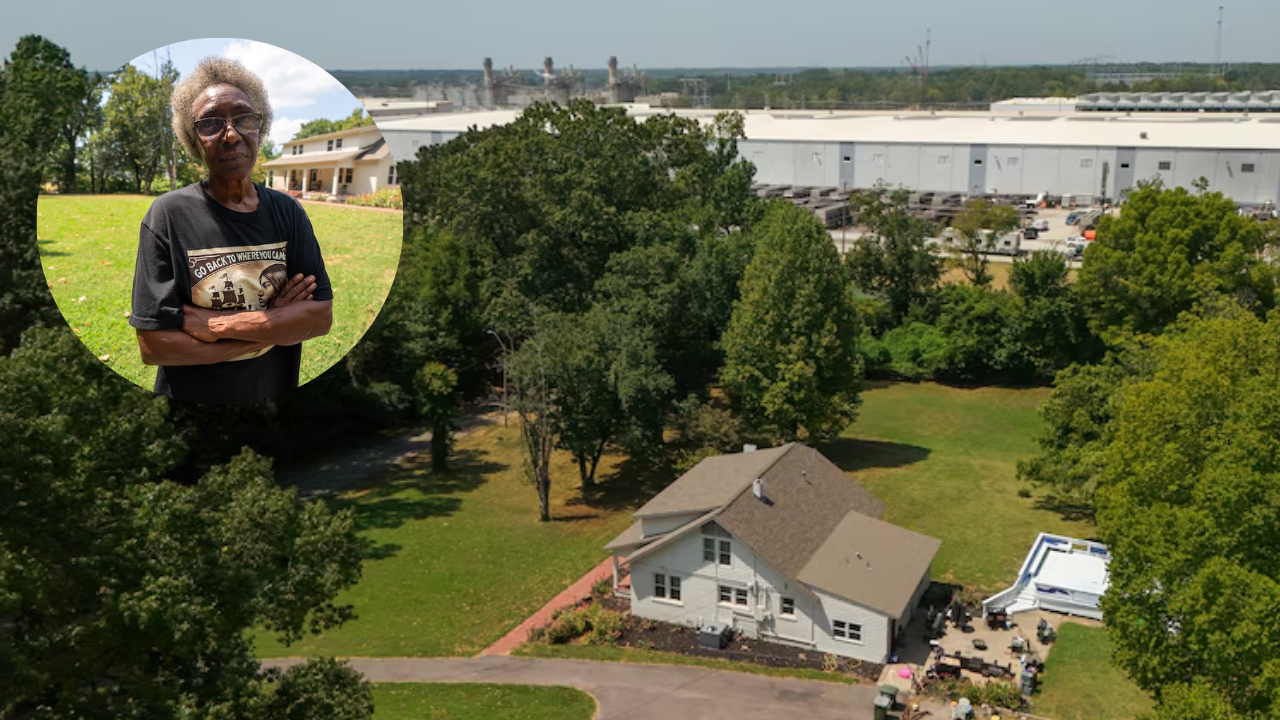
The physical footprint of the artificial intelligence boom has found a hostile intersection in Memphis, Tennessee, where residential neighborhoods now sit directly against massive industrial computing facilities. For Gulf War veteran Loretta Thornton, eleven years of quiet retirement inside a wooded property she named Serenity evaporated overnight. Elon Musk’s artificial intelligence enterprise, xAI, transformed an empty warehouse next door into Colossus II, currently operating as one of the largest computing installations in the United States. The continuous roar of industrial cooling fans and the sulfurous bite of exhaust fumes changed the local environment into something resembling a combat zone.
This localized friction highlights a broader infrastructural crisis across America. Compute clusters designed to train massive neural networks require staggering amounts of electricity and water, placing residential utility consumers in direct competition with private technological ambition. Thornton’s monthly electricity bill doubled almost immediately as local power grids struggled to handle the sudden load. Across the Tennessee-Mississippi border, rapid expansions have bypassed traditional municipal oversight timelines, leaving residents to deal with unpermitted gas turbines, soot, and noise pollution without prior public debate.
The regulatory vacuum surrounding these projects stems from an era-defining rush to secure technological supremacy. Silicon Valley firms deploy clusters packed with hundreds of thousands of specialized graphics processing units at unprecedented speeds. Traditional municipal zoning laws, designed to move at the glacial pace of public hearings and environmental impact studies, proved entirely unequipped for developments built from scratch in less than four months. Corporations found loopholes by moving into abandoned industrial shells, utilizing existing zoning designations to bypass the scrutiny required for brand-new heavy construction.
Municipal officials often find themselves caught between economic development promises and angry constituents. Mayors and economic councils view multibillion-dollar capital investments and high-profile tech footprints as generational windfalls. Federal policy makers frequently echo these sentiments, warning that municipalities hostile to heavy technological expansion risk economic stagnation. Yet the lived reality for adjacent property owners involves compromised air quality, structural noise pollution, and skyrocketing utility overhead.
Legal pushback has arrived through multiple fronts. Environmental defense groups and local civil rights organizations filed lawsuits targeting the deployment of unpermitted simple-cycle gas turbines used to bypass grid limitations during early build-out phases. These turbines pump nitrogen oxides and particulate matter into surrounding working-class neighborhoods. Government attorneys have pushed back against injunction requests, citing national security arguments and the critical importance of domestic artificial intelligence development for defense logistics. This collision between national defense priorities and local municipal rights leaves judges weighing geopolitical necessity against the habitability of residential streets.
The tension in Memphis mirrors a national reckoning. More than two hundred municipal jurisdictions across the United States have enacted temporary moratoriums on similar infrastructure projects while authorities scramble to draft modern ordinances. Public skepticism continues to climb as citizens realize that the hidden cost of algorithmic advancement is often paid in local resources, clean water depletion, and ambient environmental degradation.
For individuals living in the shadow of these massive server farms, abstract discussions about technological progress offer little comfort against sleepless nights and escalating household expenses. The expansion marches forward regardless, reshaping the American landscape one megawatt at a time.