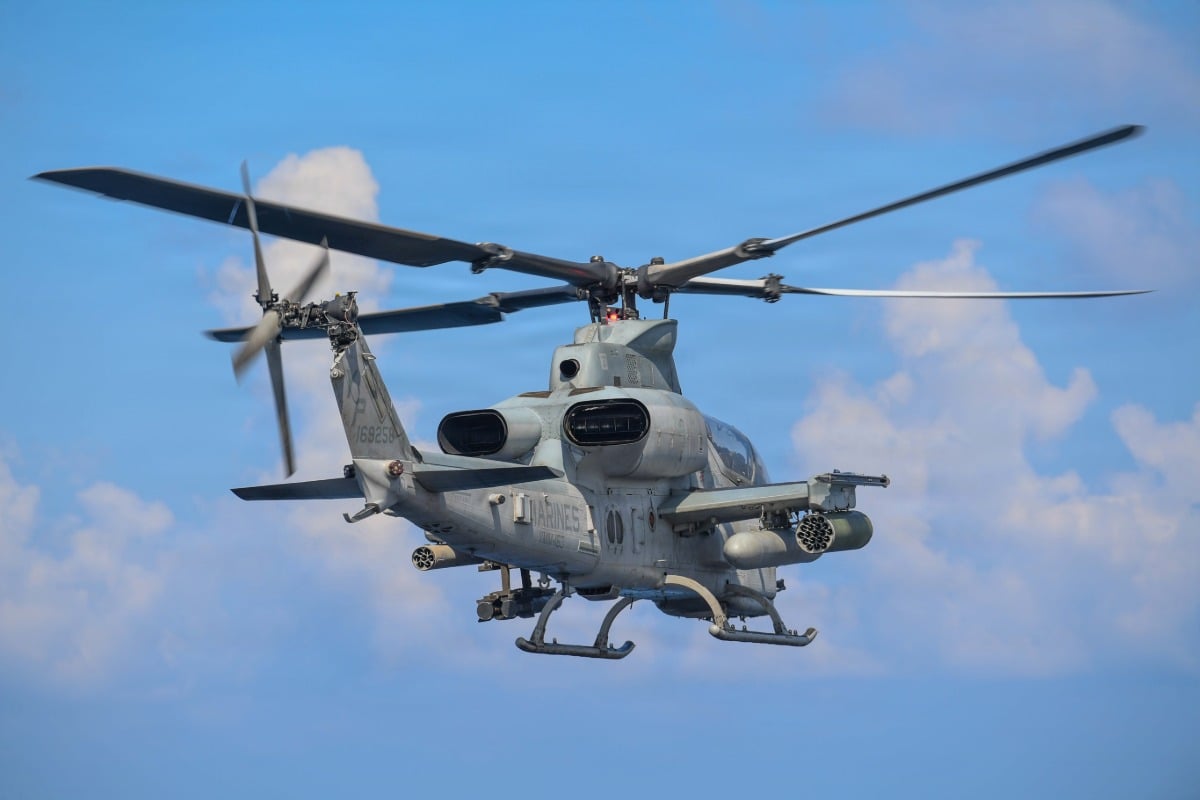
The United States Marine Corps is rewriting the electrical and structural backbone of its active AH-1Z Viper and UH-1Y Venom helicopter fleets through a major modernization overhaul known as the SPINE program, formerly designated as SIEPU. Driven by severe electrical capacity deficits that restricted the integration of advanced electronic warfare suites and modern sensors, Bell Textron completed the first modernized airframes at its Amarillo facility before transferring them to Naval Air Station Patuxent River for flight evaluation. This mechanical transformation targets the core energy limitations plaguing modern military aviation, ensuring the twin-engine platforms can survive increasingly contested electromagnetic combat environments without burning out their internal wiring.
Military aviation programs rarely fail because of bad airframes; they fail because engineers run out of electrical watts. Decades ago, when the foundations of the H-1 platform were drawn up, nobody anticipated the sheer volume of power consumed by modern digital display systems, encrypted multi-band radios, directional infrared countermeasures, and high-density computing architecture.
Every time a unit added a new defensive countermeasure or an advanced targeting pod, another subsystem had to be balanced on a razor-thin electrical margin. Pilots found themselves operating in high-threat zones with advanced mission hardware throttled down or operating on power management restrictions simply because the legacy generators and internal wiring harnesses could not safely handle the total electrical load.
Anatomy of an Overloaded Airframe
Electrical wire is the hidden nervous system of any military aircraft. When an airframe reaches its power limit, running extra copper cables is not a viable option due to strict weight budgets and spatial limits inside packed fuselage bays.
The structural and electrical redesign implemented across the Viper and Venom fleet addresses this bottleneck by reinforcing load-bearing components while completely upgrading internal power distribution pathways.
- Generator Capacity Expansion: Replacing legacy electrical generation units with higher-output alternatives capable of sustaining continuous heavy loads.
- Bus Architecture Overhaul: Reconfiguring internal power distribution buses to isolate critical flight controls from high-draw electronic warfare equipment.
- Thermal Management: Redesigning wiring pathways to prevent overheating during prolonged deployment of high-energy defensive systems.
Without these foundational changes, adding next-generation tactical software or active electronic countermeasures risked frequent power trips during critical mission windows. An attack helicopter in a high-threat suppression zone cannot afford a circuit breaker popping because the crew powered up an extra communications relay and a targeting laser simultaneously.
The Engineering Reality Behind the Upgrade
Retrofitting active military hardware is an exercise in compromise. Every pound added to the airframe reduces fuel fraction, range, or payload capacity.
Bell engineers spent nineteen months tearing down and rebuilding the initial test aircraft to ensure the structural reinforcements did not compromise the agile flight envelope that Marine aviators rely on. The H-1 architecture relies on a shared commonality model where the attack Viper and utility Venom share upwards of eighty-four percent of their components, including engines, transmissions, and tailbooms.
This high degree of commonality means that an electrical modification applied to one airframe type must be carefully balanced against the physical and dynamic constraints of the other. The UH-1Y often operates as a heavy-hauling troop transport and resupply asset, while the AH-1Z functions as a close-air-support gunship carrying external ordnance on extended wing stubs.
When electrical power generation increases, the mechanical drive systems must transfer that extra load without inducing critical fatigue on the main rotor mast or the gearboxes. The current flight tests at Patuxent River are designed to push these modified systems to their absolute limits, measuring vibration frequencies, thermal output under maximum generator load, and electronic interference between dense wiring bundles.
Operational Stakes in Contested Skies
Modern near-peer conflicts expose rotary-wing aircraft to dense radar networks, infrared-guided threats, and sophisticated radio-frequency jamming. Surviving these environments demands onboard computing power that rivals small ground stations.
If the Marine Corps had left the H-1 electrical architecture untouched, the fleet would have faced a widening capability gap against modernized adversaries. Avionics upgrades alone are useless if the generators cannot push sufficient voltage through the lines to keep them online.
By executing this overhaul now, the military avoids the far costlier alternative of designing brand-new airframes from scratch during an era of constrained defense budgets. The success of the current flight evaluations will dictate how rapidly the remaining active-duty squadrons cycle through the Amarillo facility for their own structural and electrical rebuilds.
The margin between tactical dominance and tactical obsolescence is measured in electrical capacity, and the Marine Corps is finally upgrading its wiring to match the brutal realities of modern warfare.