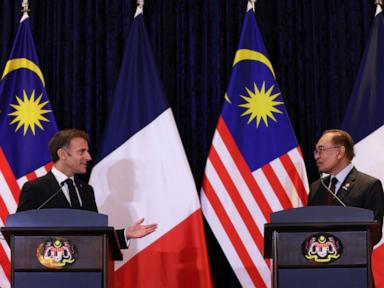
The joint rare earths venture between Malaysia and France is slated to begin commercial operations in early 2027, according to statements from French President Emmanuel Macron. Designed to process and refine critical minerals outside Chinese territory, the partnership represents a major strategic push by European industrial powers and Southeast Asian resource holders to build an independent supply chain for electric vehicles, defense systems, and renewable energy infrastructure.
Behind the diplomatic handshakes lies a far grittier industrial reality. Getting a rare earth separation facility online within a strict timeline requires overcoming massive chemical engineering hurdles, strict environmental scrutiny, and fierce market manipulation from Beijing.
Why Paris and Kuala Lumpur Need Each Other
For decades, Western nations willingly outsourced the dirty, capital-intensive work of rare earth refining to China. The economics seemed simple enough at the time. China offered cheap labor, lax environmental enforcement, and massive state subsidies that drove competitors out of business across North America and Europe.
That complacency ended when supply chains fractured and geopolitical tensions escalated. France, home to major aerospace, defense, and automotive manufacturers, suddenly realized its green transition and military readiness depended entirely on processing plants controlled by a single strategic rival.
Malaysia holds a unique card in this high-stakes poker game. The country already hosts the Lynas Rare Earths processing plant in Gebeng, Pahang, making it the only significant hub for rare earth separation outside of China. Malaysia possesses something money alone cannot buy quickly: an existing regulatory framework, an experienced workforce of chemical engineers, and established port infrastructure capable of handling specialized mineral concentrates.
The Geopolitical Math Behind the Deal
Paris brings advanced downstream manufacturing demand and European capital to the table. French industrial giants—ranging from permanent magnet producers to electric vehicle motor manufacturers—desperately need guaranteed offtake agreements that comply with strict European Union critical raw materials mandates.
Kuala Lumpur, meanwhile, wants more than just foreign companies digging up its soil and shipping raw dirt abroad. The Malaysian government has aggressively shifted its industrial policy toward resource nationalism, banning the export of unprocessed raw rare earth elements to force foreign partners to build midstream and downstream processing facilities locally.
The math works for both sides. France secures a non-Chinese supply of separated oxides, while Malaysia captures higher-value industrial jobs and technology transfers.
The Technical Reality of Rare Earth Separation
Most people hear the term "rare earths" and imagine scarce gems hidden deep underground. That is a fundamental misconception. Elements like neodymium, praseodymium, dysprosium, and terbium are relatively abundant in the Earth's crust.
The real bottleneck is not mining. It is solvent extraction.
Rare earth elements share nearly identical chemical properties, meaning they sit tightly bound together inside ore deposits. Separating them requires dissolving the crushed rock in massive vats of strong acids, then passing the liquid through hundreds of mixer-settler stages using specialized organic solvents.
Think of it like trying to separate fifteen different types of clear alcohol mixed into a single barrel, using chemical processes that take weeks to reach equilibrium.
Why Early 2027 Is an Aggressive Target
In the mining and chemical processing sector, timelines slip routinely. Building a commercial-scale separation plant from scratch typically takes five to seven years when factoring in permitting, environmental impact assessments, equipment fabrication, and commissioning.
Targeting early 2027 means the Malaysia-France consortium cannot afford a single major regulatory delay or supply bottleneck for specialized metallurgy equipment. Even after the physical pipes and tanks are bolted together, commissioning a solvent extraction circuit takes months.
Operators must carefully balance chemical concentrations across hundreds of tanks before the plant produces oxides at the 99.9% purity levels required by magnet makers. If the chemistry drifts slightly off-spec, the entire batch gets contaminated and must be reprocessed at significant financial loss.
The Radioactive Shadow Hanging Over Malaysia
Any serious analysis of rare earth processing in Malaysia must confront the elephant in the room: thorium.
Rare earth ores—particularly monazite and xenotime—almost always contain naturally occurring radioactive materials, primarily thorium and trace amounts of uranium. When you chemically crack the ore to extract the valuable rare earths, you are left with mountains of low-level radioactive waste residue.
Malaysia has fought a bitter, decade-long political and environmental battle over this exact issue. Local communities and environmental activists near Kuantan repeatedly protested the accumulation of water leach purification residue at existing facilities, turning rare earth processing into a toxic political liability for successive Malaysian governments.
Managing the Waste Problem
For the Malaysia-France project to survive public scrutiny and maintain its operating license, waste management cannot be an afterthought. The partners face immense pressure to prove they can either safely immobilize the radioactive byproducts in permanent disposal facilities or extract the thorium for separate industrial applications.
To see how delicate this balance is, consider a hypothetical example of a mid-sized separation plant processing 20,000 tons of rare earth concentrate annually. Depending on the feed ore grade, that operation could generate tens of thousands of tons of solid residue every year. Without a pre-approved, geologically stable permanent repository, public opposition can halt operations overnight, regardless of what presidents and prime ministers sign in diplomatic summits.
China's Market Weaponry
Even if French engineers and Malaysian regulators solve every technical and environmental hurdle by early 2027, the venture still faces an existential economic threat. Beijing dominates roughly 85% to 90% of global rare earth refining capacity, giving Chinese state-backed conglomerates immense power to manipulate global commodity prices.
History shows exactly how this plays out. Whenever a non-Chinese rare earth project nears commercial production, Chinese producers routinely flood the market with cheap separated oxides, crashing prices below the cost of production for Western-backed startups.
Private investors panic. Financing dries up. The competing project goes bankrupt, and Beijing buys the distressed assets for pennies on the dollar.
The Need for Price Floors and Offtake Guarantees
A free-market approach to rare earths simply does not work against state-subsidized monopolies. If the Malaysia-France project relies solely on spot market prices when it opens its doors in 2027, it will remain vulnerable to coordinated price dumping.
Survival requires structural insulation from market manipulation:
- Binding Offtake Agreements: European automakers and defense contractors must commit to buying set volumes at predetermined price floors, regardless of how cheap Chinese oxides become on the open market.
- Sovereign Financing: French state development banks and European Union industrial funds must absorb the high upfront capital expenditure that private equity refuses to touch.
- Traceability Mandates: Strict regulatory enforcement in Europe requiring manufacturers to prove their permanent magnets originate from verified, non-Chinese supply chains.
Without these financial guardrails, an early 2027 launch date risks becoming a massive sunk cost rather than a strategic triumph.
Upstream Feedstock and Downstream Gaps
Refining rare earths in Malaysia only solves the middle portion of a much longer industrial chain. A separation plant is useless without reliable upstream feedstock—the raw mineral concentrates dug out of the ground—and downstream metallization, which turns refined oxides into actual metals and alloys.
Malaysia possesses significant deposits of ion-adsorption clays, particularly in states like Perak, Kedah, and Pahang. These clays are prized globally because they contain high concentrations of heavy rare earths like dysprosium and terbium, which are essential for high-temperature magnets used in electric vehicle traction motors and wind turbines.
However, extracting ion-adsorption clays comes with severe environmental risks if done improperly. Traditional in-situ leaching involves pumping ammonium sulfate directly into hillsides, a method that has devastated water tables and triggered massive landslides in southern China. Malaysian state governments remain deeply divided over how to permit mining inside permanent forest reserves, creating potential bottlenecks in domestic raw material supply.
The Missing Link in Magnet Manufacturing
Furthermore, producing separated rare earth oxides in early 2027 does not automatically give France finished permanent magnets. Once the oxides leave the Malaysian facility, they must still undergo metallization—an energy-intensive electrolytic reduction process—before being sintered into finished neodymium-iron-boron magnets.
Currently, Europe lacks large-scale commercial capacity for both metallization and magnet sintering. If the refined oxides from Malaysia still have to be shipped to China for final conversion into magnets, the entire geopolitical purpose of the project collapses. France and its European allies must build out their domestic magnet-making factories in lockstep with the Malaysian timeline, or else they will simply create a half-built bridge that stops short of the finish line.
Execution Over Diplomacy
Announcements from heads of state generate headlines, reassure nervous markets, and signal political alignment. They do not pour concrete, calibrate mixer-settlers, or neutralize acidic tailings.
The true test of the Malaysia-France rare earths partnership will not happen at an economic forum in Paris or Kuala Lumpur. It will happen quietly in early 2027 on a chemical plant floor, when engineers turn on the pumps, feed raw concentrate into the first extraction circuit, and find out whether two nations can build a resilient industrial supply chain before their competitors pull the rug out from under them.


