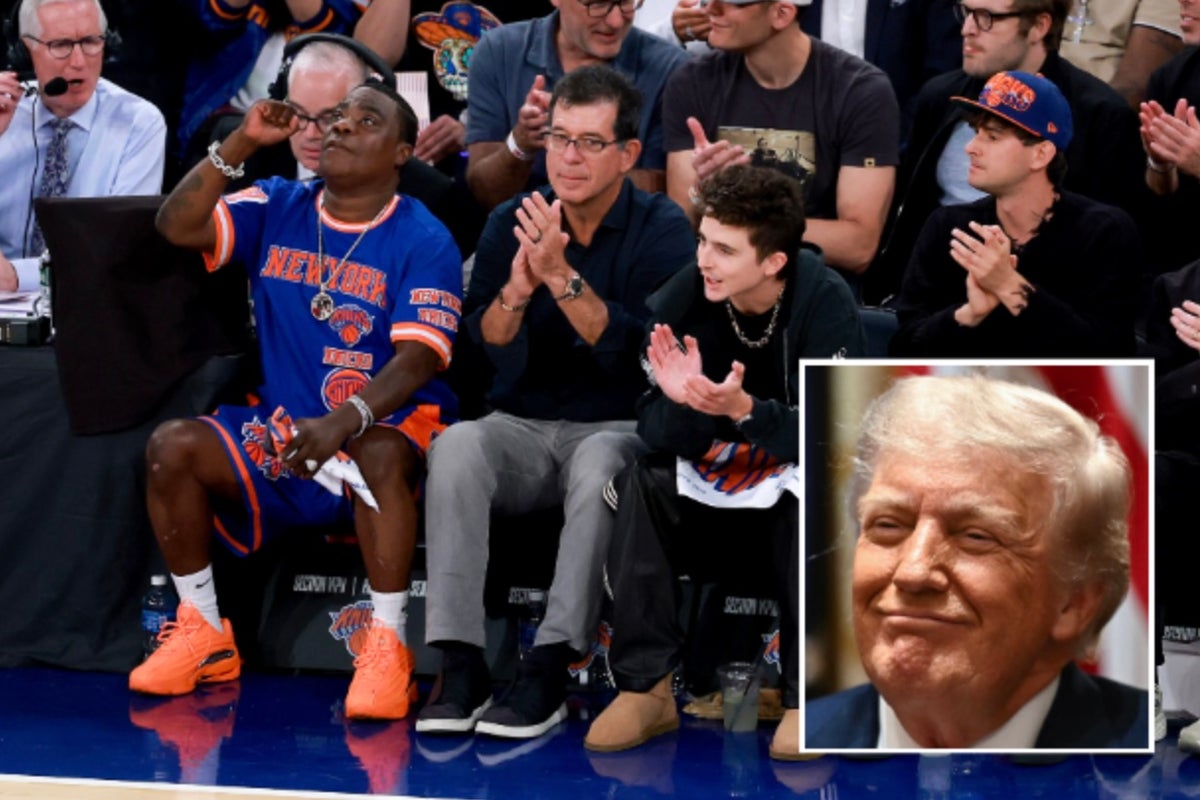
Donald Trump will attend Game 3 of the NBA Finals at Madison Square Garden on Monday night as a personal guest of New York Knicks owner James Dolan. The appearance will mark the first time a sitting United States president has ever attended an NBA Finals game in person. While the political optics of a lifelong New Yorker returning to Midtown Manhattan to witness Jalen Brunson shield a 1-0 series lead against Victor Wembanyama and the San Antonio Spurs will dominate television coverage, the underlying reality presents an unprecedented logistical nightmare for the city, the league, and thousands of ordinary basketball fans holding tickets that are currently trading for upwards of $7,000 on the secondary market.
Behind the public excitement from NBA Commissioner Adam Silver, law enforcement agencies are grappling with the realities of dropping a presidential motorcade directly into the heart of America’s densest transit hub. Penn Station sits directly beneath the arena floor. The overlapping jurisdictions of the Secret Service, the NYPD, and the Metropolitan Transportation Authority (MTA) are colliding to build an iron clad security perimeter that will fundamentally alter the fan experience and reshape the neighborhood for days.
The Logistical Friction at Eighth Avenue
Madison Square Garden was built for accessibility, not isolation. It sits on top of a subterranean labyrinth where hundreds of thousands of commuters catch Amtrak, Long Island Rail Road, and New Jersey Transit trains every hour. When Trump arrives next week, that architectural vulnerability will be put to the test.
Law enforcement planning documents reveal a defensive posture that goes far beyond standard high-profile sports details. The Secret Service is deploying over 40 magnetometers inside the concrete concourses of the arena. Every single ticket holder will undergo airport-style screening before they can even glimpse the court.
- Mandatory Early Arrivals: Fans are being told to arrive up to three hours before the evening tip-off just to clear the checkpoints.
- Transit Chokepoints: Stairwell closures and rolling subway station shutdowns inside Penn Station are expected to cause massive delays for commuters who have absolutely no interest in basketball.
- Surface Gridlock: The NYPD plans to seal off entire blocks around Seventh and Eighth avenues, transforming the clogged arteries of Midtown into frozen zones.
A presidential motorcade moving through Manhattan requires the total stoppage of cross-traffic. Doing this at the exact moment thousands of sports fans are arriving, and hundreds of thousands of workers are heading home, will create a cascading gridlock effect that could paralyze Manhattan from Chelsea up to Times Square.
Two Billionaires and an Unpredictable Arena
The invitation came directly from James Dolan, the controversial billionaire who controls the Knicks and Madison Square Garden. Dolan and Trump share a decades-long relationship rooted in the insular world of New York real estate, celebrity, and power.
Trump was a permanent fixture in the front row during the 1990s, sitting courtside the last time the franchise reached the championship series in 1999. His return during his second presidential term is an intentional display of cultural permanence. He is choosing to step into an arena that is notoriously unpredictable.
New York City Mayor Zohran Mamdani has already confirmed his attendance at Game 3. He made a point to clarify that he paid for his own ticket and will be sitting far away from the presidential box. The political contrast will be stark. New York remains a deeply divided political landscape, and Madison Square Garden crowds are famously hostile to anyone they feel is trying to upstage the product on the hardwood.
The NBA is trying to manage the situation by leaning into a narrative of unity. Adam Silver publicly stated that sports can emphasize what Americans have in common rather than what pulls them apart. But a sports arena is not a controlled rally. It is a live television environment packed with 19,000 highly emotional people who have paid record-breaking sums to see a historic basketball game, not a political spectacle.
The Financial Stakes of a 54 Year Drought
The distraction comes at a moment when the financial and emotional stakes for the New York Knicks have never been higher. The franchise has not won an NBA championship since 1973.
After dropping two games in the opening round against the Atlanta Hawks, the Knicks have rattled off 12 consecutive playoff victories. They swept the Philadelphia 76ers, dismantled the Cleveland Cavaliers, and took Game 1 on the road in San Antonio with a gritty 105-95 performance. Jalen Brunson has become a folk hero in the five boroughs. The team is now the betting favorite to hoist the Larry O'Brien Trophy.
Knicks Playoff Run Strategy
[First Round: 4-2 vs Hawks] ──> [Conf. Semis: 4-0 vs 76ers] ──> [Conf. Finals: 4-0 vs Cavaliers] ──> [Finals: 1-0 vs Spurs]
This success has triggered an economic frenzy. The secondary ticket market has exploded to levels never seen in basketball history. The cheapest seats in the upper nosebleeds are clearing for $4,000, while lower-bowl access is pushing past $8,000.
For fans who have invested a month's salary to be inside the building for the biggest Knicks game in nearly three decades, the introduction of counter-sniper teams, tactical assault units, and presidential motorcades is an unwanted complication. The game is the event. Everything else is noise.
Precedent and the Security Apparatus
White House officials confirmed that Trump’s schedule may not just include Game 3. He is also considering returning for Game 4 on Wednesday night.
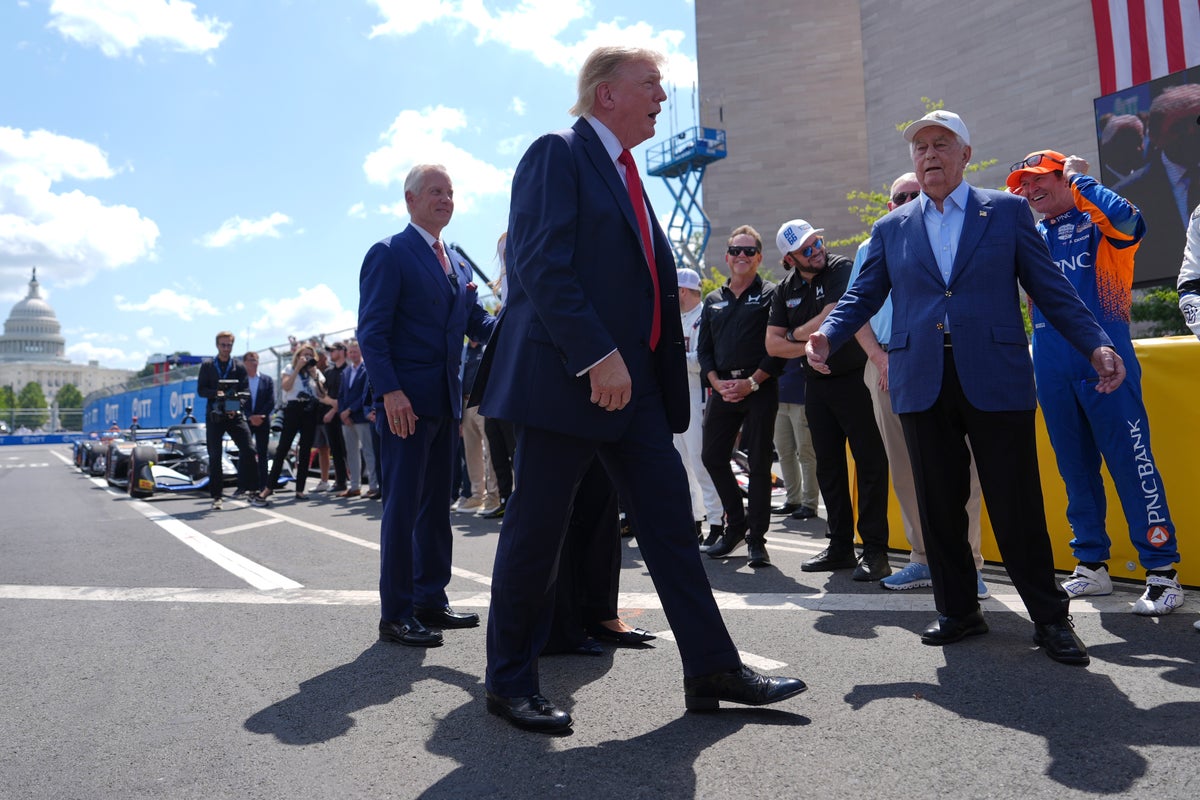
This aggressive sports scheduling has become a hallmark of his second term, following appearances at the US Open and a historic visit to an NFL regular season game. But an indoor arena built over a train station is significantly more difficult to secure than an open-air stadium or a suburban golf course.
The Secret Service views the Garden as a series of vertical vectors. The arena floor sits multiple stories above street level, accessible only by escalators, elevators, and bridges. Air support units will patrol the airspace over Midtown, while undercover NYPD intelligence officers will blend into the crowds inside the concourses.
The logistical friction will test the patience of a fan base that has waited over half a century for this moment. If lines stretch around the block and thousands of fans miss the opening tip-off due to security bottlenecks, the atmosphere inside the building could shift quickly. The bigness of the event is undeniable, but the execution of this security operation will determine whether Monday night is remembered as a historic sports triumph or a spectacular civic mess.