The official numbers from Antananarivo rarely capture the reality on the ground. For years, international health trackers categorized Madagascar as a low-prevalence nation for HIV, a statistical comfort zone that allowed policy makers to look elsewhere while other continental regions shouldered the heavy burden of the epidemic. That comfort zone has evaporated. Official data compiled by national authorities point to a staggering shift: recorded cases have doubled within a remarkably tight window, leaping from roughly 17,000 known individuals living with the virus to over 36,000 in just two years, while independent models project the true total of those infected to be significantly higher.
This acceleration is not merely a statistical artifact of better counting. It is a structural failure born of chronic underfunding, broken supply chains, and a deeply entrenched social stigma that pushes transmissions further into the shadows. When a public health crisis outpaces the institutional apparatus designed to contain it, the breakdown happens quietly in regional clinics, understaffed rural outposts, and urban centers where young adults discover their status only when it is too late for effective intervention.
The Anatomy of an Undercounted Spread
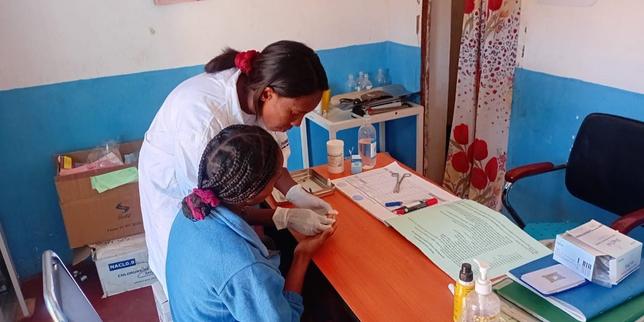
Epidemiological tracking in island nations presents distinct geographical and logistical hurdles, but the blind spots in Madagascar's public health monitoring have created a dangerous information vacuum. While international bodies utilize projection tools like Spectrum to estimate the scope of the virus, local practitioners face a daily reality of missing test kits, broken refrigeration units for diagnostic reagents, and vast rural populations situated hours away from the nearest primary health center.
Consider the distribution of the virus along major transport arteries and coastal hubs. Historically, urban areas and ports carried the highest concentration of risk, mirroring economic migration patterns and tourism corridors. Yet recent screening data reveal a different trajectory. Positivity rates exceeding critical thresholds are now routinely documented across dozens of remote districts.
When young adults between the ages of 19 and 25 comprise a substantial share of those succumbing to AIDS-related complications in major hospital wards, the traditional framing of the disease as an issue confined strictly to high-risk key populations collapses. The transmission map has widened because prevention infrastructure failed to scale alongside shifting social behaviors, rising economic precarity, and declining rates of consistent barrier contraception use.
Financial Gaps and the Cost of Inaction
Public health strategies require capital, coordination, and political will. On paper, international aid packages and national strategic plans outline comprehensive frameworks for testing, counseling, and distributing antiretroviral therapy. In practice, the fiscal reality is grim. Domestic health budgets remain chronically constrained, and available funding covers only a small fraction of the estimated resources required to execute a nationwide containment strategy.
This funding shortfall translates directly into human terms. When regional dispensaries run out of rapid diagnostic tests, individuals seeking to know their status are turned away or forced to travel prohibitive distances at their own expense. Antiretroviral drug delivery networks suffer similar bottlenecks, interrupting treatment regimens that patients must maintain religiously to suppress viral loads and prevent transmission.
A treatment program that experiences intermittent stockouts loses its therapeutic efficacy and breeds patient distrust. People who manage to secure a diagnosis often drop out of the system because the logistical friction of staying alive under a broken public health architecture becomes too exhausting to navigate.
Breaking the Silence
Stigma remains an invisible engine driving new infections. In many communities across the island, a positive diagnosis carries profound social penalties, ranging from workplace discrimination to ostracization within families. This fear of disclosure forces individuals to avoid testing altogether, ensuring that the virus circulates unchecked among asymptomatic partners.
Outreach programs attempting to distribute education and preventative tools often run up against traditional conservatism and institutional resistance. Addressing this requires more than shipping medical supplies to major ports. It demands decentralized community-level engagement, where trusted local actors can distribute self-testing kits and normalize discussions surrounding sexual health without invoking the threat of moral condemnation.
The trajectory of the epidemic in Madagascar offers a sobering lesson in what happens when early warning signs are dismissed as statistical anomalies. Without a radical injection of sustained domestic funding, decentralized testing access, and an aggressive campaign to dismantle social taboos, the rising tide of new infections will continue to overwhelm clinical facilities. The infrastructure to reverse this trend exists in theory, but translating policy documents into functional, life-saving care on the ground remains an unfinished, urgent battle.