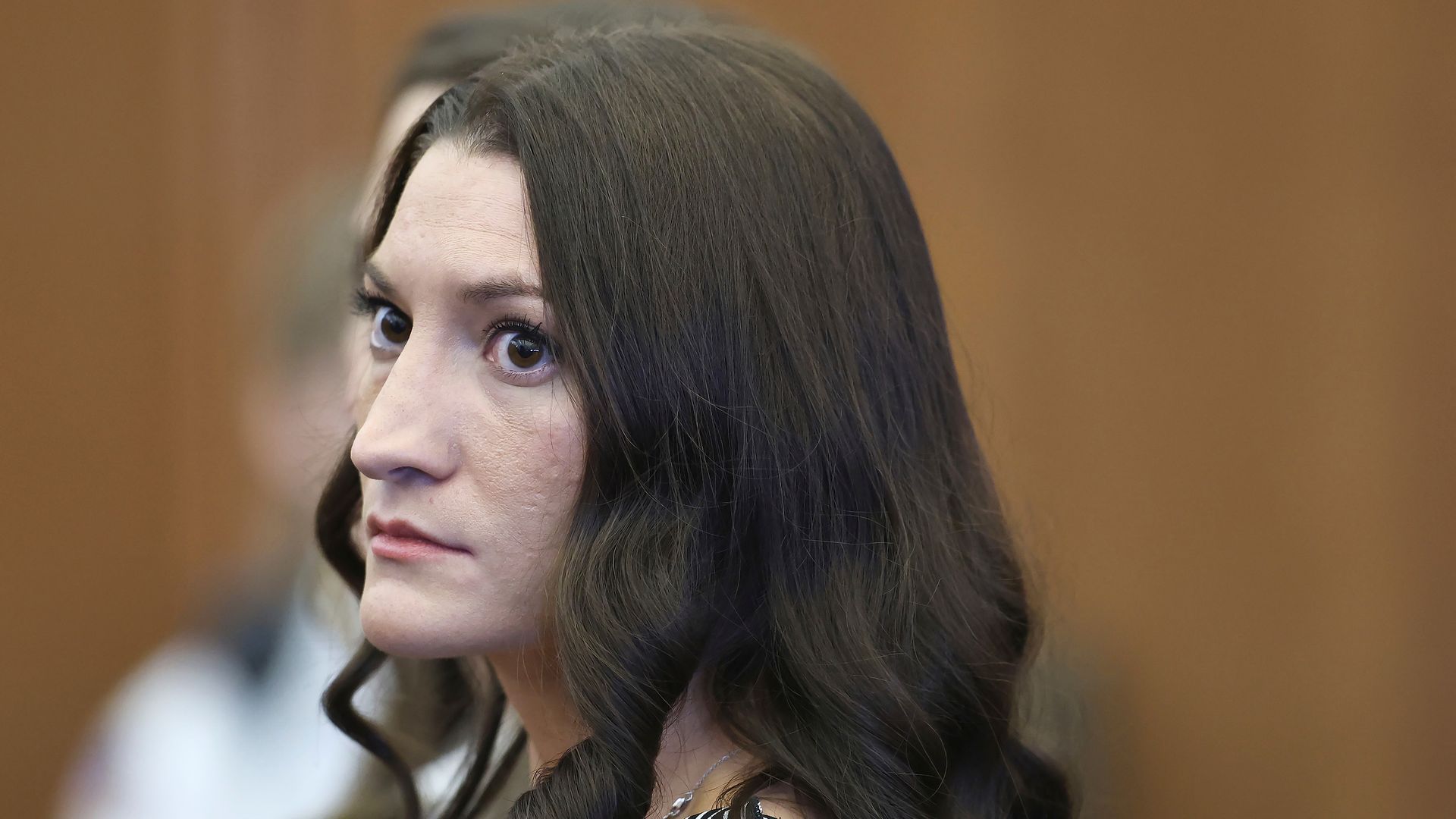
A Massachusetts judge has officially scheduled a new trial date for Lindsay Clancy, the Duxbury mother charged with strangling her three young children in January 2023. Following a mistrial that left Plymouth County and the broader legal community divided, prosecutors and defense attorneys are preparing for a high-stakes courtroom showdown that will once again center on criminal responsibility, psychiatric medication, and the elusive boundary between severe postpartum mental illness and premeditated murder.
The scheduling order resets the clock on one of the most closely watched criminal cases in New England history. When the first trial ended without a unanimous verdict, it exposed a deep fissure in how everyday citizens view maternal mental health crises. A jury could not agree on whether Clancy was legally insane at the moment she killed five-year-old Cora, three-year-old Dawson, and eight-month-old Callan, or whether her actions reflected calculated, deliberate intent. Recently making news recently: Why Baby Sea Turtles Are Suddenly Flooding Huntington Beach Waters.
Now, both sides have a clear target on the calendar. Yet the upcoming proceedings will not simply be a replay of the first trial. With years of pretrial motions, exhaustive medical records, and the lessons of a hung jury behind them, the prosecution and defense are sharpening entirely different narratives about what happened inside that Summer Street home.
What Happened in Duxbury and Why the First Trial Stalled
To understand why the retrial carries such immense weight, you have to look at the timeline of January 24, 2023. Prosecutors laid out a sequence of events designed to show rational planning. According to court filings and testimony from the initial proceedings, Clancy used Apple Maps to check how long it would take her husband, Patrick Clancy, to drive to a nearby restaurant in Kingston to pick up takeout food and stop at a CVS pharmacy. During that narrow window of roughly twenty-five minutes, the children were strangled with exercise bands in the basement before Lindsay Clancy cut her own wrists and neck and jumped from a second-story bedroom window, an act that left her paralyzed from the waist down. Additional information on this are explored by The New York Times.
To the Plymouth County District Attorney’s office, those digital footprints told a story of cold calculation. Checking travel times implies awareness of a ticking clock. Waiting until a spouse leaves the house implies an effort to avoid interruption. Under Massachusetts law, prosecutors argued, a defendant who takes steps to ensure a crime can be committed without interference understands the wrongfulness of her actions.
The defense, led by attorney Kevin Reddington, dismantled that framing by pointing to the preceding four months of aggressive psychiatric intervention. Clancy, a labor and delivery nurse at Massachusetts General Hospital, had actively sought help for severe postpartum distress. Between October 2022 and January 2023, she was prescribed more than a dozen different psychiatric medications—including antidepressants, mood stabilizers, benzodiazepines, and antipsychotics—often in overlapping combinations or rapid succession.
Jurors in the first trial heard competing expert testimony on how that pharmacological storm affected her brain. Defense psychiatrists argued that Clancy was experiencing acute postpartum psychosis compounded by severe medication-induced akathisia and emotional blunting, rendering her incapable of conforming her conduct to the law. Prosecution experts countered that while she suffered from depression and anxiety, she never exhibited the classic hallmarks of psychosis prior to the killings and maintained full cognitive control.
The jury deadlocked. Neither side secured the twelve votes required for a verdict, forcing the court to declare a mistrial and setting the stage for the newly scheduled retrial.
The Legal Standard That Makes Massachusetts So Difficult for the Defense
Most coverage of the Lindsay Clancy case treats the insanity defense as a straightforward medical question. In reality, it is a rigid legal test that heavily favors the prosecution, especially in Massachusetts.
Unlike states that use the strict M'Naghten rule—which focuses almost exclusively on whether a defendant knew right from wrong—Massachusetts relies on the McHoul standard, adopted from the Model Penal Code. Under McHoul, a person is not responsible for criminal conduct if, at the time of such conduct, as a result of mental disease or defect, they lacked substantial capacity either to appreciate the criminality of their conduct or to conform their conduct to the requirements of law.
Read that phrasing carefully. It offers two distinct avenues for acquittal by reason of lack of criminal responsibility:
- The cognitive prong: Did the defendant understand that what they were doing was legally and morally wrong?
- The volitional prong: Even if they knew it was wrong, did a mental disease strip them of the ability to control their impulses and stop themselves?
In theory, the volitional prong gives defense attorneys a vital tool in postpartum psychosis cases, where mothers often experience command hallucinations or overwhelming delusions that killing their children is the only way to save them from a worse fate. In practice, convincing twelve jurors that a defendant lacked volitional control—when the physical evidence shows she looked up driving directions on her phone—is an uphill battle.
Furthermore, Massachusetts law places the burden of proof squarely on the Commonwealth once the issue of sanity is raised. Prosecutors do not merely have to prove that Clancy killed her children; they must prove beyond a reasonable doubt that she was legally sane when she did it. That is an extraordinarily high bar for the state, which explains why the first jury struggled to reach consensus. A single juror harboring reasonable doubt about the impact of thirteen psychiatric drugs on a postpartum brain is enough to block a conviction.
The Overlooked Variable in the Courtroom
Much of the public debate surrounding Lindsay Clancy has fallen into predictable camps. One side sees a cold-blooded killer using mental health as a shield; the other sees a devoted mother broken by a failing healthcare system. Both perspectives miss a critical factor that will dominate the retrial: polypharmacy and withdrawal.
In modern outpatient psychiatry, patients in acute crisis are frequently cycled through medications when initial treatments fail to yield quick results. When a patient presents with severe postpartum insomnia, intrusive thoughts, and crushing anxiety, clinicians often layer drugs to manage symptoms rapidly. Yet selective serotonin reuptake inhibitors (SSRIs), atypical antipsychotics, and benzodiazepines each carry distinct neurological risks during titration and discontinuation.
Abruptly stopping or switching certain psychiatric medications can trigger severe physiological agitation, derealization, and impulsive behavior. Defense experts in the upcoming trial are expected to focus even more intensely on the exact dates prescriptions were started, adjusted, and halted in the weeks leading up to January 24.
Prosecutors will push back hard on this theory. From the state's perspective, blaming the medication regimen creates a dangerous precedent where any defendant taking prescribed psychiatric drugs can claim diminished capacity. They will emphasize that Clancy had been discharged from McLean Hospital—one of the premier psychiatric facilities in the country—just weeks before the killings, and that clinicians there did not diagnose her with psychosis.
That clinical paper trail cuts both ways. Does a discharge without a psychosis diagnosis prove she wasn't psychotic, or does it prove that standard inpatient assessments missed a rapidly evolving crisis? The second jury will have to weigh the credibility of hospital intake notes against the reality of what happened in that Duxbury basement.
How Prosecutors and Defense Attorneys Will Adjust Their Strategy
A retrial is never a static event. Both legal teams have now seen the other side's playbook in full, watched how witnesses held up under cross-examination, and observed which pieces of evidence resonated with jurors.
The Commonwealth’s Refined Approach
Expect prosecutors to streamline their presentation and hammer on purposeful action. In the first trial, technical testimony about pharmacology occasionally bogged down the narrative. Going into the retrial, the state’s sharpest weapon remains the timeline of that evening. By focusing relentlessly on the ordinary, unremarkable interactions Clancy had earlier in the day—taking her daughter to a pediatrician appointment, playing with the kids in the snow, ordering dinner—prosecutors aim to show a woman operating fully within reality. They will argue that mental illness does not switch on for twenty-five minutes while a husband runs errands and switch off the moment he returns.
The Defense’s Counter-Offensive
Kevin Reddington and his team will likely work to humanize the clinical data so jurors don't get lost in medical jargon. The defense's biggest challenge in the first trial was bridging the gap between Clancy's seemingly normal outward behavior and an internal psychotic break. In the retrial, expect heavier emphasis on how high-functioning individuals mask severe psychiatric deterioration, particularly healthcare workers trained to project competence and calm. Testimony from Patrick Clancy—who famously forgave his wife publicly shortly after the tragedy and expressed concern about the medications she was prescribed—remains a potent emotional anchor for the defense, though prosecutors will carefully limit how far his personal forgiveness can influence legal culpability.
What a Verdict Actually Means for Lindsay Clancy
Lost in the emotional weight of the charges is the stark reality of what happens after a verdict is read. Many observers assume that a finding of "not guilty by reason of insanity" means a defendant walks free. In Massachusetts, nothing could be further from the truth.
If a jury acquits Lindsay Clancy by reason of lack of criminal responsibility, she is immediately committed to a state psychiatric facility—typically Worcester Recovery Center and Hospital or Bridgewater State Hospital, depending on security classifications—for an initial observation period. From there, the court holds regular commitment hearings. A person acquitted on insanity grounds can be held in a secure mental health facility for the rest of their life if clinicians and judges determine they remain a danger to themselves or others.
Conversely, if prosecutors secure a conviction on first-degree murder charges, Massachusetts law mandates a sentence of life in prison without the possibility of parole. Because Clancy is permanently paralyzed from the waist down and requires continuous medical care, incarceration would take place within a specialized medical unit of the Massachusetts Department of Correction.
There is also the middle ground of second-degree murder or voluntary manslaughter, which juries sometimes turn to when they reject an insanity defense but feel the defendant lacked the cold premeditation required for first-degree murder. A second-degree conviction carries a life sentence, though with eligibility for parole after a set number of years.
The Broader Reckoning Inside American Courtrooms
The legal system was never built to handle the messy realities of postpartum brain chemistry. Unlike countries such as the United Kingdom, which enacted the Infanticide Act over a century ago to recognize that childbirth and lactation can severely disturb a mother's balance of mind, the United States forces maternal filicide cases into an all-or-nothing binary: either the defendant is a fully rational criminal, or she is legally insane.
There is no statutory middle lane in Massachusetts for postpartum mental illness. As a result, twelve ordinary residents of Plymouth County will once again be asked to sit in a jury box, sift through conflicting psychiatric diagnoses, examine Apple Maps timestamps, and decide where medicine ends and murder begins. When jury selection begins on the newly scheduled date, the courtroom won't just be judging Lindsay Clancy—it will be testing whether American criminal law can comprehend a mind in total collapse.