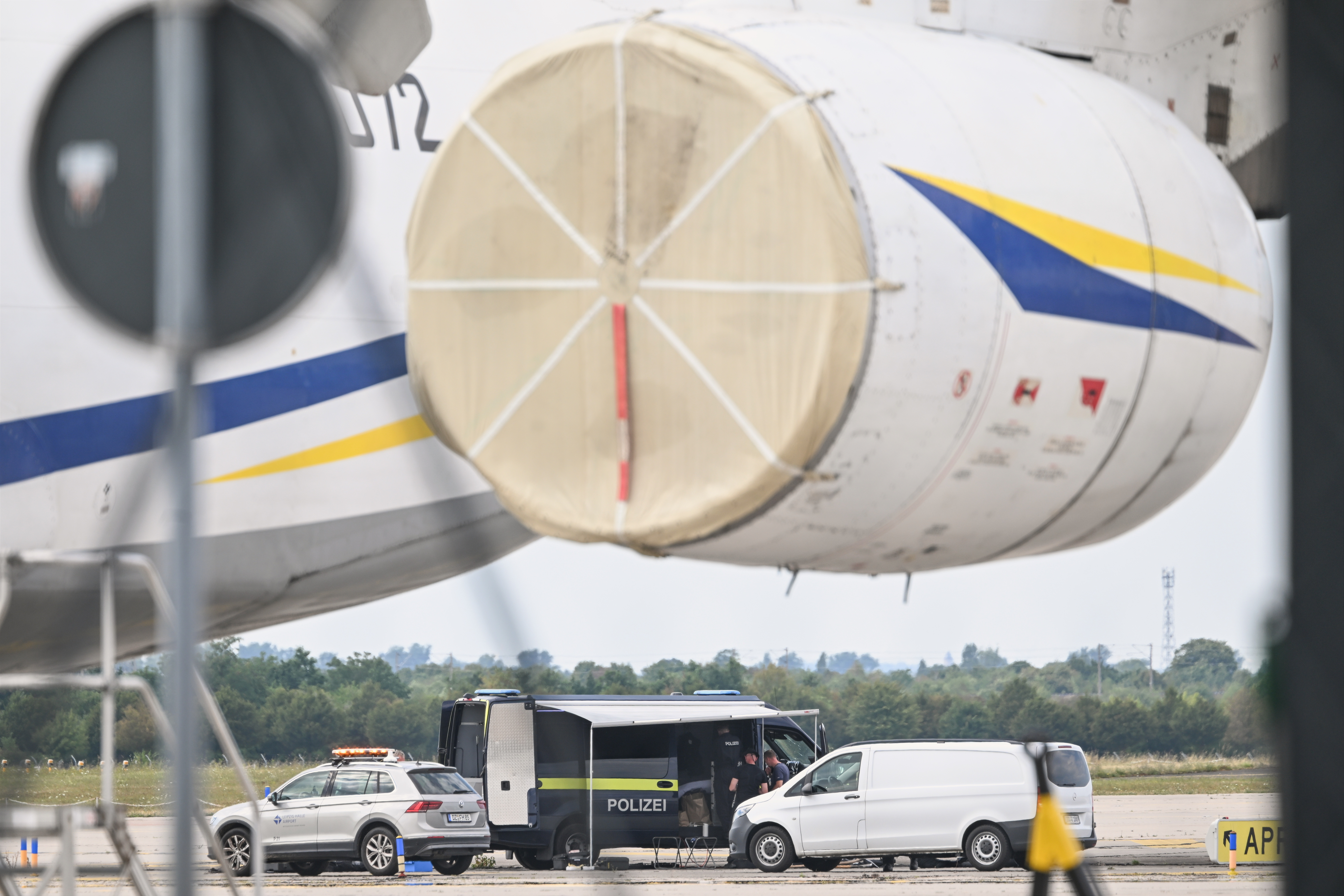
Germany has officially pointed the finger at Moscow for an explosives-laden drone attack targeting Leipzig/Halle Airport last month, breaking weeks of governmental hesitation and exposing a terrifying new frontline in European infrastructure defense. When a modified drone carrying 600 grams of military-grade hexogen and a malfunctioning detonator was discovered near a Ukrainian cargo plane on August 4, it initially registered as an isolated security breach. It was anything but. Interior Minister Alexander Dobrindt and Foreign Minister Johann Wadephul revealed in a tense Berlin briefing that state-level intelligence points directly to Russian handlers utilizing low-level local operatives to execute a sophisticated act of sabotage on German soil.
The incident has forced the administration of Chancellor Friedrich Merz to abandon its traditionally cautious approach toward hybrid warfare attribution. Berlin announced immediate retaliatory steps, including the closure of the Russian consulate in Bonn, the shuttering of the controversial Russian House cultural center in Berlin, tighter visa restrictions for Russian nationals, and targeted measures against the evasion tactics of the shadow oil fleet. Yet, behind the diplomatic expulsions lies an uncomfortable reality. Critical European logistics hubs are dangerously porous, and the modern playbook of asymmetric disruption has transformed commercial airports into active combat zones. For an alternative perspective, read: this related article.
Anatomy of a Near Miss
The mechanics of the Leipzig plot reveal a chilling convergence of high-end military engineering and low-cost execution. According to federal investigators, the drone's architecture—comprising specialized communication configurations, distinct explosive components, and a proprietary detonation system—matched devices recovered from active combat theaters in Ukraine.
Yet the people who actually wheeled the equipment into place were not elite Spetsnaz commandos. Investigators describe a network of expendable proxy agents hired to complete the final, high-risk delivery phase. This separation of technical design from ground-level implementation gives Moscow plausible deniability while maximizing operational reach. Further insight on this trend has been shared by BBC News.
The bomb itself was engineered to obliterate the targeted Antonov cargo plane and spark a catastrophic fire inside a vital European cargo terminal. Only a mechanical failure of the detonation sequence prevented a mass-casualty disaster that would have paralyzed Central European air freight overnight. Security camera footage later confirmed the drone striking the wing area before tumbling inertly to the tarmac.
The Political Fallout and Retaliation Limits
The political shockwaves were instantaneous. For months, lawmakers from across the political spectrum had demanded clarity, criticizing Berlin for moving too slowly against escalating provocations. The formal attribution shifted the conversation from speculative threat assessments to concrete retaliation.
Closing the Bonn consulate deals a symbolic and operational blow to Russian consular intelligence gathering in western Germany. Meanwhile, targeting the Russian House in Berlin dismantles a long-standing cultural asset that security agencies have monitored for years over suspected intelligence ties.
Critics argue these measures do not go far enough. Former intelligence officials point out that closing diplomatic outposts and tightening visa rules fail to alter the strategic calculus in the Kremlin. Without a credible framework of deterrence that threatens severe economic or structural consequences for every future hybrid strike, western infrastructure remains exposed to a relentless cycle of cheap disruption.
The Broader European Vulnerability
Leipzig is not an anomaly. Intelligence sharing across NATO partners reveals a synchronized wave of suspicious package fires, communication cable cuts, and reconnaissance drones hovering over military training grounds from Italy to the Baltic states.
Commercial logistics centers like Leipzig/Halle operate under the imperative of fast turnaround times. They handle millions of tons of cargo annually, relying on open spaces and flexible access roads that make absolute perimeter security nearly impossible. When state actors weaponize this openness, the economic cost of defensive hardening threatens to choke the very commerce these hubs were built to expedite.
Moscow has dismissed the accusations as manufactured provocations designed to distract from domestic German economic struggles. But as NATO Secretary General Mark Rutte and European Commission President Ursula von der Leyen rushed to express full solidarity with Berlin, the alliance recognized that an attack on a logistics ramp in Saxony is an attack on the logistical backbone of western defense.
The debris at Leipzig has been cleared, but the security paradigm across the continent has shifted permanently. The luxury of treating hybrid warfare as a low-priority police matter has expired, leaving European capitals scrambling to defend borders that extend far beyond the frontline trenches.