The fragile diplomatic architecture meticulously engineered by Washington and Tehran is collapsing before the ink can dry. The recent framework agreement between the United States and Iran—meant to pause a devastating regional war, reopen the critical Strait of Hormuz, and establish a sixty-day window for nuclear negotiations—has run headfirst into the brutal reality of southern Lebanon. A wave of deadly clashes between Israel and Hezbollah has abruptly forced the postponement of critical implementation talks in Switzerland. Despite frantic announcements of a renewed ceasefire, the fundamental friction remains unresolved. The core problem is that Washington and Tehran attempted to build a grand diplomatic bargain while treating the war in Lebanon as a secondary issue that would simply resolve itself once the superpowers shook hands.
It was a catastrophic miscalculation. The fighting in Lebanon is not a sideshow. It is the exact point of failure for the entire US-Iran peace initiative because neither of the actual combatants on the ground signed the piece of paper drafted in Washington and Tehran. Building on this topic, you can find more in: The Mechanics of Soft Power Projection: Quantifying India's Cultural Diplomacy Framework in Bangladesh.
The Flaw of Compartmentalization
For decades, Western diplomacy has operated on the assumption that Middle Eastern conflicts can be neatly partitioned. The strategy behind the recent Memorandum of Understanding signed by President Donald Trump and Iranian President Masoud Pezeshkian relied on this exact logic. By addressing the strategic choke points—specifically, unlocking oil traffic through the Strait of Hormuz and reviving structural talks on Iran's nuclear program—negotiators believed they could freeze the broader regional proxy wars.
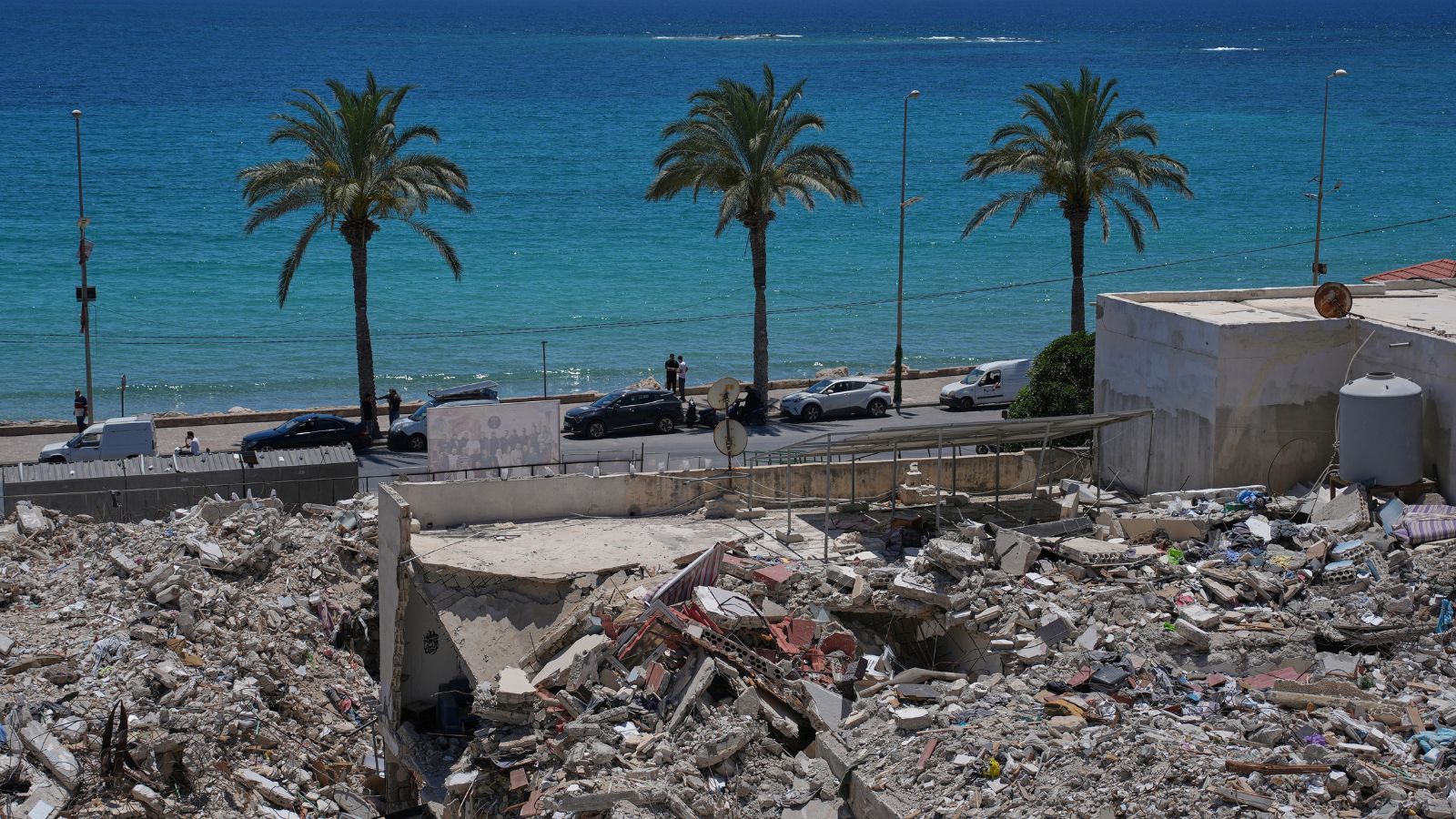
The battlefield in southern Lebanon shattered that theory within forty-eight hours. When Hezbollah killed four Israeli soldiers, Israel responded with a massive campaign of over 150 airstrikes across southern Lebanon and the Bekaa Valley. The violence killed dozens of people, instantly tanking the scheduled diplomatic summit in the Swiss village of Obbürgen. US Vice President JD Vance and Iranian chief negotiator Mohammad Bagher Ghalibaf were both forced to delay their travel as the ground shifted beneath them. Observers at NPR have also weighed in on this matter.
The underlying mechanism driving this disruption is an irreconcilable difference in structural priorities:
- The Iranian Leverage Point: Tehran views Hezbollah not merely as an ally, but as its primary forward deterrent against external aggression. For Iran, any permanent deal with the United States must include a total, non-negotiable withdrawal of Israeli forces from Lebanese territory.
- The Israeli Security Zone: Conversely, Israeli Prime Minister Benjamin Netanyahu has made it clear that Israeli forces intend to maintain a hundreds-of-square-miles "security zone" inside southern Lebanon to protect civilian communities from rocket fire.
- The Hezbollah Veto: Hezbollah leadership has openly rejected any truce that does not guarantee complete Lebanese sovereignty, asserting their right to strike Israeli forces as long as they remain on Lebanese soil.
This creates a diplomatic paradox. The US-Iran deal requires a comprehensive regional ceasefire to function, yet the architectural layout of the deal provides zero enforcement mechanisms to compel either Israel or Hezbollah to stop shooting.
The Strait of Hormuz as a Geopolitical Weapon
The immediate casualty of this diplomatic paralysis has been global energy security. Following the Israeli strikes on Lebanon, Iran's central military command moved swiftly to shut down the Strait of Hormuz once again, citing what it termed a American breach of contract and continuous Israeli violations of the truce.
The rapid closure demonstrates how quickly regional theater dynamics translate into global economic shockwaves. The brief reopening of the strait had offered a temporary reprieve for international energy markets, which had been battered during the intense forty-day war earlier this spring. Now, that progress has been completely undone.
The reaction from Washington has been characteristically transactional. Rather than focusing purely on the underlying diplomatic dispute, the White House has threatened to impose unilateral US tolls on shipping traffic through Hormuz if the agreement fails to hold. While US Central Command maintains a heavily armed naval presence in the Gulf to project stability, the reality is that naval patrols cannot force a diplomatic breakthrough in Switzerland.
The Broken Mediation Chain
The logistical collapse of the Swiss summit highlights the deep fragmentation of modern international mediation. Because direct communication between Washington and Tehran remains constrained by intense political vulnerability at home, the entire peace process relies on an unstable network of intermediaries, including Qatar, Pakistan, and Switzerland.
When the ground war escalates, this telephone-game style of diplomacy breaks down completely. While technical teams led by figures like Jared Kushner have attempted to salvage the fine print of the nuclear agreements in Geneva, the macro-level political willpower is evaporating. Iranian officials are now stating openly that while their diplomats may arrive in Switzerland, minimal progress can occur while Israeli jets continue flying low over coastal cities like Tyre.
This highlights the core illusion of the current peace process. A diplomatic framework constructed via digital signatures between global capitals means nothing if it cannot alter the tactical calculations of a drone operator in southern Lebanon or a rocket crew in Nabatieh.
The current conflict began on March 2, when Hezbollah launched an initial barrage of rockets into northern Israel, triggering a massive Israeli ground invasion and an eventual direct military clash between the US, Israel, and Iran. That war cost thousands of lives and devastated infrastructure across the region. The current MoU was supposed to be the exit ramp. Instead, it is exposing the profound limits of superpower influence over deeply entrenched regional actors.
The Illusion of a Superpower Mandate
The hard truth of this crisis is that the era of the comprehensive, superpower-enforced Middle Eastern peace settlement is over. Washington can pressure Israel, and Tehran can bankroll Hezbollah, but neither patron can force their respective partner to accept a security framework they believe invites existential ruin.
As negotiators scramble to patch together yet another temporary ceasefire to rescue the Swiss talks, they are merely treating the symptoms of a fundamental design flaw. You cannot negotiate a macroeconomic and nuclear truce at thirty thousand feet while ignoring the sovereign borders and asymmetric warfare happening on the ground. Until the structural realities of southern Lebanon are integrated directly into the core text of the US-Iran negotiations—rather than treated as an afterthought—the peace deal will remain a document that looks spectacular in a Swiss conference room but means absolutely nothing on the battlefield.