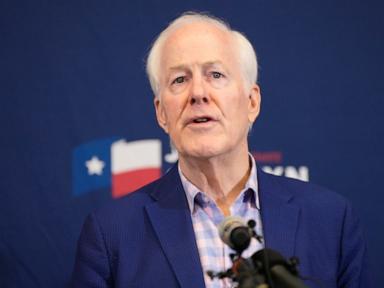
Outgoing Republican Senator John Cornyn has blocked President Donald Trump’s nomination of Assistant Attorney General T. Elliot Gaiser to a lifetime seat on the U.S. District Court for the Northern District of Texas. By withholding his blue slip—a Senate Judiciary Committee tradition that grants home-state senators veto power over federal district court picks—Cornyn effectively halted Gaiser’s confirmation before a single hearing could take place. Cornyn cited Gaiser’s lack of Texas residency, minimal trial experience, and bypassed vetting procedures. Yet the standoff runs far deeper than a resume dispute, exposing a bitter lame-duck power struggle between a departing institutionalist, a furious White House, and a ticking clock before Democrats assume control of the Senate in January.
The surface narrative offered by Capitol Hill press releases paints a tidy picture of constitutional procedure. In reality, the battle over a single Dallas-area courtroom seat is the culmination of months of political warfare inside the Texas Republican Party. Cornyn is serving out the final weeks of a nearly 24-year Senate career after losing the May 2026 Republican primary runoff to Texas Attorney General Ken Paxton, a challenge fueled by Trump’s endorsement. Paxton subsequently lost the November general election to Democrat James Talarico, handing Texas Republicans a historic defeat and turning the remaining weeks of the congressional session into a high-stakes race to fill judicial vacancies before the balance of power shifts.
With nothing left to lose politically, Cornyn has decided to enforce the Senate rules he spent two decades defending.
The Mechanics of the Blue Slip Veto
To understand how one departing senator brought a presidential nomination to a standstill, you have to look at how the Senate Judiciary Committee operates behind closed doors. Under the advice and consent clause of the Constitution, the president nominates federal judges and the Senate confirms them. Over the past century, senators formalized their influence over local courts through the blue slip policy.
When the White House nominates a candidate for a federal district court, the chair of the Senate Judiciary Committee sends blue-colored forms to both senators representing the nominee's home state. If both senators sign and return the slips, the nomination moves forward to a committee hearing and a vote. If either senator withholds the slip or returns it with an objection, the chair refuses to schedule a hearing.
During Trump’s first term, Senate Republicans eliminated the blue slip veto for federal appellate courts, allowing conservative circuit judges to be confirmed over the objections of Democratic home-state senators. However, Judiciary Committee Chair Chuck Grassley of Iowa has steadfastly preserved the blue slip requirement for federal district court judges and U.S. attorneys. Grassley’s adherence to that rule is the exact mechanism Cornyn used to stop Gaiser in his tracks.
Cornyn’s position is blunt. He told reporters that the White House made no attempt to consult him before announcing Gaiser’s name, treating the Senate as a rubber stamp rather than a co-equal branch of government. For a senator who spent years leading the bipartisan vetting committee that screened judicial candidates in Texas, watching an out-of-state political appointee get parachuted into a Dallas district court crossed a line he refused to ignore.
Who Is T. Elliot Gaiser
The man at the center of this institutional collision is 37-year-old Thomas Elliot Gaiser, the head of the Justice Department’s powerful Office of Legal Counsel. Nominated by Trump in April 2025 and confirmed in July of that year, Gaiser quickly became one of the administration's most influential legal architects.
His conservative credentials are beyond dispute. A graduate of the University of Chicago Law School, Gaiser clerked for Fifth Circuit Judge Edith H. Jones, D.C. Circuit Judge Neomi Rao, and Supreme Court Justice Samuel Alito during the 2021–2022 term. Before taking the helm at the Office of Legal Counsel, he served as the Solicitor General of Ohio, arguing appellate cases on behalf of the state. Earlier in his career, he worked as legal counsel for Trump’s 2020 presidential campaign and volunteered on Senator Ted Cruz’s 2016 presidential run.
Inside the Justice Department, Gaiser has authored high-profile legal opinions shielding administration actions from oversight. In August 2026, he issued an opinion concluding that presidential communications with private outside advisers are protected by executive privilege, insulating non-government allies from congressional subpoenas. He also penned legal guidance arguing that certain U.S. military strikes did not meet the statutory definition of hostilities under the War Powers Resolution.
Yet for all his appellate pedigree and executive-branch clout, Gaiser has almost no connection to Texas. Born and raised in Ohio, he lived and practiced there until joining the Justice Department in 2025. His sole tie to the Lone Star State is a single year spent in Houston nearly a decade ago clerking for Judge Jones. Furthermore, his career has been spent almost exclusively in appellate briefs and policy memos rather than managing criminal trials, civil discovery, and live juries—the daily grind of a federal district court judge.
The Timeline of a Rushed Nomination
The speed with which Gaiser’s nomination materialized explains why Cornyn felt blindsided. The vacancy itself opened when U.S. District Judge Jane Boyle, an appointee of President George W. Bush, announced in late August 2026 that she would take senior status effective October 1. Because the Senate recessed for all of October and the first week of November ahead of the midterm elections, the seat sat untouched while voters went to the polls.
On November 3, Election Day delivered a shock to the GOP. Democrats won control of the Senate, and Talarico defeated Paxton in Texas. Suddenly, the window for confirming conservative judges without Democratic interference shrank to a few dozen legislative days before January 2027.
According to Gaiser’s own Senate Judiciary Committee questionnaire, the push to put him on the bench began the very next morning.
- November 4: Staff from Senator Ted Cruz’s office contacted Gaiser to gauge his interest in the Northern District of Texas vacancy.
- November 6: Gaiser spoke with Cornyn’s staff about a potential nomination, and the White House Counsel’s Office formally notified him he was under consideration.
- November 7: Gaiser completed and dated his Judiciary Committee questionnaire.
- November 9–10: Trump publicly announced Gaiser’s nomination to the Dallas-based court.
- November 16: The White House formally transmitted the nomination paperwork to the Senate.
In less than two weeks, an Ohio lawyer with zero trial court experience was selected, announced, and sent to the Senate for a lifetime appointment. For Cornyn, the timeline proved that neither the White House nor Cruz had conducted genuine due diligence or respected the traditional screening process used to vet Texas judicial candidates.
Floor Fireworks and the Cruz Factor
The friction between Texas’s two Republican senators spilled into public view on the Senate floor just before Cornyn officially killed the nomination. Witnesses in the press gallery watched Cornyn and Cruz engage in a heated, audible argument over Gaiser’s fate. At one point, Cornyn’s voice carried clearly across the chamber as he told his junior colleague that he did not find him credible and was angry over how the process had been handled.
Cruz’s frustration stems from cold political math. Once the new Congress is sworn in on January 3, 2027, Democrats will hold the Senate majority, and Talarico will take Cornyn’s seat. Because Grassley’s blue slip rule applies equally to both home-state senators, Talarico will immediately gain veto power over every future federal district court nominee in Texas.
So long as Cruz and Talarico serve together, no president of either party will be able to seat a federal trial judge in Texas unless both senators agree on the candidate. Cruz pointed to the late-2024 lame-duck session, when Senate Democrats rapidly confirmed 22 federal judges before handing power over to Republicans, arguing that the GOP cannot afford to squander a single vacancy. From Cruz’s perspective, blocking a staunch conservative like Gaiser over residency and vetting protocols is an act of unilateral disarmament.
Cornyn sees the exact same calendar and draws the opposite conclusion. Having already lost his primary after Trump endorsed Paxton, Cornyn owes nothing to the White House or to Cruz, who stayed neutral during the bitter primary battle. More importantly, Cornyn argues that a lifetime appointment to the federal bench demands more than ideological loyalty. Even while blocking the nomination, Cornyn expressed sympathy for Gaiser personally, calling him a bright young lawyer who was being used as a political pawn by people rushing to beat an election deadline.
The Alternative on the Table
Cornyn has insisted he is not trying to leave the Dallas seat empty for Democrats to fill. Instead, he has pushed the White House to nominate Steve Fahey, a seasoned federal prosecutor based in Texas who has already cleared traditional vetting hurdles.
The contrast between the two candidates highlights the divide inside conservative legal circles:
| Factor | T. Elliot Gaiser | Steve Fahey |
|---|---|---|
| Current Role | Assistant Attorney General, Office of Legal Counsel | Former federal prosecutor in Texas |
| Home State Ties | Ohio native; one-year Houston clerkship in 2016–2017 | Established career practicing in Texas |
| Core Experience | Appellate litigation, Supreme Court clerkship, executive branch memos | Federal trial work and courtroom prosecution |
| Senate Backing | Supported by Ted Cruz and the White House | Recommended and vetted by John Cornyn |
By late November, signals from Capitol Hill suggested the White House was beginning to recognize that Gaiser had no path forward. Senate Judiciary Chairman Chuck Grassley confirmed that his committee had received initial nomination paperwork for Fahey, indicating that administration officials were quietly preparing a backup plan rather than fighting a losing war against Cornyn’s blue slip.
What Happens When Institutional Norms Collide With Partisan Urgency
The broader consequence of this standoff reaches well beyond one courtroom in Dallas. For decades, the federal judiciary relied on an unwritten compact between the White House and home-state senators. Presidents deferred to senators on local district judgeships because those judges handle the everyday criminal and civil disputes affecting the state’s residents. In exchange, senators ensured that nominees possessed genuine courtroom competence and community standing.
As judicial confirmations became central battlegrounds in national politics, both parties began treating vacancies as ideological real estate to be claimed at any cost. When a seat opens in a friendly state, the pressure to install a young, ideologically reliable jurist often overrides traditional standards like trial experience or local roots.
Yet the rules of the Senate only bend until a senator with institutional leverage decides to stand in the doorway. Lame-duck sessions routinely expose the limits of party discipline, especially when outgoing lawmakers no longer fear primary challenges or presidential retaliation. Whether the Senate manages to vet, hold hearings for, and confirm Steve Fahey before the gavel falls on the current Congress remains an open question. If the clock runs out before January, the Northern District of Texas vacancy will become the first test of whether Ted Cruz and James Talarico can strike a bipartisan bargain—or whether that bench will sit empty for years to come.