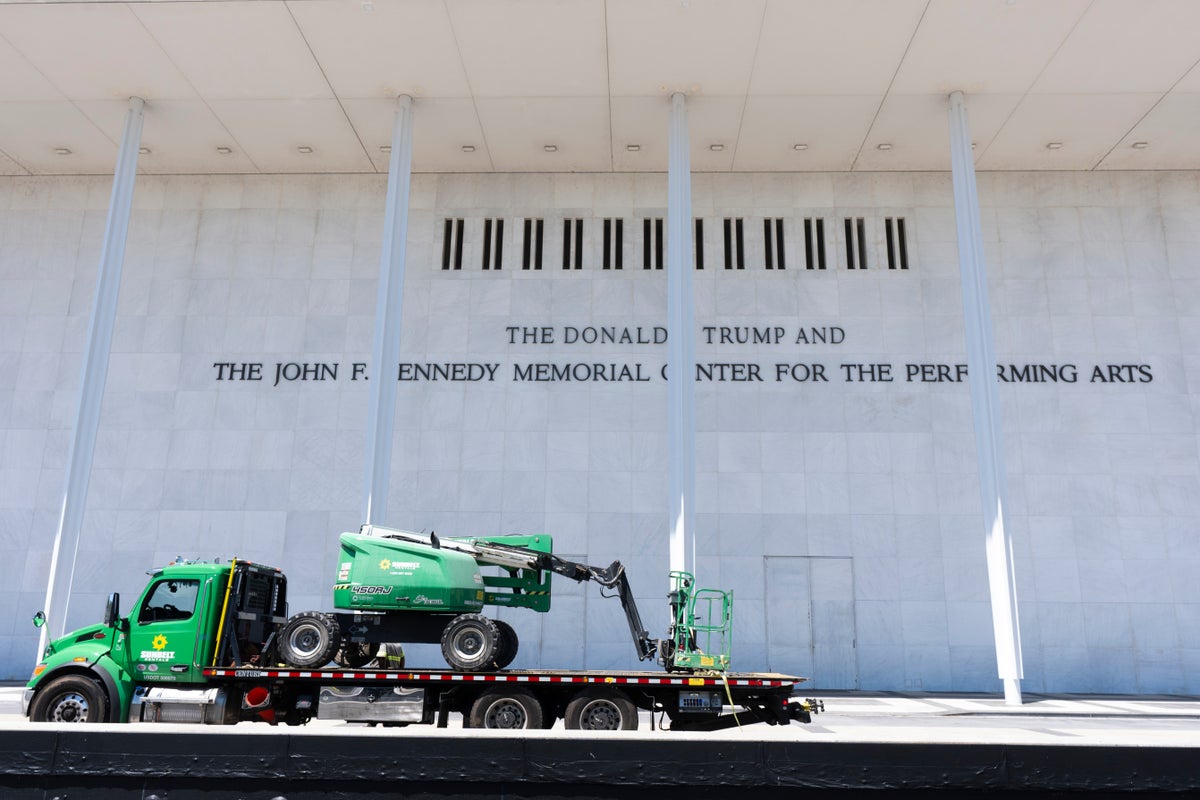
The John F. Kennedy Center for the Performing Arts has ordered its staff to immediately scrub Donald Trump’s name from its physical building, digital footprint, and internal materials. According to an internal directive issued by the center's general counsel, employees face a hard June 12 deadline to remove the 45th president's name from everything from the building's facade to corporate letterheads and email signatures. This internal scramble follows a definitive 94-page ruling by U.S. District Judge Christopher Cooper, who determined that a presidential memorial established by Congress cannot be renamed by a rogue board of trustees. The decision halts an aggressive 18-month attempt by the administration to remodel the nation’s premier cultural hub into a political monument.
While the immediate news cycle focuses on the physical removal of brass lettering, the true crisis facing the Kennedy Center is structural and financial. The judicial intervention did not just order a name change. It halted a planned two-year shutdown of the venue, exposing deep fractures between executive overreach, congressional mandate, and the economic reality of public arts funding.
The Statutory Wall Facing Executive Branding
The legal battle over the "Trump Kennedy Center" highlights a fundamental misunderstanding of how national monuments operate. When the board voted last December to add the president’s name to the venue, they treated the federal institution like a private real estate asset. It was not.
Congress deliberately renamed the National Cultural Center to honor John F. Kennedy in 1964, cementing its purpose in federal law. Judge Cooper's opinion cut through months of obfuscation by the Justice Department, which had argued that inserting "Trump" onto the front portico was merely creating a "secondary name" akin to corporate nicknames like Fannie Mae. The court called this argument "too cute by half."
The legal reality is simple. A board appointed by the executive branch can manage operations, but it lacks the statutory power to alter a legacy designated by legislative act. By attempting to bypass Congress, the board exposed the institution to severe legal liabilities that have now disrupted its entire operating calendar.
The Real Cost of Cultural Warfare
The branding conflict has already inflicted massive damage on the institution's balance sheet and cultural standing. Following the board’s takeover and the subsequent name change, the Kennedy Center experienced an unprecedented operational decline.
- Artist Boycotts: High-profile touring productions and major performers canceled scheduled runs rather than appear at a venue bearing the controversial rebranding. A scheduled run of the musical Hamilton was pulled, dealing a severe blow to projected seasonal revenue.
- Ticket Slump: General ticket sales plummeted to their lowest levels in years as local and national patrons opted to boycott the venue.
- Affiliate Exodus: Prestigious resident groups, including the Washington National Opera and the National Symphony Orchestra, faced internal rebellion and severe revenue losses, threatening the historic partnerships that form the core of the center's programming.
To counter this downward spiral, the administration leaned heavily on private fundraising tied directly to the rebranding. In court filings, the center's management argued that the president had personally raised tens of millions of dollars and committed to bringing in an additional $150 million from private donors over the next two years. Management claimed that erasing the name would cause "irreparable harm" and make the center financially unviable.
This argument reveals a troubling strategy. The business model of a national cultural treasure was tied to the personal brand of a single political figure. When that brand was legally severed from the building, the financial architecture beneath it collapsed.
The Shutdown Strategy That Failed
The most damaging component of this saga was the aborted plan to close the Kennedy Center entirely for two years starting this July. Nominally pitched as a $257 million modernization project, the shutdown was blocked by the court after a challenge led by Ohio Democratic Representative Joyce Beatty and historical preservation groups.
Judge Cooper’s ruling was scathing regarding the board's behavior, explicitly stating they were "derelict in discharging the full range of its responsibilities." The court found that the board accepted a one-sided presentation of information, ignored its statutory obligations to provide continuous programming, and completely disregarded the adverse impacts a two-year closure would have on the staff and the surrounding community.
Before the court's intervention, the center had already begun laying off staff in anticipation of the dark years. Now, the venue is legally required to remain open, but it possesses an empty performance calendar and an alienated base of artistic talent.
The Looming Abandonment
The ultimate outcome of this failed institutional takeover is likely to be total abandonment rather than compromise. Following the court order, the president signaled his intention to wash his hands of the venue entirely, stating on social media that he has no interest in a "hopeless journey" if he is not free to manage the institution his way. He has already instructed the Department of Commerce to explore transferring the responsibility for its operation, maintenance, and management back to Congress.
This leaves the Kennedy Center in a perilous position. The private donor network cultivated over the last year is likely to evaporate along with the presidential nameplate. Meanwhile, federal funding remains precarious after recent pushback from Senate factions weary of the drama surrounding the venue.
Scrubbing the letters off the facade by June 12 is the easy part. Rebuilding the broken trust of audiences, restoring frayed relationships with elite arts organizations, and replacing a politicized fundraising apparatus will take years. The gold columns on the Potomac can be repainted, but the institutional stability of America's national cultural center has been profoundly compromised.