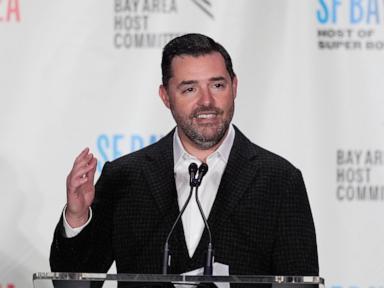
San Francisco 49ers owner and chief executive officer Jed York pleaded no contest to amended misdemeanor charges of disorderly conduct and possessing criminal tools in Columbiana County, Ohio, following an undercover sting operation by local law enforcement and the Mahoning Valley Human Trafficking Task Force. York, 46, was arrested on a Sunday morning at a mobile home community in East Palestine, Ohio, after allegedly responding to an online advertisement and arranging a sexual encounter in exchange for one hundred and forty dollars. The initial felony-level or first-degree misdemeanor charge of engaging in prostitution was swiftly reduced via a plea agreement, resulting in a sentence of one day in jail per count served concurrently, a total fine of one,150 dollars, credit for time served, an ordered online course, and the forfeiture of seized cash to the regional human trafficking task force.
The legal speed with which a high-profile multi-billion-dollar franchise owner processed a criminal case in a small Ohio municipality raises immediate questions about how wealth and localized justice intersect. This episode shifts from a simple police blotter item to a institutional stress test for the National Football League and its rigid personal conduct policies.
The Anatomy of an Ohio Sting Operation
East Palestine is located roughly thirty minutes away from Youngstown, where York was born and raised. Returning to one's roots usually implies nostalgia or family ties. For a prominent sports executive steering an enterprise valued in the billions, returning home anonymously via an online solicitation platform proved disastrously naive.
The Mahoning Valley Human Trafficking Task Force operates regular stings targeting digital solicitation sites. Investigators deploy decoys, post advertisements, and monitor communications. When York allegedly answered the digital prompt and drove to a local mobile home park, he walked directly into an established trap.
The charge of possessing criminal tools often surprises outsiders when attached to a prostitution sting. In the context of modern criminal statutes, prosecutors routinely apply this designation to the cellular device used to coordinate the illicit arrangement. York's phone was temporarily seized, scrutinized, and eventually ordered returned as part of the rapid-fire plea deal that wrapped up inside twenty-four hours.
Swift Plea Deals and the Mechanics of Privilege
Speed is a luxury of capital. While average defendants caught in regional municipal courts routinely languish behind bars waiting for arraignments, public defenders, or bail hearings, York's legal team orchestrated a neat resolution before the start of the standard work week.
Columbiana County Prosecutor Vito Abruzzino noted publicly that standard prostitution-related offenses frequently resolve through plea negotiations depending on evidence, criminal history, and judicial discretion. Yet, the transformation of a solicitation charge down to misdemeanor disorderly conduct offers a textbook illustration of how minor infractions are massaged within provincial legal systems when a defendant possesses unlimited financial resources.
He received credit for the single day spent in custody upon booking, effectively walking out of the courthouse doors immediately following the morning hearing. The financial penalties assessed—totalling one thousand one hundred and fifty dollars in fines alongside a minor cash forfeiture—amount to a rounding error for an executive whose franchise commands an enterprise valuation stretching well past eight billion dollars.
The Institutional Silence from Santa Clara
Corporate public relations playbooks dictate a specific defensive posture during executive crises. Silence, minimization, and compartmentalization rule the day. The San Francisco 49ers issued a flat, sterile statement emphasizing that the legal matter had reached its conclusion and declining further substantive comment.
This posture attempts to wall off the executive suite from the daily operations of Kyle Shanahan's coaching staff and John Lynch's front office. Football operations continue. Training camp schedules press forward. Media availability for players and coaches will inevitably feature awkward pivots away from the owner's legal troubles toward the upcoming regular season slate.
Yet, treating this as an isolated personal indiscretion ignores the structural reality of modern sports governance. Owners are not ordinary employees. They sit at the absolute apex of the corporate hierarchy, voting on league rules, hiring commissioners, and theoretically embodying the corporate values of the shield.
The League Office and the Disciplinary Tightrope
Attention now pivots directly to league headquarters in New York. Commissioner Roger Goodell faces a delicate administrative challenge under the codified personal conduct policy.
Past precedent provides erratic guidance. When New England Patriots owner Robert Kraft was implicated in a 2019 Florida massage parlor solicitation sting, the league ultimately levied zero formal discipline, relying heavily on the fact that local courts later suppressed video evidence and dropped charges. Conversely, lower-profile executives or personnel found in violation of laws involving human trafficking task force stings face varying degrees of internal scrutiny, ranging from steep private fines to mandatory behavioral counseling.
Because York pleaded no contest rather than guilty, his legal strategy technically avoids an absolute admission of criminal culpability while accepting the court's punitive sanctions. Under standard legal definitions, a no-contest plea cannot easily be weaponized as an admission in potential civil litigation, but the personal conduct policy grants the commissioner broad authority to punish conduct deemed detrimental to the league regardless of whether a criminal conviction is secured.
If the league issues a nominal fine and a stern warning, critics will accuse headquarters of protecting billionaire club members. If the league attempts a substantial suspension or forces a temporary step-back from operational control, it sets an aggressive precedent that transforms how ownership behavior is policed across all thirty-two franchises.
The scandal strips away the polished veneer of corporate sports ownership, exposing a messy intersection of digital vulnerability, small-town law enforcement operations, and swift legal mitigation. As the autumn football schedule approaches, the 49ers organization must navigate the uncomfortable reality that their chief executive's weekend in Ohio will cast a long shadow over their championship ambitions.