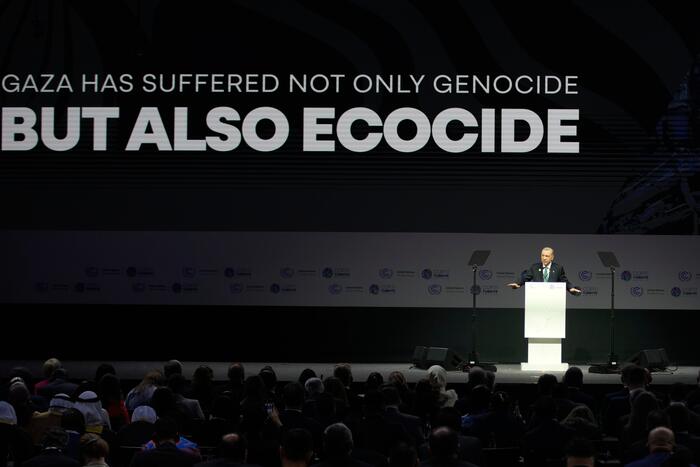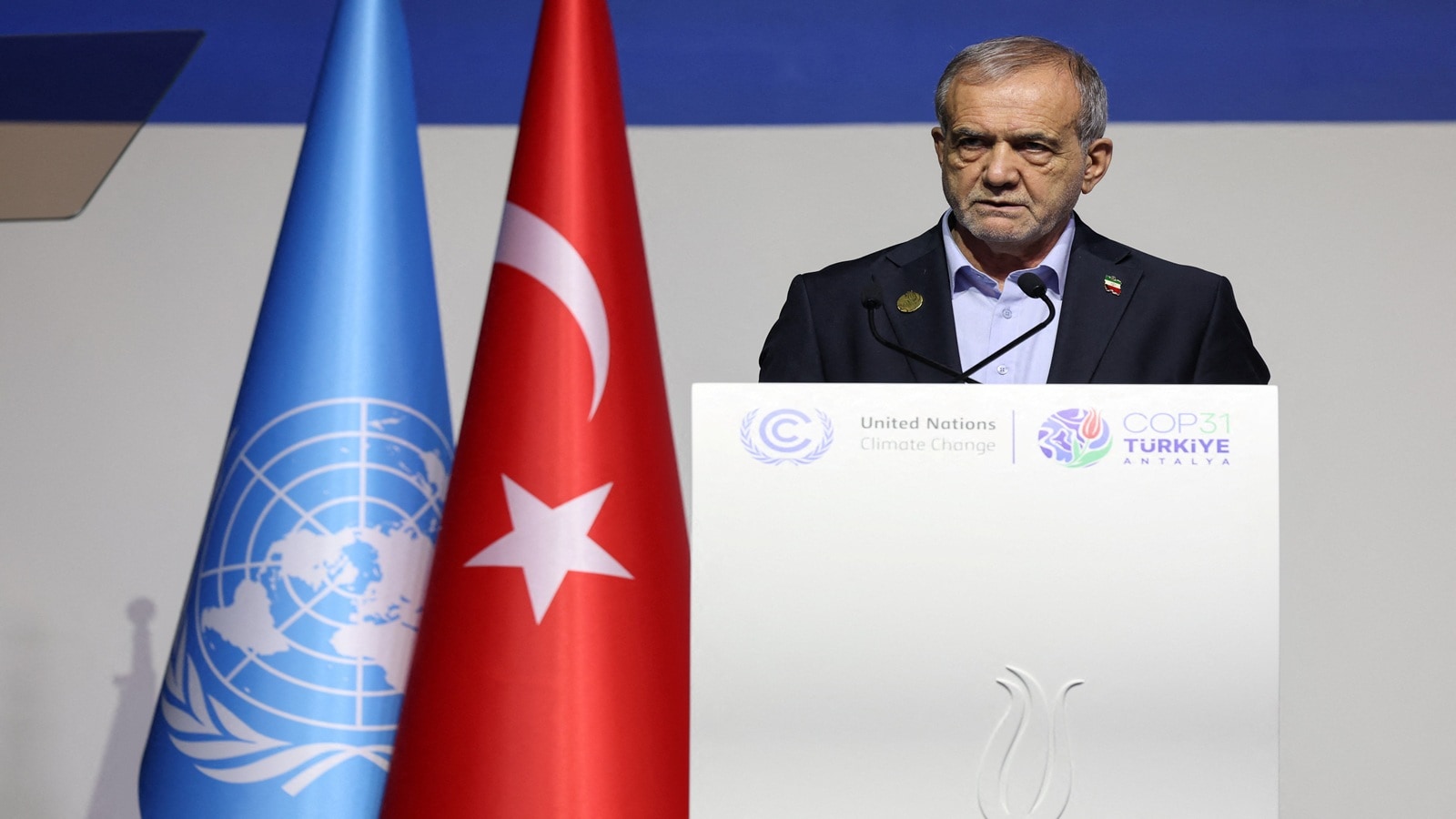
At the COP31 climate summit, Iranian officials formally demanded financial compensation for environmental damage resulting from US and Israeli military strikes. This move attempts to pull active geopolitical warfare directly into the United Nations climate finance architecture, specifically targeting mechanisms designed to help vulnerable nations recover from climate-driven disasters. While Tehran frames these strikes as an ecological catastrophe that cripples its green transition, Western diplomats and legal analysts argue the United Nations Framework Convention on Climate Change (UNFCCC) has neither the mandate nor the accounting framework to adjudicate military conflicts. The clash exposes a widening fault line in global climate diplomacy.
Climate negotiations have never existed in a vacuum, yet the collision between active kinetic warfare and international environmental law has rarely been this blunt. For decades, Conference of the Parties (COP) summits operated under a fragile consensus: keep the focus on carbon metrics, adaptation grants, and temperature thresholds, while leaving security disputes to the UN Security Council. That wall is crumbling. By bringing battlefield grievances to the negotiating table at COP31, Iran is testing whether the global climate regime can be weaponized—or reformed—to cover the ecological fallout of modern military campaigns.
The Anatomy of the Iranian Argument
To understand why Tehran brought this fight to COP31, you have to look at how the country frames its domestic environmental crisis. Iran suffers from severe water scarcity, rapid desertification, chronic air pollution, and shrinking wetlands like Lake Urmia. Government representatives argue that external military pressure, combined with decades of economic sanctions, systematically strips the state of the capital and technology required to manage these ecological threats.
According to statements from Iranian delegations at international climate forums, kinetic strikes against infrastructure do not merely destroy concrete and steel. They release toxic plumes, contaminate groundwater, disrupt energy grids, and force governments to divert scarce funds from environmental restoration toward immediate defense and reconstruction. In Tehran's telling, a country cannot be expected to meet its Nationally Determined Contributions (NDCs)—the core emissions-reduction pledges under the Paris Agreement—while its infrastructure is under bombardment.
The strategic logic behind this demand rests on three pillars:
- Equating Military Damage with Climate Loss: Tehran is attempting to stretch the definition of Loss and Damage—a fund established to help developing nations recover from unavoidable climate impacts like rising seas and extreme droughts—to include human-caused environmental destruction from foreign military operations.
- Highlighting Sanctions as a Climate Barrier: Iranian negotiators consistently link military strikes with Western financial sanctions, arguing that restrictions on banking and green technology transfers constitute a form of "environmental warfare" that blocks clean energy deployment.
- Building Solidarity with the Global South: By framing itself as a developing nation victimized by wealthier military powers, Iran seeks diplomatic cover and ideological alignment with the G77 + China negotiating bloc, which has long demanded that wealthy nations pay their "climate debt."
It is a calculated diplomatic gambit. Even if Iranian officials know they will never see a dime from a UN climate fund for military strikes, putting the demand on the official record forces Western delegations onto the defensive. It shifts the spotlight away from Iran's own status as a major fossil fuel producer and one of the world's top ten greenhouse gas emitters.
How International Law Treats War and the Environment
The legal reality is messy. When bombs fall on industrial sites, refineries, or power plants, the environmental toll is undeniable. Oil fires pump black carbon into the upper atmosphere, heavy metals leach into agricultural soil, and destroyed water treatment facilities spill raw sewage into rivers. Yet international law separates the rules of war from the rules of climate governance, creating a massive jurisdictional gap.
Under International Humanitarian Law (IHL), specifically Additional Protocol I to the Geneva Conventions, warfare methods intended or expected to cause "widespread, long-term and severe damage to the natural environment" are prohibited. The ENMOD Convention (Environmental Modification Convention) of 1976 similarly bars the hostile use of environmental modification techniques. Furthermore, the UN International Law Commission adopted principles in 2022 aimed at enhancing the protection of the environment in relation to armed conflicts.
None of these legal instruments sit inside the UNFCCC.
The UN climate body operates by consensus among nearly 200 nations. Its financial mechanisms—such as the Green Climate Fund and the Loss and Damage Fund—are strictly calibrated around anthropogenic greenhouse gas emissions and extreme weather events. Auditors and scientists rely on attribution science to determine how much a specific flood or heatwave was worsened by global warming.
You cannot run a standard climate attribution model on a missile strike.
If COP31 were to accept Iran's premise, it would trigger an immediate operational collapse of climate finance. Every nation experiencing border skirmishes, civil unrest, or foreign intervention would immediately file claims for ecological reparations. Consider a hypothetical example: if a regional conflict disrupts a neighboring country's hydroelectric dam, causing downstream flooding and crop failure, would that qualify for climate adaptation funds? Under current UNFCCC rules, the answer is a flat no. Mixing war reparations with climate finance would paralyze funding pipelines that are already struggling to meet basic adaptation needs in island nations and sub-Saharan Africa.
The Geopolitical Counter-Push and Diplomatic Friction
Western diplomats, alongside representatives from the United States and Israel, view Iran's COP31 maneuver as a cynical distraction. From their perspective, the UNFCCC is a technical and financial forum meant to decarbonize the global economy, not a tribunal for Middle Eastern security disputes.
Critics of Tehran's position point out a glaring contradiction. While demanding compensation for environmental damage, Iran remains heavily reliant on hydrocarbon exports and has yet to ratify the Paris Agreement—making it one of the very few countries in the world, alongside states like Libya and Yemen, that has not formally joined the pact. Opponents argue that a nation cannot demand financial payouts from an international climate architecture while refusing to bind itself to the treaty's core legal obligations.
Moreover, analysts note that much of Iran's acute environmental degradation stems from decades of domestic mismanagement rather than external strikes. Unchecked dam construction, massive subsidies for water-intensive agriculture, illegal well drilling, and poor urban planning have drained aquifers across the Iranian plateau. Independent environmental scientists—many of whom have faced arrest or exile for speaking out inside Iran—have documented how domestic policies drove the ecological collapse of major river basins long before recent regional escalations.
| Dimension | Iran's Position at COP31 | Western & Legal Counter-Argument |
|---|---|---|
| Jurisdiction | UN climate summits must address all severe barriers to a nation's ecological survival and green transition. | The UNFCCC has no legal mandate to adjudicate military conflicts or award war reparations. |
| Loss and Damage | Foreign military strikes destroy green infrastructure and constitute direct environmental harm requiring compensation. | Loss and Damage funds are strictly reserved for unavoidable impacts caused by global greenhouse gas emissions. |
| Paris Agreement | Sanctions and military threats prevent ratification and block access to clean energy technology. | Demanding funds while refusing to ratify the Paris Agreement undermines basic treaty reciprocity. |
| Root Causes | External aggression and economic isolation are primary drivers of domestic environmental degradation. | Decades of domestic water mismanagement, fossil fuel subsidies, and industrial policy drive local crises. |
This standoff highlights a broader crisis of trust at global climate summits. Developing nations frequently accuse wealthy countries of using procedural rules to dodge financial responsibility, while donor nations accuse certain states of hijacking technical forums for political theater.
The Precedent of Conflict-Driven Climate Claims
Iran is not the first country to bring war to a COP summit, though its explicit demand for direct compensation from the US and Israel raises the stakes considerably. In recent years, climate conferences have increasingly become stages for wartime grievances.
During COP27 in Egypt and COP28 in the United Arab Emirates, Ukrainian officials set up prominent pavilions dedicated to tracking the carbon footprint of the Russian invasion. Kyiv hired environmental economists to calculate the exact metric tons of carbon dioxide equivalent generated by artillery fire, burning forests, fuel consumption, and future reconstruction. Ukraine argued that Russia should be held financially liable for "climate damages" caused by its military aggression—a concept that gained sympathetic hearings from European allies but still faced steep legal hurdles regarding how to enforce payment through UN climate channels.
Similarly, during COP28 and COP29, delegations from Palestine and allied nations used the floor to highlight the environmental devastation in Gaza, pointing to destroyed water infrastructure, contaminated soil, and the massive carbon emissions generated by bombardment.
The difference lies in the target of the financial demand. Ukraine sought to establish a legal precedent to seize frozen Russian sovereign assets to pay for ecological recovery, working largely outside the core UNFCCC funding pools. Iran, by contrast, is attempting to force the issue directly into the COP31 negotiating text, demanding accountability and financial redress from the United States and Israel within the UN climate framework itself.
Why the Battle Over Climate Finance Matters Now
The timing of Iran's push coincides with intense friction over the New Collective Quantified Goal (NCQG)—the post-2025 climate finance target meant to replace the older, unfulfilled pledge of $100 billion per year from wealthy nations to developing countries. Every dollar in the global climate finance pool is fiercely contested.
Small Island Developing States (SIDS) and Least Developed Countries (LDCs) watch these geopolitical disputes with growing alarm. For nations like Tuvalu, the Maldives, or Bangladesh, climate finance is not an abstract diplomatic bargaining chip; it is the capital needed to build sea walls, desalinate drinking water, and relocate coastal communities before they disappear.
When major geopolitical conflicts dominate the plenary sessions at COP31, they consume political oxygen and stall technical negotiations. Every hour spent debating whether military strikes qualify as climate damage is an hour not spent finalizing disbursement rules for the Loss and Damage Fund or tightening regulations on global carbon markets under Article 6 of the Paris Agreement.
Financial institutions and multilateral development banks—such as the World Bank, which hosts the interim secretariat for the Loss and Damage Fund—operate under strict fiduciary mandates. Their boards are legally barred from disbursing climate adaptation grants to cover military reconstruction. Even if a majority of delegates in a COP plenary hall expressed sympathy for a war-affected nation, the actual financial plumbing of the global climate regime cannot process a war reparation claim.
The Accountability Vacuum for Wartime Ecology
Stripping away the political posturing at COP31 leaves an uncomfortable truth: the international community has no functional mechanism to clean up the environmental wreckage of modern warfare.
The closest historical parallel remains the United Nations Compensation Commission (UNCC), established by the UN Security Council in 1991 following Iraq's invasion of Kuwait. When retreating Iraqi forces set fire to over 600 Kuwaiti oil wells, the resulting smoke plumes, oil lakes, and marine spills created one of the worst environmental disasters in modern history. The UNCC processed billions of dollars in claims for environmental remediation and public health damages, funded by a percentage of Iraqi oil export revenues.
That mechanism only worked because the UN Security Council passed binding resolutions under Chapter VII of the UN Charter, backed by international consensus and direct control over the aggressor's export revenues.
No such consensus exists today. The Security Council is deadlocked by geopolitical rivalries, leaving nations without a viable legal venue to pursue environmental claims stemming from military strikes. As a result, countries like Iran turn to alternative forums like COP31—not because the UNFCCC is equipped to solve the problem, but because it is one of the few global stages where every nation holds an equal voice and where environmental grievances command media attention.
What Happens When Geopolitics Invades the Climate Regime
The collision at COP31 underscores a fundamental shift in how nations view climate diplomacy. For thirty years, the architecture of global climate governance relied on separating environmental cooperation from hard security conflicts. The United States and China could clash over trade and Taiwan while still negotiating joint methane pledges; rival regional powers could sit in the same plenary hall to haggle over carbon accounting rules.
That firewall is failing. As military conflicts proliferate and the physical impacts of climate change intensify simultaneously, the line between ecological collapse and geopolitical warfare blurs. Destroyed energy grids force countries back onto dirty backup fuels; damaged agricultural land accelerates food insecurity; contaminated water supplies trigger mass displacement.
Iran's demand for compensation at COP31 will almost certainly fail to produce a financial payout or a change in UNFCCC funding rules. The legal, technical, and political barriers within the UN climate framework are simply too high, and donor nations will veto any attempt to turn climate funds into a war-claims tribunal. Yet by forcing the issue onto the agenda, Tehran has exposed a massive blind spot in international governance: a world that carefully tracks every ton of industrial carbon while having no rules, no funds, and no court to address the ecological ruin left behind when missiles hit the ground.