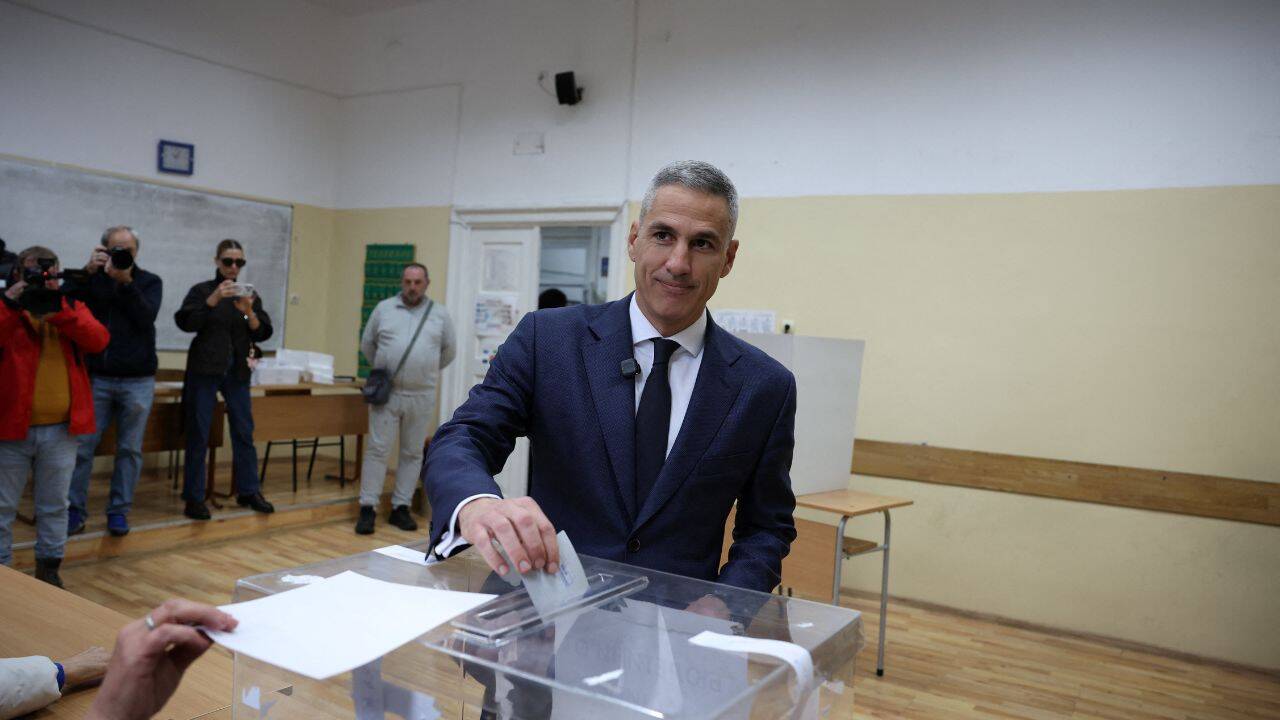
Iliana Iotova has won Bulgaria’s presidential election, defeating her pro-Western opponent in a runoff that exposes the deep political exhaustion gripping the European Union’s poorest member state. By capturing the presidency, the former journalist and longtime Bulgarian Socialist Party (BSP) stalwart inherits the mantle of her predecessor, Rumen Radev, cementing a skeptical, Moscow-friendly posture at the top of Sofia’s executive branch. For Brussels and Washington, the result is a stark warning. Voter fatigue over years of revolving-door coalitions, entrenched corruption, and economic stagnation has handed the presidency to a figure who favors pragmatic dialogue with Russia over strict transatlantic alignment.
To understand how Iotova pulled off this victory, you have to look past the lazy binary of "East versus West" that foreign correspondents love to slap onto Balkan politics. The surface narrative—that a pro-Russian candidate simply outmaneuvered a pro-Western rival—misses the grinding domestic machinery that actually drove voters to the ballot box.
The Anatomy of an Electoral Realignment
Bulgaria has spent the last several years trapped in a cycle of parliamentary paralysis. Snap election after snap election eroded public trust in the reformist, Euro-Atlantic parties that promised to clean up the judiciary and modernize the economy. When governments collapse every few months, voters stop caring about grand geopolitical strategies. They care about heating bills, inflation at the grocery store, and the feeling that their leaders are taking orders from foreign embassies rather than listening to Sofia’s streets.
Iotova did not win because a majority of Bulgarians suddenly want to abandon the European Union or tear up their NATO membership. She won because she positioned herself as a stabilizing force against a political class that voters view as chaotic and self-serving.
Having served as Vice President alongside Rumen Radev since 2017, Iotova possessed something her rival desperately lacked: institutional familiarity without the stain of daily parliamentary failure. In Bulgaria’s constitutional setup, the presidency is largely ceremonial, yet it carries immense moral authority and critical levers during crises—most notably the power to appoint caretaker governments when parliament fails to form a majority. Radev used that power aggressively, turning the presidency into an alternative center of gravity. Iotova watched every move from the front row.
Her campaign leaned heavily into sovereigntist populism, a messaging strategy that frames caution toward Western military and economic directives as a defense of Bulgarian national dignity. While her pro-Western opponent campaigned on deeper European integration, Eurozone adoption, and unwavering support for Ukraine, Iotova spoke the language of economic protectionism and peace through negotiation. In regions outside Sofia—where demographic decline is severe and memories of Russian cultural ties run deep—that message landed with lethal efficiency.
Who Is Iliana Iotova and Why Does Her Background Matter
Before entering the presidential palace, Iotova built a career that bridged media and hard-nosed socialist politics. A former television journalist at Bulgarian National Television (BNT), she knows how to control a frame, dodge a trap question, and project calm authority on camera. She transitioned into politics through the Bulgarian Socialist Party, the direct successor to the Bulgarian Communist Party, eventually serving as a Member of the European Parliament from 2007 to 2017.
That decade in Brussels is the detail most superficial analyses overlook. Iotova is not a provincial nationalist who doesn't understand how Europe works. She knows the corridors of the European Parliament intimately. She understands EU budget mechanisms, cohesion funds, and regulatory pressure points.
This makes her far more formidable than a crude ideological firebrand. When Iotova pushes back against Brussels on energy sanctions or military aid to Kyiv, she does so using the exact legalistic and diplomatic vocabulary that European bureaucrats struggle to dismiss. She frames resistance not as anti-European rebellion, but as a demand for equal treatment among member states.
The Machinery of Russian Soft Power in Sofia
Calling Iotova "pro-Russian" is accurate in terms of geopolitical alignment, yet the label oversimplifies how Moscow’s influence actually operates inside Bulgaria. You rarely see overt demands to leave NATO. Instead, influence moves through shared Orthodox heritage, nineteenth-century historical gratitude for liberation from Ottoman rule, and deeply embedded energy networks.
For decades, Bulgaria’s energy sector was tethered to Russian gas, oil, and nuclear fuel. Even after Sofia scrambled to diversify supplies following the invasion of Ukraine, the economic pain of that transition provided fertile ground for anti-Western narratives. Disinformation ecosystems on Telegram, Facebook, and sympathetic local outlets amplified every price spike as proof that Western solidarity was bankrupting ordinary Bulgarians.
Iotova tapped directly into this resentment without ever needing to adopt the extreme rhetoric of fringe ultranationalist parties like Vazrazhdane (Revival). She positioned herself in the comfortable middle ground: respectable enough for moderate conservatives and nostalgic socialists, yet skeptical enough of Washington and Brussels to absorb the protest vote from the nationalist right in the second round.
Consider how the runoff math worked in her favor:
- Consolidation of the Left: Despite years of internal infighting and shrinking parliamentary vote shares, the BSP machine still commands disciplined older voters in smaller municipalities who turn out reliably when given a viable presidential contender.
- Transfer of Nationalist Votes: Supporters of hardline Russophile and anti-EU factions held their noses and backed Iotova in the runoff to block a candidate they viewed as a proxy for Western NGOs and foreign diplomats.
- Apathy Among Urban Reformers: Disillusioned by infighting among pro-Western coalition partners, younger voters in Sofia, Plovdiv, and Varna stayed home in decisive numbers, depressing turnout where her rival needed it most.
What Her Presidency Means for NATO’s Eastern Flank
A single president cannot unilaterally rewrite Bulgaria’s foreign policy. Treaties are ratified by the National Assembly, and day-to-day governance belongs to the Prime Minister and Cabinet. Still, assuming the presidency is merely symbolic ignores the realities of Bulgarian governance.
Under the Bulgarian constitution, the president is the Supreme Commander-in-Chief of the Armed Forces and chairs the Consultative Council on National Security. More practically, the presidency acts as a megaphone and a bottleneck. Whenever parliament deadlocks—a recurring feature of modern Bulgarian politics—the president steps in to appoint a caretaker prime minister from a restricted list of senior state officials. Even with constitutional amendments passed in recent years to curb presidential power over caretaker cabinets, the head of state retains massive influence over the timing of elections and the framing of national crises.
For NATO, Iotova’s victory introduces friction along the Black Sea corridor. Bulgaria sits in a strategic chokepoint bordering Romania, Serbia, North Macedonia, Greece, and Turkey, with a coastline directly across from Crimea. Alliance planners rely on smooth logistical transit, joint naval exercises, and intelligence sharing across Sofia’s territory.
Iotova has consistently echoed Radev’s argument that sending weapons to Ukraine prolongs the war and drags Bulgaria closer to direct conflict. While she cannot single-handedly halt defense contracts already approved by parliament, she can delay ambassadorial appointments, stall defense modernization signatures, and use every international summit to signal hesitation. In alliance politics, hesitation is contagious.
The Eurozone and Economic Crossroads
Beyond defense, her victory complicates Bulgaria’s long-delayed push to adopt the euro. Joining the Eurozone requires strict adherence to inflation criteria, legislative alignment, and broad public confidence. Pro-Western parties have treated euro adoption as the final anchor locking Bulgaria permanently into the European core.
Skeptics, including Iotova, have questioned the timing, warning that adopting the single currency amid lingering cost-of-living pressures will trigger hidden price hikes for pensioners and low-income workers. By giving voice to those anxieties from the highest office in the land, she strengthens the hand of parliamentary factions seeking to delay convergence targets or demand national referendums on the currency.
Brussels now faces a delicate balancing act. Pushing Sofia too hard on fiscal reforms, rule-of-law benchmarks, or foreign policy conformity risks feeding the exact narrative that propelled Iotova to power: that unelected technocrats in Western Europe are dictating terms to a sovereign nation. Yet ignoring democratic backsliding or soft-pedaling sanctions enforcement sets a dangerous precedent for other wavering states in Central and Eastern Europe.
The Failure of the Pro-Western Establishment
It would be intellectually dishonest to blame Iotova’s rise solely on Russian propaganda or voter nostalgia. Her pro-Western rivals handed her the keys to the presidency through their own strategic incompetence.
For years, Sofia’s Euro-Atlantic camp treated alignment with Brussels and Washington as a substitute for domestic governance. They assumed that waving the European flag and lecturing voters about democratic values would excuse broken coalitions, unfulfilled anti-corruption pledges, and tone-deaf messaging on inflation. When scandals hit reformist leaders, the hypocrisy alienated the exact urban middle class they depended on to win national runoffs.
In politics, you cannot beat an emotional narrative about sovereignty and economic survival with dry talking points about macroeconomic indicators. Iotova’s opponent ran a campaign tailored for diplomatic receptions in Brussels rather than town squares in Pleven or Burgas. When forced to defend unpopular decisions on energy transition and military aid, the pro-Western camp sounded defensive and detached.
A Fragmented Nation Moving Forward
Bulgaria is not about to exit the European Union tomorrow, nor will Russian troops land in Varna. The country’s economic lifeline remains overwhelmingly tied to European trade, remittances from Bulgarians working in Western Europe, and EU structural funding. Even the most ardent Russophiles in Sofia send their children to universities in Germany, the Netherlands, and the United Kingdom, not Moscow.
What has changed is the political center of gravity. Iotova’s victory institutionalizes a dual-track reality in Bulgarian statecraft: one foot firmly planted in Western financial and security structures for survival, the other dragged deliberately backward toward Moscow and Belgrade to appease domestic sentiment and extract geopolitical concessions.
Western diplomats who view this election as a temporary aberration are misreading the room. Until Bulgaria’s pro-Western parties figure out how to deliver clean governance and tangible economic security without looking like subordinate branch managers for Brussels, leaders like Iliana Iotova will continue to own the ballot box.