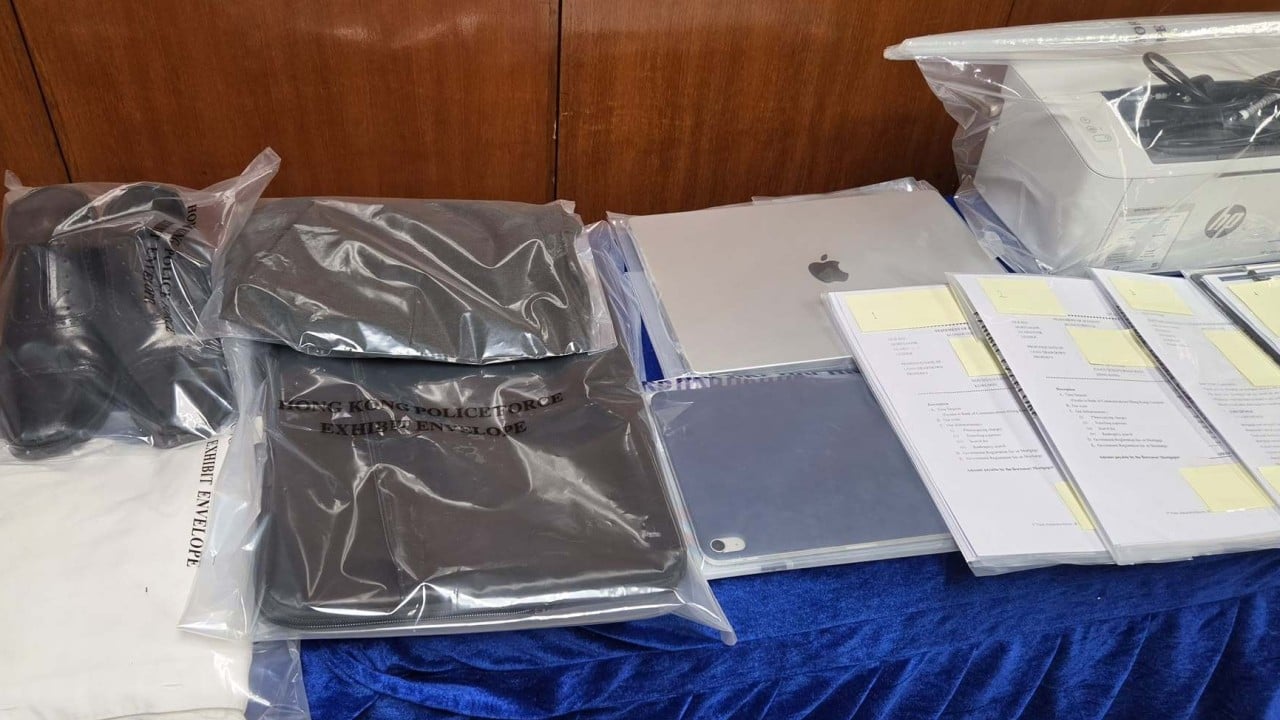
A Hong Kong university student was arrested in connection with an alleged HK$3.4 million mortgage scam after authorities uncovered fraudulent loan applications relying on falsified income and employment records. The case is not merely a story about youthful recklessness or an isolated lapse in compliance. It exposes a systemic vulnerability at the intersection of Hong Kong’s high-stakes property market, aggressive mortgage lending competition, and the increasing ease with which digital documentation can be fabricated to bypass standard banking verification.
For decades, the Hong Kong mortgage market has operated under some of the strictest macroprudential rules in the world, overseen closely by the Hong Kong Monetary Authority (HKMA). Yet when a full-time student with little to no legitimate earning capacity can allegedly orchestrate multi-million-dollar mortgage fraud, the industry has to ask uncomfortable questions. How did the paperwork clear initial underwriting? Why do retail banks and non-bank finance companies remain vulnerable to fabricated employment trails? And what does this reveal about the broader shadow economy of credit intermediation in the city?
The Anatomy of Modern Mortgage Fraud in Hong Kong
To understand how an alleged HK$3.4 million mortgage scam unfolds in a heavily regulated financial hub, you have to look at how residential lending actually works on the ground. Unlike unsecured personal loans, mortgages are backed by physical real estate. That collateral gives lenders a false sense of security. When property values are stable or rising, underwriters sometimes treat borrower income verification as a box-ticking exercise rather than an existential safeguard against default.
In a typical mortgage fraud scheme involving inflated or fabricated income, the mechanics follow a predictable pattern. Consider a hypothetical example to illustrate how these operations function. A syndication or an individual recruiter identifies a "straw borrower"—often a student, a retiree, or a low-income worker with a clean credit record on TransUnion (TU). Because the borrower has no history of defaults, their credit score looks pristine on paper. The recruiter then constructs a fictional financial profile. This usually involves registering a shell company or colluding with an existing small business to generate three to six months of bogus payroll records, Mandatory Provident Fund (MPF) contribution statements, and forged tax demand notes from the Inland Revenue Department (IRD).
Banks rely heavily on consistency across these documents. If the bank statement shows regular auto-pay deposits matching the salary stated on an employment contract, and the MPF statement reflects the mandatory 5% employer and employee contributions, automated and human underwriting systems often greenlight the application. The flaw in this verification chain is obvious to anyone who has spent years auditing financial crime. Document consistency is not the same as economic reality. A shell company can recycle the same HK$50,000 through a bank account every month, paying a few thousand dollars in MPF contributions as a cost of doing business, to manufacture the illusion of a high-earning executive.
Why Students Become Prime Targets for Financial Syndicates
The arrest of a student in a HK$3.4 million case fits a disturbing demographic trend seen across financial hubs in Asia. University students sit in a unique sweet spot for fraudsters. They are legally adults capable of signing binding loan contracts. They almost always possess unblemished credit histories because they have never held credit cards or loans long enough to miss payments. At the same time, many face acute financial pressure from tuition fees, soaring living costs, or the lure of fast money promoted across encrypted messaging apps and social media.
When recruiters approach students, they rarely frame the pitch as outright bank fraud. Instead, it is sold as "credit monetization" or "acting as a nominee director" for a quick commission—sometimes a few thousand to a few tens of thousands of Hong Kong dollars. The student hands over their Hong Kong Identity Card, signs stacks of pre-filled application forms, and lets the operators handle the bank interactions. By the time the first mortgage payments are missed, or an audit flags the forged IRD tax returns, the syndicates have vanished with the proceeds, leaving the student holding the criminal liability and facing charges of fraud or conspiracy to defraud under the Theft Ordinance.
The Regulatory Blind Spots Enabling Application Fraud
Hong Kong’s banking sector prides itself on rigorous Know Your Customer (KYC) and Anti-Money Laundering (AML) protocols. However, mortgage underwriting operates in a fiercely competitive commercial environment that creates natural friction between sales targets and risk management.
The Pressure of Mortgage Rebates and Market Share
Retail banks in Hong Kong fight tooth and nail for residential mortgage market share. Mortgages are the anchor product for retail banking; once a customer takes out a home loan, the bank can cross-sell wealth management, insurance, and credit cards. To win these loans, banks routinely offer cash rebates, preferential HIBOR-capped interest rates, and fast-track approvals. Mortgage brokers and frontline relationship managers are compensated based on loan volume.
This incentive structure breeds subtle pressure to push borderline applications through. When a borrower presents a complete file of seemingly valid PDFs—bank e-statements, digital tax notices, and employment letters—an underwriter working under tight turnaround times has limited bandwidth to conduct forensic audits. Unless a discrepancy jumps off the page, the file moves forward.
The Digital Forgery Problem
Ten years ago, forging a bank statement or an Inland Revenue Department assessment required physical skill, specialized paper, and a willingness to risk presenting altered documents across a branch counter. Today, almost the entire mortgage application pipeline is digital. Borrowers upload PDF files through online portals or email them to mortgage referrals.
Modern PDF editing software allows anyone with basic technical competence to alter figures, dates, and employer names on genuine bank e-statements with pixel-level accuracy. Without direct, real-time API verification between the lending bank, the employer’s payroll bank, the MPF trustee, and the tax authority, underwriters are essentially looking at static images of text. While the HKMA has pushed initiatives like the Commercial Data Interchange (CDI) and Open API frameworks to allow banks to pull verified data directly from the source, adoption across small-to-medium enterprises—the exact entities most often used as fake employers in mortgage scams—remains fragmented.
Beyond Tier-One Banks The Role of Finance Companies
A critical detail often overlooked in mainstream crime reporting on Hong Kong mortgage scams is the two-tiered nature of the city’s lending market. Traditional licensed banks are bound by strict HKMA loan-to-value (LTV) caps and Debt Servicing Ratio (DSR) limits. Under these rules, a borrower’s monthly debt obligations generally cannot exceed 50% of their verifiable monthly income, and applicants must pass interest rate stress tests.
When fraudsters cannot push a fabricated profile past a major bank’s compliance department, or when they want to extract maximum cash from a property quickly, they turn to licensed money lenders—commonly known as finance companies—regulated under the Money Lenders Ordinance rather than the Banking Ordinance.
Finance companies operate with far greater flexibility and significantly higher interest rates. They frequently offer second mortgages, sub-prime top-up loans, or bridging finance with minimal income documentation, relying instead on quick property valuations and aggressive default recovery clauses. In many multi-million-dollar mortgage schemes, perpetrators layer loans. They secure a primary mortgage from a mainstream bank using fabricated income proofs, and simultaneously or shortly thereafter take out secondary loans from finance companies against the same property before the Land Registry encumbrances are fully updated, or by misrepresenting the purpose of the funds.
The Legal Consequences Under Hong Kong Law
Authorities in Hong Kong treat mortgage and loan fraud with extreme severity, regardless of the perpetrator's age or academic status. Because the city’s economy is deeply intertwined with real estate and banking stability, prosecutors routinely push for deterrent custodial sentences to protect the integrity of the financial system.
Under Section 16A of the Theft Ordinance (Cap. 210), the offense of fraud carries a maximum penalty of 14 years imprisonment. If prosecutors establish that multiple individuals worked together—such as a student collaborating with a rogue broker or shell company operator—they will typically pursue charges of conspiracy to defraud under common law, which carries the exact same 14-year ceiling.
Furthermore, the courts rarely accept "naivety" or "being used as a pawn" as grounds to avoid prison when sums reach into the millions of dollars. In a HK$3.4 million case, the sheer quantum of the alleged fraud places it well above minor summary offenses, almost guaranteeing transfer to the District Court where sentencing powers extend up to seven years. Beyond criminal incarceration, convicted individuals face permanent financial ruin. Banks pursue civil recovery to claw back lost principal, forcing defendants into bankruptcy and permanently barring them from future credit, professional licensing, or corporate directorships.
How Lenders and Regulators Are Closing the Gaps
The persistence of document-based mortgage fraud has forced both regulators and financial institutions to rethink traditional verification models. Relying on borrower-submitted PDFs is an obsolete defense mechanism in an era of sophisticated digital alteration.
Several structural shifts are actively reshaping how Hong Kong banks verify mortgage applicants:
- Direct Source Data Verification: Banks are increasingly bypassing applicant-uploaded files in favor of direct digital consent mechanisms. Through frameworks supported by the HKMA, lenders are pushing applicants to authorize direct data pulls from the Inland Revenue Department’s eTAX portal and MPF trustees, eliminating the window where a PDF can be tampered with before submission.
- Cross-Checking MPF and Payroll Anomalies: Advanced compliance teams now run forensic checks on employment histories. They look for sudden spikes in salary precisely three to six months prior to a mortgage application, newly incorporated employer entities with no commercial footprint, and circular fund transfers where an employer’s corporate account receives cash deposits just days before issuing payroll.
- Tighter Scrutiny on Mortgage Intermediaries: Following a string of high-profile referral scams over the past decade, banks have drastically culled their lists of approved mortgage brokers. Any intermediary linked to a fraudulent application faces immediate blacklisting across the banking sector and mandatory reporting to the Police Commercial Crime Bureau (CCB).
- Biometric and Digital Identity Integration: The rollout of Hong Kong’s "iAM Smart" digital identity platform is gradually being integrated into banking onboarding. By tying loan applications to government-verified digital credentials, banks reduce the risk of identity theft and make it harder for syndicates to remotely operate accounts on behalf of straw borrowers.
What Borrowers and Property Owners Must Watch For
While banks bear the primary financial risk in mortgage fraud, ordinary citizens, property owners, and young adults are frequently caught in the blast radius. Identity compromise and unwitting participation remain the two biggest vectors of exposure.
Anyone approached with offers to "lend their name" for a property transaction, corporate directorship, or loan application in exchange for a guaranteed fee is walking directly into a criminal conspiracy. Legitimate property investors never need a university student’s clean credit profile to secure a HK$3.4 million mortgage; they only need a straw borrower when the underlying transaction is fraudulent or designed to evade regulatory borrowing limits.
At the same time, property owners must actively monitor their title deeds via the Land Registry’s e-Alert service, which notifies owners whenever instruments affecting their property are lodged for registration. Fraudsters occasionally target unencumbered properties—homes where the mortgage has been fully paid off—using forged identity documents to impersonate the true owner and take out fraudulent mortgages against the title.
The arrest over the alleged HK$3.4 million scam serves as a stark reminder that while digital finance has made borrowing faster than ever, the legal guardrails surrounding Hong Kong’s banking system remain unforgiving. Financial institutions can absorb a multi-million-dollar write-down on their balance sheets, and regulators can issue another round of compliance circulars, but for the individual standing in the dock, a shortcut to quick cash costs a decade of freedom.