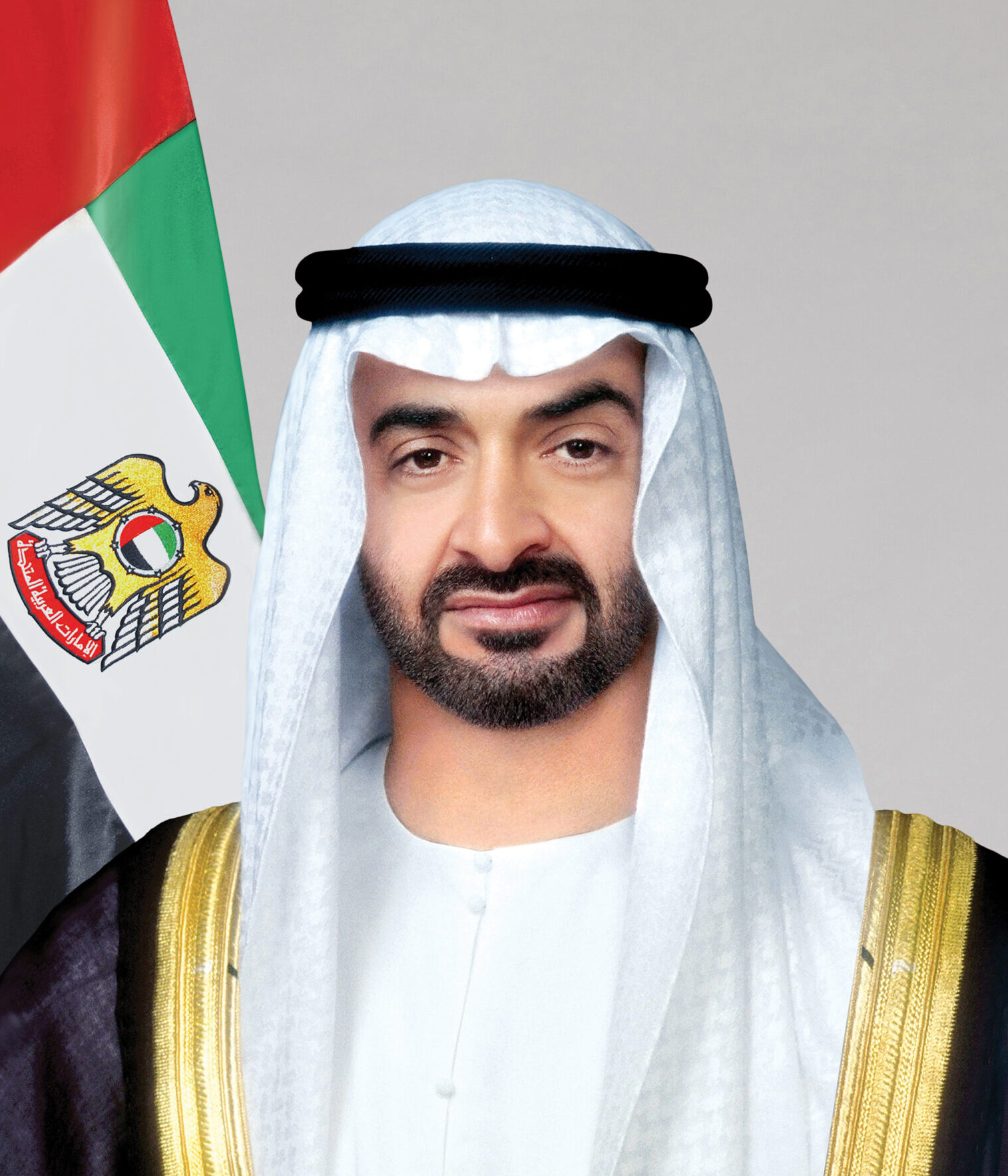
On November 23, 2026, Indian Prime Minister Narendra Modi and Nepali Prime Minister Balendra "Balen" Shah signed a sweeping bilateral blueprint titled Viksit Bharat and Samunnat Nepal. The joint vision document establishes a 10-pillar roadmap backed by an unprecedented ₹15,000 crore Indian financial package, deep cross-border digital integration, new maritime transit access, and a formal agreement to review the controversial 1950 Treaty of Peace and Friendship.
Wire reports have treated the 25-hour New Delhi summit as routine diplomatic theater. It is anything but. The agreement represents a calculated geopolitical gamble by two leaders operating under vastly different domestic pressures, attempting to replace decades of Himalayan friction with hard infrastructure and debt-financed energy integration.
The Unlikely Negotiator in New Delhi
To understand why this roadmap exists, you first have to look at the man sitting across from Modi at Hyderabad House. Eight months ago, Balendra Shah was the independent mayor of Kathmandu. A 36-year-old structural engineer and former hip-hop artist, Shah swept into the prime minister’s office in March 2026 after the 2025 Gen Z protests dismantled Nepal’s entrenched political establishment and handed his Rastriya Swatantra Party a near two-thirds parliamentary majority.
New Delhi had every reason to view Shah with suspicion. During his mayoral tenure, he banned Indian films in Kathmandu over a dialogue dispute and hung a map of "Greater Nepal" in his office—a direct challenge to Indian territorial claims. Yet when Shah chose India for his first bilateral state visit, the rhetoric evaporated.
Shah’s political survival depends on his 100-point Delivery-Based Governance agenda. Nepali voters who toppled traditional parties over chronic stagnation will not reward anti-India posturing if their lights stay off and flood-damaged roads remain washed out. Meanwhile, India needed to lock in a working relationship with Nepal’s generational disruptor before Beijing could capitalize on Kathmandu’s political reset. The 10-pillar roadmap is the result of mutual necessity.
Decoding the 10-Pillar Architecture
Strip away the diplomatic phrasing, and the Viksit Bharat and Samunnat Nepal framework reveals an aggressive push to bind Nepal’s physical and digital arteries to the Indian economy. The ten pillars cover virtually every sector of statecraft:
- Comprehensive Economic and Development Partnership focuses on rewriting trade frameworks, building cross-border Special Economic Zones (SEZs), and deploying the ₹15,000 crore package.
- Physical and Digital Connectivity prioritizes Integrated Check Posts (ICPs), cross-border railways, petroleum pipelines, and linking India’s Unified Payments Interface (UPI) with Nepal’s retail payment grid.
- Energy, Water Resources, and Climate Resilience targets stalled hydropower mega-projects, real-time flood forecasting, glacial lake monitoring, and a pilot green hydrogen initiative.
- Good Governance pairs India’s National Centre for Good Governance with Nepali civil service institutions to standardize digital public infrastructure.
- Technology, Space, and Innovation launches the IN-SPAN startup network, joint data centers, a Nepali Large Language Model built via India’s Bhashini platform, and satellite utilization through ISRO.
- Education and Skill Development opens the door for an Indian Institute of Technology (IIT) campus in Nepal alongside expanded scholarships in artificial intelligence and law.
- Sports commits Indian funding to build a national cricket academy in Nepal and opens Indian training facilities to Nepali provincial athletes.
- Culture and Tourism formalizes cross-border religious circuits linking Ramayana, Buddhist, and Shiv-Shakti sites, anchored by the newly inaugurated Ayodhya-Janakpur Saryu-Kamala Express train.
- Health expands India-Nepal Jan Aushadhi Kendras for low-cost generic medicines and upgrades Nepal’s National Medical Laboratory.
- Agriculture funds an Agro-Industrial Park in Chitwan and links the agricultural research councils of both nations through 2030.
The breadth is deliberate. By bundling high-visibility cultural and sports projects with heavy infrastructure, both governments are insulating the broader relationship from single-issue political blowups.
Follow the Money Behind the ₹15,000 Crore Package
Headlines across South Asia celebrated India’s ₹15,000 crore (NPR 24,000 crore) commitment as New Delhi’s largest-ever financial pledge to Kathmandu. A closer look at the ledger tells a far more complicated story.
| Financial Component | Amount (INR) | Amount (NPR) | Terms & Designated Use |
|---|---|---|---|
| Grant Assistance | ₹3,500 crore | NPR 5,600 crore | Non-repayable; post-disaster reconstruction and new infrastructure |
| Line of Credit | ₹11,500 crore | NPR 18,400 crore | Repayable debt; first-ever Indian Rupee-denominated LoC for energy projects |
| Total Package | ₹15,000 crore | NPR 24,000 crore | Project modalities subject to bilateral consultation |
More than 76 percent of the headline figure is debt. While denominating the ₹11,500 crore Line of Credit in Indian Rupees shields Nepal from US dollar exchange volatility, Kathmandu still has to pay it back.
That creates a severe structural bottleneck. Recent floods damaged over a dozen Nepali hydroelectric stations, knocking out roughly 10 percent of the country's generating capacity and halting power exports. During the summit, Modi and Shah laid the foundation stone for the 669-megawatt Lower Arun Hydropower Project. Yet the high-voltage cross-border transmission lines required to carry that electricity to Indian buyers—specifically the Inaruwa–New Purnea and Dodhara–Bareilly corridors—remain stuck at the joint-venture stage.
If turbine construction outpaces transmission wiring, Nepal faces a trap. Kathmandu will owe interest on Indian credit lines for power plants whose electricity cannot physically reach the Indian grid.
Ports, Pipelines, and the Geography Trap
Landlocked nations live and die by transit chokepoints. Historically, Nepal’s overseas trade has funneled almost exclusively through Kolkata and Haldia on India’s eastern coast, leaving Nepali importers vulnerable to port congestion and political blockades.
Under the new vision document, India granted Nepal immediate transit access to Deendayal Port in Kandla, Gujarat, with future access promised at Paradip Port in Odisha once connecting infrastructure is finished. Opening Kandla gives Nepali businesses direct maritime access on India’s western coast, slashing shipping times for trade moving toward the Middle East and Europe.
On land, the roadmap accelerates a hard-infrastructure perimeter along the open border:
- Integrated Check Posts: Leaders laid the foundation stone for a new ICP at Banbasa while pushing forward stalled construction at Bhairahawa, Sunauli, and Dodhara-Chandani.
- Energy Arteries: Having dedicated Phase II of the Motihari–Amlekhgunj petroleum pipeline, both nations broke ground on a new terminal in Jhapa for the upcoming Siliguri–Jhapa pipeline and agreed to study a cross-border natural gas pipeline.
- Railways: Following the completion of the Final Location Survey for the Raxaul–Kathmandu rail link, India agreed to collaborate on Nepal’s domestic East-West Rail Link, prioritizing the Bardibas–Nijgadh and Birgunj–Nijgadh segments.
To keep these projects from dying in bureaucratic limbo, Shah and Modi activated a High-Level Monitoring Group co-chaired by Nepal’s Foreign Secretary and India’s Ambassador to Kathmandu. The panel is mandated to meet every six months to clear regulatory logjams and report directly to the India-Nepal Joint Commission.
The Unresolved Fault Lines
For all its ambition, the Viksit Bharat and Samunnat Nepal document sidesteps the deepest political wounds between the two neighbors.
The joint statement acknowledges that existing bilateral agreements—explicitly naming the 1950 Treaty of Peace and Friendship—can be reviewed through "mutual consent". For decades, Nepali nationalists have demanded an overhaul of the 1950 pact, arguing its security and trade clauses treat Nepal as a subordinate protectorate. However, New Delhi has quietly signaled that it considers the 2018 report produced by the Eminent Persons’ Group (EPG)—which spent years drafting a consensus replacement—irrelevant to current talks. Agreeing to talk about a review is not the same as signing a new treaty.
Boundary disputes received similarly cautious treatment. While the two leaders praised joint field teams for repairing damaged boundary pillars and instructed their Foreign Secretaries to keep talking, the document offers no timeline or mechanism to resolve the territorial standoff over Kalapani, Lipulekh, and Limpiyadhura.
There is also a glaring omission on military recruitment. The joint press release makes zero mention of the stalled recruitment of Nepali Gorkha soldiers into the Indian Army under India's Agnipath scheme, a dispute that has frozen a centuries-old military tradition since 2022.
What Determines If This Deal Survives
South Asian diplomacy is littered with grandiose joint statements that quietly expire once the motorcades leave the airport. In 2018, Modi and then-Prime Minister K.P. Sharma Oli announced the Raxaul–Kathmandu railway; eight years later, the two sides are still celebrating the completion of its survey.
Balen Shah’s engineering background gives him a sharp eye for the difference between a press release and a poured concrete foundation. If his administration wants the 10-pillar roadmap to deliver real economic autonomy rather than unserviceable debt, Kathmandu must force a strict sequencing discipline on New Delhi: cross-border power transmission lines must be energized before Lower Arun comes online, and clear project lists must be attached to the ₹3,500 crore reconstruction grant before the next monsoon hits. Until freight trains cross the border on schedule and Nepali megawatts flow unimpeded into the Indian grid, this historic reset remains an unverified blueprint.